
Best AI Tools of 2026: 11 Solutions for Your Business
Multimodal AI | AI in Digital Marketing | AI in FinTech
The landscape of the best AI tools in 2026 has shifted from simple assistance to total autonomy. Today, AI in digital marketing and enterprise operations is no longer a luxury; over 60% of corporate workflows are now projected to run autonomously.
By integrating multimodal AI and AI workflow automation tools, high-performance teams are replacing manual bottlenecks with intelligent AI assistants. This transition allows employees to reclaim their time, shifting focus from data entry to high-level strategic innovation. Each platform listed below has been tested for real business impact in 2026.
How Autonomous Intelligence Is Reshaping Workflows
In 2026, the definition of automation has evolved into autonomous intelligence. This refers to AI systems that move beyond simple prompts to plan, reason, and execute multistep tasks with minimal human intervention, including AI for writing and decision support.
-
Replacing Manual Tasks with AI Workflow Automation
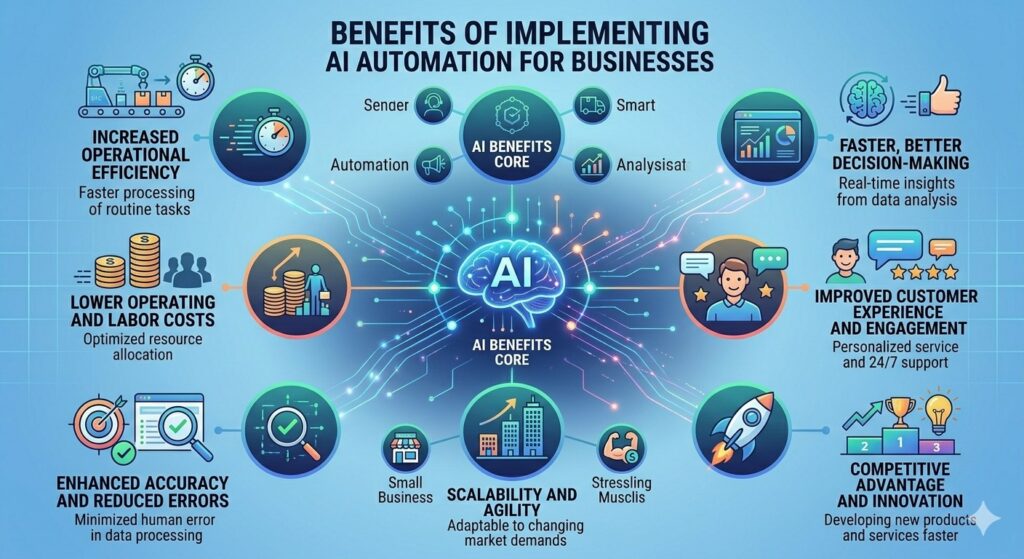
One of the most immediate impacts of this technology is the total removal of administrative bottlenecks. Modern businesses are currently deploying AI workflow automation tools for scheduling, detailed reporting, and customer follow-ups. As a result, error rates are declining while operational speed increases. Instead of losing hours to data entry, teams can now dedicate their energy to innovation and revenue-generating activities.
-
Redefining Team Productivity and AI Assistants
Autonomous systems are reshaping the workforce. For instance, a single employee supported by an AI voice assistant can now accomplish work that previously required an entire department.
Moreover, the adoption of AI in marketing automation allows brands to adjust campaigns dynamically, while responding faster to customer behavior and improving performance without increasing manual effort.
Modern teams are under constant pressure to do more with limited resources, which has made structured task management and time optimization essential. Consequently, many organizations are adopting intelligent productivity tools to support daily planning and execution.
AI Tools Tested for Real Business Impact in 2026
Notably, AI tools have moved beyond the experimental stage. Today, high-performance teams are deploying them to cut manual work, sharpen decision-making, and scale operations instantly. Each platform listed below plays a vital role in building a modern, agentic workflow.
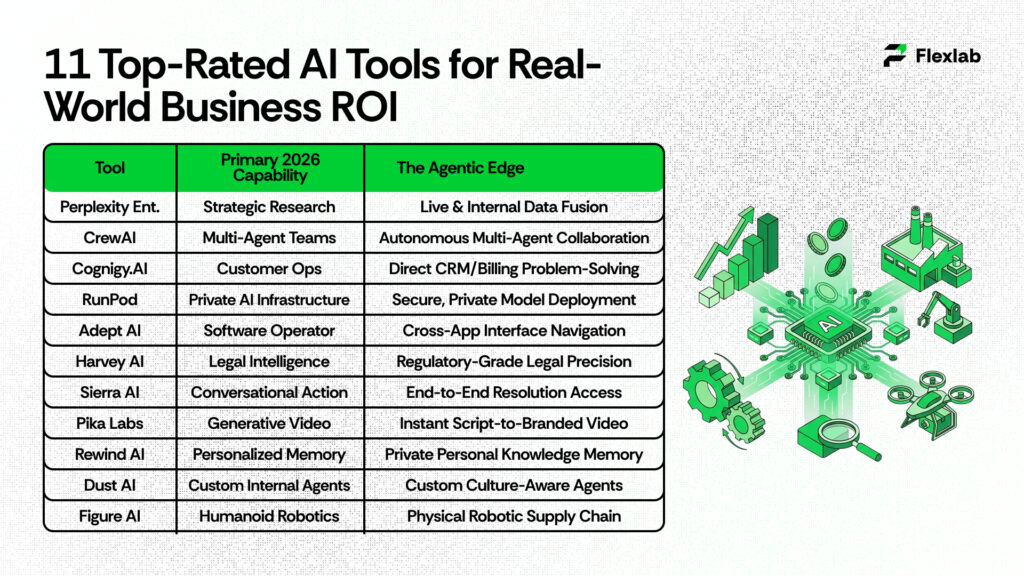
1. Perplexity Enterprise: Streamlining Research & Discovery
Perplexity Enterprise has redefined how teams gather intelligence by providing verified, real-time answers. Instead of opening countless browser tabs, users get the information they need instantly.
- The 2026 Edge: It blends live web data with your internal company files, ensuring all research is relevant and kept behind a secure enterprise firewall.
- How Teams Use It: Strategy departments leverage Perplexity to track competitor moves and validate market shifts without the delay of manual searching.
- Efficiency Gain: This effectively eliminates the search phase of research. Empowering leaders to move directly into decision-making.
2. CrewAI: Orchestrating Autonomous Multi-Agent Teams
CrewAI is the premier platform for businesses wanting to deploy specialized AI agents that work together. For example, you can assign different roles, such as a researcher, a writer, and a quality-check agent, to collaboratively work on a single complex goal.
- Core Functionality: These agents communicate with each other to divide tasks and resolve problems without requiring constant human prompts.
- Practical Example: A growth team might use a crew to identify high-value leads and automatically draft personalized outreach sequences.
- Primary Benefit: It removes the need for manual hand-offs, completing multistep projects with significantly higher speed.
3. Cognigy.AI: High-Scale Conversational Automation
Cognigy.AI is an enterprise-grade conversational AI chatbot designed to manage complex voice and chat workflows.
- Key Innovation: It offers native integration with deep-stack systems such as your CRM and billing software for autonomous issue resolution.
- Global Impact: Large organizations use Cognigy.AI to maintain consistent service quality across multiple countries and languages simultaneously.
- The Result: Companies consistently notice a sharp drop in support overhead and a measurable rise in customer satisfaction scores.
4. RunPod: Secure Infrastructure for Private AI
RunPod supports private deployment of generative AI models for sensitive business operations.
- Privacy Milestone: It allows for the rapid deployment of Small Language Models within isolated, private environments.
- Engineering Case: Developers use RunPod to host internal tools that handle proprietary data with near-zero response time.
- The Bottom Line: You get the power of AI with the security of a private server, drastically reducing both risk and inference costs.
5. Adept AI: The Software Operator that Takes Action
While most AI just thinks, Adept AI actually does. It is designed to navigate software interfaces just like a human, executing workflows across different apps.
- Breakthrough Tech: It understands UI elements and can click, type, and move data between programs based on a single goal.
- Operational Usage: Operations managers rely on Adept to update messy databases and manage complex dashboards that usually require hours of manual work.
- The Advantage: It bridges the gap between different software tools, making your entire tech stack feel like one unified system.
6. Harvey AI: Precision Intelligence for Legal Professionals
Harvey AI serves high-stakes industries where close enough isn’t good enough. By focusing on accuracy and compliance, it has become a staple in modern law firms.
- Specialized Training: The model is trained on vast regulatory and legal datasets, featuring strict safeguards to prevent errors.
- In-House Application: Legal teams use it to summarize massive filings and flag potential risks in contracts before a human ever sees them.
- Strategic Outcome: It allows legal experts to focus on high-level strategy and litigation, rather than the exhausting work of document review.
7. Sierra AI: Autonomous Customer Operations
Sierra AI goes beyond traditional AI chatbots by resolving customer issues end-to-end.
- The 2026 Edge: It connects directly with your internal CRM, billing, and inventory systems to act on behalf of the customer.
- Practical Application: E-commerce brands use Sierra to process refunds and update order statuses without any human intervention.
- Strategic Value: This results in shorter resolution times and significantly higher customer loyalty.
8. Pika Labs: Next-Gen Generative Video Creation
Pika Labs enables fast, cost-effective video creation and is widely adopted among AI tools for marketing.
- Core Capability: Advanced text-to-video generation that is specifically optimized for branded social media content.
- Case Study: Creative departments utilize Pika to transform simple scripts into professional product explainers in just minutes.
- Main Benefit: Drastically lowers creative costs while accelerating the pace of content production.
9. Rewind AI: Your Personal Knowledge & Memory Assistant
Rewind AI serves as a searchable digital memory for your professional life. It privately captures your meetings, chats, and tasks, making everything you’ve seen or heard instantly accessible.
- Privacy Focus: A searchable timeline of all work activity that stays stored securely on your local device.
- Who It’s For: Busy executives use Rewind to recall specific decisions or details from past meetings without the need to take manual notes.
- The Result: Enhanced personal productivity and perfect knowledge retention across the workday.
10. Dust AI: Custom Internal Agents for Modern Teams
Dust AI allows organizations to build their own custom agents trained specifically on internal data. This ensures that the AI understands your unique company culture and processes.
- Customization: These agents are built to navigate company-specific documentation and workflows securely.
- Team Impact: Onboarding becomes faster as new hires can ask the Dust agent questions about company policy or project history.
- The Advantage: Reduces the burden on senior staff and eliminates internal information gaps.
11. Figure AI: Bringing Intelligence to Physical Robotics
Figure AI bridges the gap between digital intelligence and the physical world through humanoid robots. These machines are designed to handle labor-intensive tasks in logistics and industrial settings.
- Technological Shift: Robots capable of navigating warehouses and performing repetitive physical labor alongside human workers.
- Real-World Use: Logistics giants deploy Figure robots to assist with material handling and heavy lifting in distribution centers.
- Long-term Impact: Improved operational safety, reduced labor workload, and a more scalable physical supply chain.
As technology continues to mature, the discussion is shifting from experimentation to outcomes, while leaders increasingly focus on the measurable benefits of AI in terms of long-term performance, stability, and growth.
Key Benefits of AI Tools in 2026
In 2026, companies are becoming more selective about the best AI tools for business. As a result, they are focusing on solutions that deliver measurable impact rather than short-term hype or experimental features.
1. Shifting from Speed to Effectiveness
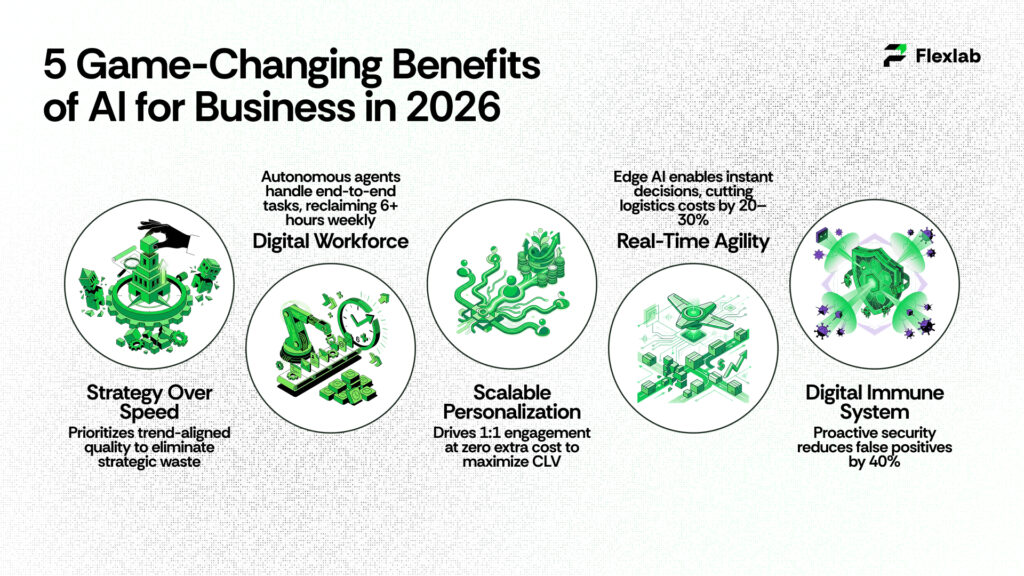
In previous years, AI focused almost entirely on speed. However, modern AI automation tools are now about doing things better. Instead of generating 100 generic posts, AI marketing tools ensure content aligns with live sentiment trends and predicted market shifts.
- The Advantage: Decisions are more precise, and as a result, strategic waste drops dramatically, since teams spend less time on trial-and-error and more time executing winning strategies.
2. The Rise of the Digital Workforce
AI agents now function as autonomous digital coworkers. They don’t wait for step-by-step instructions; instead, they understand high-level goals.
- Case in Point: In AI-driven customer service, agents now manage full cases, including checking inventory, processing refunds, and updating the CRM. As a result, human staff can focus on high-judgment tasks and creative problem-solving.
3. Hyper-Personalization at Scale
Before 2026, personalization was both expensive and slow. By contrast, current AI tools for content creation allow brands to treat every customer like an individual without increasing overhead.
- Practical Result: Brands use AI-powered video editing tools to produce personalized video messages for each client. As a result, every interaction feels one-on-one, thereby leading to higher brand loyalty and increased customer lifetime value.
4. Real-Time Operational Agility
In 2026, AI in transportation and supply chain management has reached a point where companies can respond to global disruptions in milliseconds. Additionally, small language models (SLMs) now allow AI to run locally on the edge, thereby enabling instant, localized decision-making without cloud delays.
- In the Field, Retailers and warehouse operators use these systems to adjust logistics dynamically based on live weather data, sudden demand spikes, or fuel price fluctuations.
- The Business Win: Operational costs such as fuel consumption often drop by 20–30%, while delivery delays are eliminated through dynamic routing.
5. Proactive Risk and Security Management
Waiting for a system breach or a compliance error is not acceptable. AI testing tools and security agents now act as a digital immune system, protecting corporate data in real-time while ensuring strict compliance with global regulations.
- Security Insight: Modern conversational systems consist of built-in ethical safety measures that catch potential data leaks or false output before they reach the customer.
- The Business Win: Organizations using these proactive controls report a 40% drop in cybersecurity false positives, allowing IT teams to focus on high-priority infrastructure rather than chasing ghosts.
The 2026 Success Formula
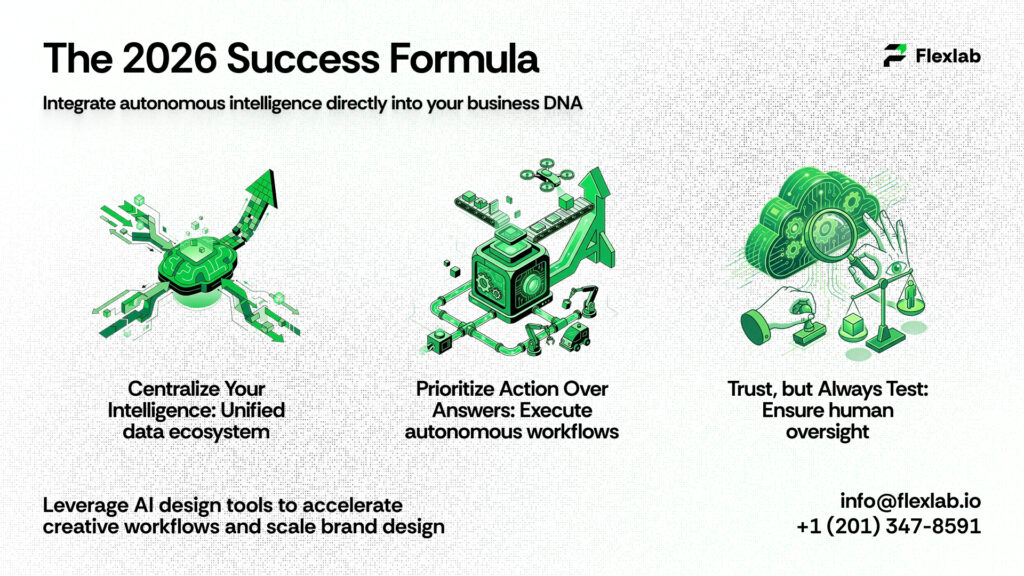
To truly lead in this Agentic Era, high-performing companies follow a specific blueprint for AI adoption. It isn’t just about having the latest software; it’s about how that software is integrated into your business DNA.
- Centralize Your Intelligence: Rather than using 50 isolated apps, leading firms rely on a unified stack, such as Microsoft Copilot or Google Gemini, to act as a single source of truth. This removes data barriers and ensures every department is working from the same insights.
- Prioritize Action Over Answers: Insight alone is no longer the goal. The most successful teams move beyond simple research by deploying AI assistants that can actually execute tasks, from processing a refund to launching a targeted marketing campaign.
- Trust, but Always Test: As AI gains more autonomy, human oversight remains the most critical component. Continuous monitoring with specialized AI testing tools ensures your automated systems stay accurate, ethical, and perfectly aligned with your brand’s voice.
Teams are increasingly using AI design tools to accelerate creative workflows, while producing professional-quality visuals and maintaining brand consistency without adding manual overhead.
How to Build a High-Performance AI Stack
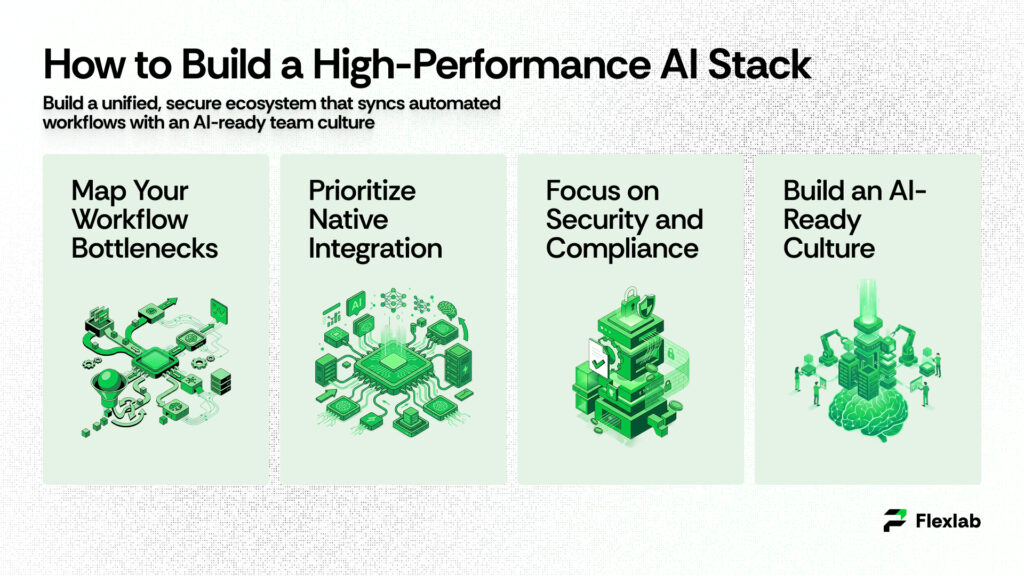
Choosing the right AI stack is about more than just picking the most popular tools on the market. It is about building a connected ecosystem that aligns with your specific business goals, team workflows, and long-term growth plans. A truly effective stack combines AI adoption, workflow automation, and digital tools that work together as a single, unified engine.
1. Map Your Workflow Bottlenecks
Start by identifying the repetitive tasks that are currently draining your team’s energy. Whether it is in marketing, customer support, or operations, you should look for high-volume, low-judgment work. Deploying specialized tools such as AI in customer service or AI marketing tools can instantly reclaim hours and virtually eliminate manual errors.
2. Prioritize Native Integration
The goal of a modern stack is to avoid software silos. Therefore, you should select AI tools that integrate seamlessly with your existing infrastructure. For example, platforms like Microsoft Copilot Studio and n8n are designed to scale alongside your business, ensuring that your data flows freely between different departments without manual intervention.
3. Focus on Security and Compliance
As AI becomes more autonomous, security cannot be an afterthought. Therefore, in 2026, protecting proprietary data is the top priority. To achieve this, we recommend using AI testing tools and small language models to keep your sensitive information private and local. Always ensure your workflows comply with both global regulations and your internal security policies.
4. Build an AI-Ready Culture
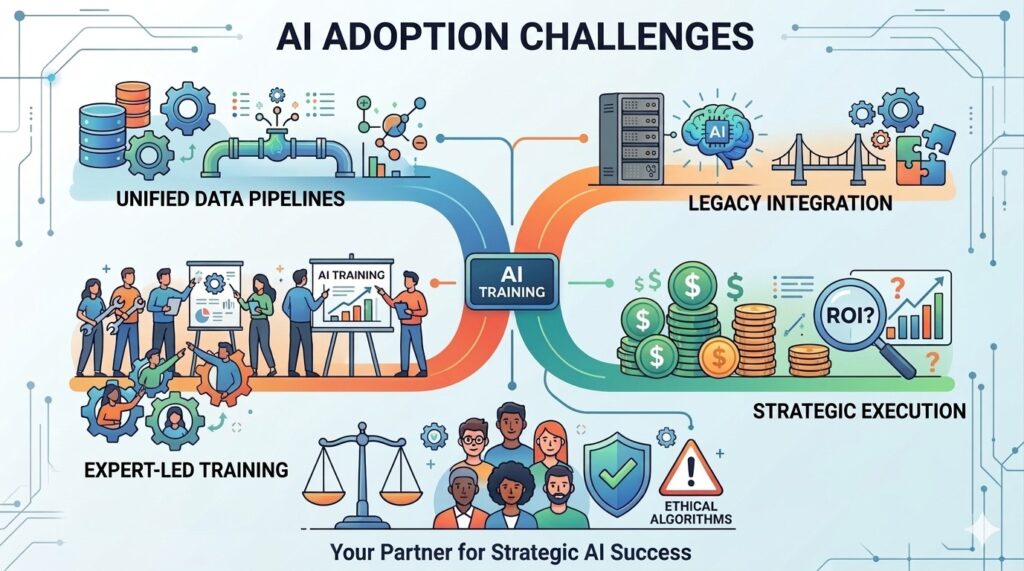
Even the most advanced technology is useless if your team is not empowered to use it. Success requires a proactive approach to AI adoption. This means providing hands-on training and, in many cases, partnering with AI consulting services to ensure your implementation is smooth, ethical, and built to last.
Future Trends & Predictions for AI in 2026
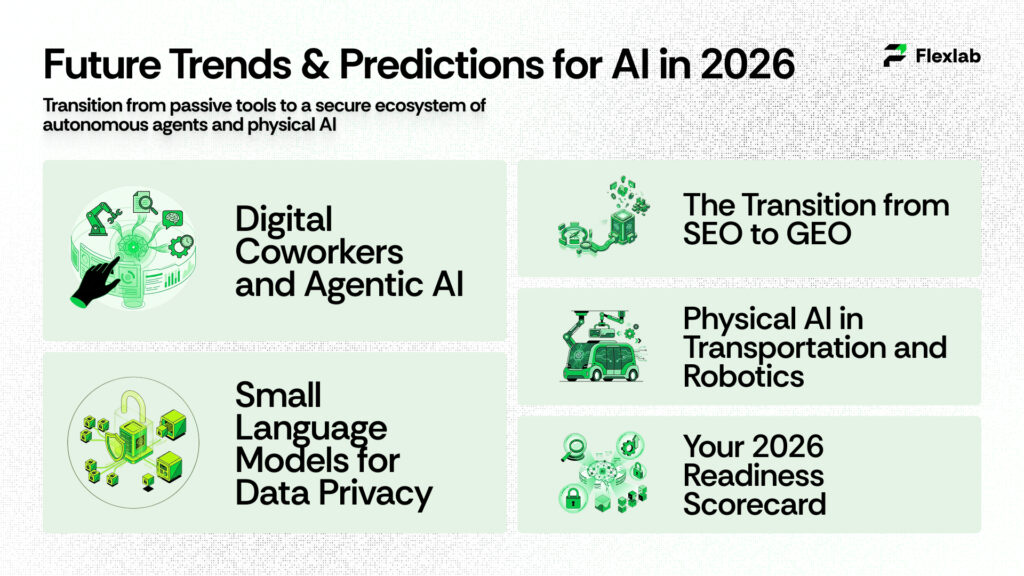
1. Digital Coworkers and Agentic AI
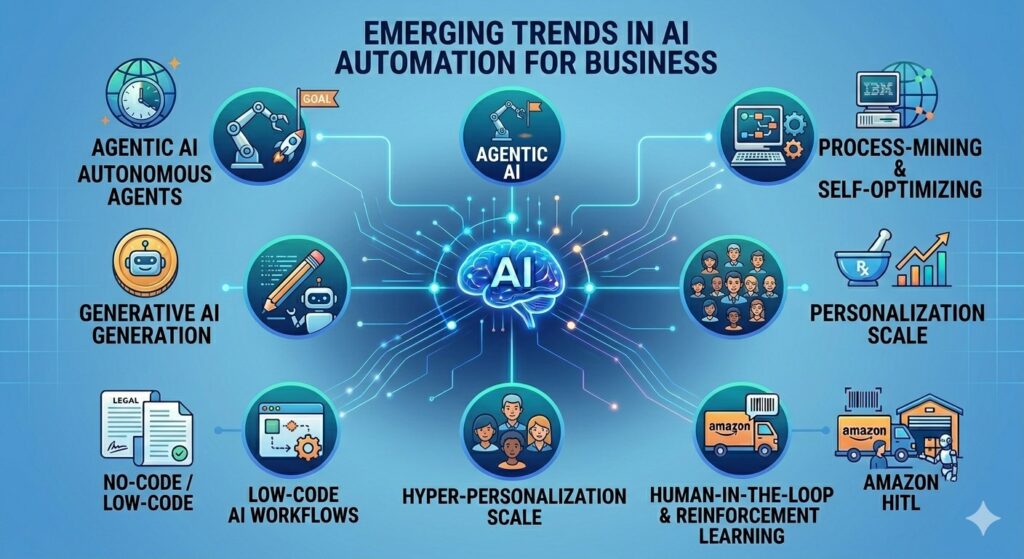
AI is no longer just a passive assistant; it is now working directly alongside human teams. In this new era, you can delegate complex goals, such as researching these leads and launching a personalized outreach campaign, and expect full execution. By late 2026, experts predict that 40% of enterprise applications will have embedded AI agents, allowing even tiny startups to manage thousands of autonomous digital coworkers.
2. Small Language Models for Data Privacy
Small language models (SLMs) are rapidly taking over daily tasks, largely because they can process data locally on your device. Spending on AI-integrated digital tools is expected to reach $2 trillion as companies shift toward private clouds and local AI for their most sensitive operations. This move significantly reduces the risk of data leaks while maintaining high-speed performance.
3. The Transition from SEO to GEO
Brands are increasingly leveraging AI in marketing automation to dynamically optimize campaigns, while responding to user behavior in real time, and thereby maximizing engagement without additional manual effort.
4. Physical AI in Transportation and Robotics
The impact of AI in transportation and logistics is becoming visible as drones and warehouse robots handle last-mile delivery and inventory management. AI-powered automation is already reducing operational costs, while customer service is expanding to include physical AI voice assistants in retail spaces. This bridge between digital intelligence and physical labor is a hallmark of the 2026 landscape.
5. Your 2026 Readiness Scorecard
Companies that successfully embrace AI automation tools and agentic workflows will be the ones that stay ahead of the curve. To remain competitive, brands should begin mapping repeatable tasks to AI agents, optimizing for voice queries using conversational AI, and maintaining authenticity with high-quality AI tools for content creation. Consequently, in 2026, if your business isn’t AI-powered, it simply is incompetent.
The Flexlab Roadmap: Scale Your Growth with AI in 2026
The era of guessing your digital transformation is over. At the same time, at Flexlab, we turn the complexity of the 2026 AI landscape into a high-speed engine for your success. Moreover, as your strategic partner, we design and scale intelligent systems that deliver measurable ROI, faster operations, and sustainable growth. From autonomous agents and workflow automation to scalable engineering, we empower teams to adopt AI with total confidence.
Ready to Build Your 2026 AI Strategy?
📞 Book a FREE Consultation Call: +1 (201) 347-8591
📧 Email us: info@flexlab.io
Activate the power of agentic workflows and advanced engineering to solve your toughest operational challenges. First, explore our Services to see how we build high-performance solutions, or visit our portfolio to witness real-world automation projects built for speed and reliability. Then, contact us today and start transforming your operations. Additionally, stay ahead of the curve with actionable insights on our blog or follow our latest innovations on LinkedIn.
Related Reads:
- What Is Automated Machine Learning and How Does It Work?
- Top 10 Benefits of AI Agents in Enterprise Software Development
- Types of AI Agents: A Comprehensive Guide to Autonomous Intelligence
The Bottom Line: Choosing the Best AI Tools in 2026
The benefits of AI in 2026 are undeniable. By adopting agentic workflows, businesses are achieving faster operations, lower overhead, and highly personalized customer experiences at scale. Whether through AI design tools that evolve a brand or AI in transportation that streamlines logistics, the goal remains the same: removing repetitive work, so teams can focus on strategy, creativity, and leadership.
As AI continues to evolve rapidly, the most successful leaders will treat adoption as a continuous journey rather than a one-time implementation. By prioritizing action over research and choosing tools that integrate seamlessly into existing systems, businesses will not only survive but thrive in this new era.
FAQs
-
How are agentic AI tools different from the chatbots businesses used in 2025?
In 2025, most AI tools were still reactive, meaning they only answered questions or generated content after receiving a specific prompt. In 2026, agentic AI tools work toward broad goals. Instead of just assisting with a task, they plan the necessary steps, move between different platforms, and complete full workflows with minimal oversight.
-
Why are small language models becoming the go-to option for privacy-focused companies?
Small language models are gaining popularity because they can run locally on company devices or private systems. Consequently, sensitive data stays inside the organization rather than being sent to public cloud servers. For businesses handling financial records or internal strategy, this adds a critical layer of trust and control, while also making the AI faster and more reliable.
-
Will AI tools replace human roles in creative and marketing teams?
This is unlikely, as we are seeing a shift in how work is divided rather than a total replacement. AI now handles repetitive tasks like drafting and testing ideas, while humans focus more on high-level strategy and authentic brand voice. In fact, teams that use AI well often find that human judgment is more important than ever to ensure outputs remain ethical and aligned with the company’s vision.










2 Responses