
How Can AI Assistants Enhance Business Efficiency?
AI Automation | AI-Powered Chatbots | Multimodal AI
AI Assistants are transforming how businesses operate by enhancing efficiency, productivity, and decision-making at scale. Organizations can eliminate repetitive work, reduce manual effort, and refocus teams on high-value initiatives that drive sustainable growth.
In fact, research shows many employees lose an average of 15 hours every week to routine administrative tasks. This loss slows growth, delays decision-making, and costs businesses real money. The challenge today isn’t working harder; it’s working smarter through the strategic deployment of an AI assistant for business. These tools transform complex, repetitive tasks into automation, creating seamless workflows that allow teams to focus on high-value work.
In this guide, we explore how AI assistants improve business efficiency across departments, deliver measurable ROI, and support long-term business growth.
Unlocking Productivity: Where AI Assistants Truly Shine
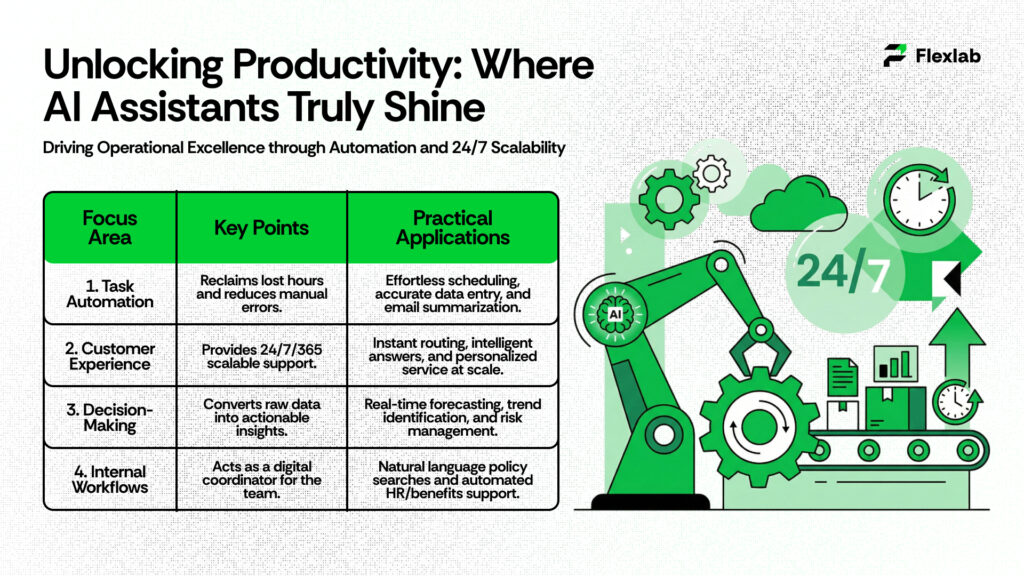
An AI virtual assistant takes on routine tasks, freeing your human team to focus on high-value work that requires creativity and strategic thinking. This creates a measurable difference in AI productivity and day-to-day operations.
1. Automation of Repetitive Tasks
One of the most immediate benefits of AI Assistants is reclaiming hours lost to repetitive administrative work. By automating these tasks, businesses reduce manual effort, minimize errors, and allow employees to focus on higher-value projects.
- Scheduling Made Effortless: AI Assistants automatically analyze multiple calendars, find optimal meeting times, send invitations, and manage reminders. This eliminates endless email back-and-forth, speeding up coordination across teams.
- Accurate Data Entry: AI extracts information from forms, receipts, and emails, then logs it directly into CRM or ERP systems. This ensures reliable, error-free data while saving valuable time.
- Streamlined Email Management: AI summarizes long email threads and drafts contextual responses. These digital tools flag only messages requiring human attention, so teams can focus on meaningful work.
2. Enhancing Customer Experience (24/7/365)
AI assistants transform customer engagement by providing instant, consistent, and scalable support 24/7.
- Instant Answers and Intelligent Routing: First, routine questions are handled immediately, which significantly reduces wait times. Meanwhile, for more complex issues, AI gathers relevant context and then directs customers to the right human expert. As a result, businesses can ensure faster and more effective resolutions.
- Personalization at Scale: In addition, AI analyzes customer history to deliver highly personalized services. Consequently, it enables proactive support rather than reactive responses. Ultimately, this approach enhances customer satisfaction, strengthens loyalty, and improves overall sales performance.
3. Data-Driven Decision-Making
Your business generates vast amounts of data. Using workflow automation. AI assistants convert this into actionable insights for smarter and faster decisions.
- Real-Time Insights and Forecasting: AI continuously monitors operational data and market trends, identifying patterns and potential bottlenecks. Predictive capabilities allow businesses to move from reactive to proactive strategies.
- Risk Management: AI flags financial irregularities or compliance risks early, helping prevent costly mistakes and regulatory penalties.
4. Streamlining Internal Workflows
AI acts as a digital coordinator, keeping projects and internal processes running smoothly. Using AI algorithms, organizations can handle routine employee questions about policies, benefits, and PTO, allowing HR teams to focus on complex employee relations. Therefore, employees can ask questions in natural language, and AI quickly pulls the correct policy or document from the company’s knowledge base, eliminating frantic searches and improving business efficiency.
AI Assistants Customized for Business Units
Efficiency isn’t just theory; it’s about real, measurable results. Business process automation transforms how departments operate, allowing teams to focus on high-value, strategic work while automating repetitive tasks.
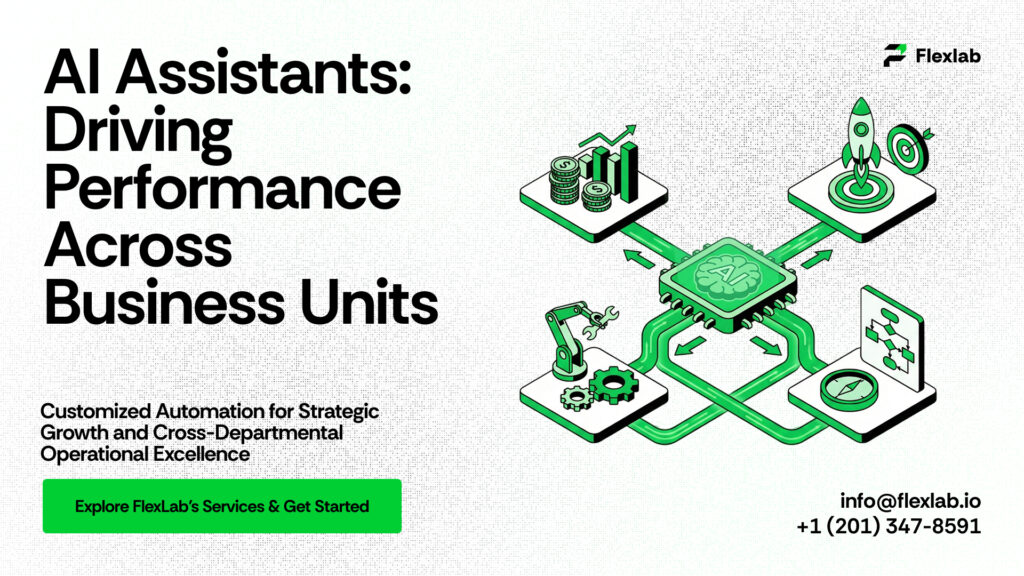
1. Sales: Close Deals Faster Than Ever
Your sales team should focus on building strong relationships. AI assistants handle the heavy lifting.
- Lead Scoring: AI analyzes prospect data instantly and prioritizes leads most likely to convert. This saves hours of wasted time and improves focus.
- Conversation Intelligence: The AI listens to sales calls, automatically extracting key actions, next steps, and competitor mentions. Manual note-taking is no longer required.
- Automated Follow-Up: AI drafts and schedules personalized follow-up emails, using customer feedback analysis to determine the perfect moment to engage.
2. Marketing: Personalization at Scale
Marketing’s biggest challenge is reaching the right person with the right message. AI assistants make personalization scalable and accurate.
- Content Generation: AI drafts blog outlines, social media posts, and email subject lines, giving your writers a massive head start and speeding up innovation in campaign delivery.
- Predictive Ad Spend: AI monitors ad performance in real-time and shifts budget automatically to the best-performing demographics. You get better ROI without manual adjustments.
3. HR & Operations: Supporting Your People
HR teams need time for people, not paperwork. Using robotic process automation handles the bulk of routine employee support.
- Onboarding Assistance: AI guides new hires through paperwork and training modules seamlessly, thereby reducing HR workload.
- Resume Screening: In addition, AI scans thousands of applications and ranks candidates based on skills, which frees recruiters to focus on interviewing top talent.
4. Finance & Accounting: Streamline Financial Operations
AI assistants help finance teams reduce errors, save time, and make better data-driven decisions.
- Automated Reporting: AI generates reports and dashboards instantly, helping teams track performance without manual data compilation.
- Invoice & Expense Management: Using automated invoice processing reconciles expenses and flags anomalies, saving hours of administrative work.
Measuring Success: The High ROI of AI Assistants
Every investment needs to prove its worth, and AI assistants deliver. They don’t just feel faster; they generate measurable financial returns through operational savings and long-term revenue growth. The benefits come in two key ways:
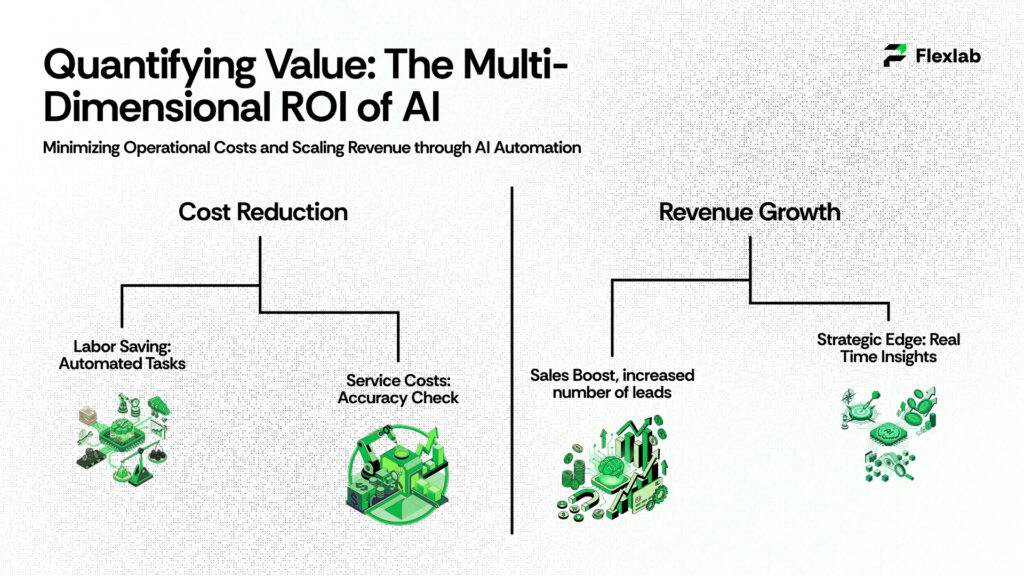
1. Immediate Cost Reduction
AI assistants deliver rapid ROI by cutting operational expenses.
Labor Savings: By automating repetitive, manual tasks, AI allows your current team to focus on higher-level work, thereby reducing the need to hire additional staff.
Customer Service Costs: Moreover, AI chatbots handle up to 80% of routine inquiries, which lowers the average cost of each customer interaction from dollars to mere cents.
Fewer Errors: In addition, AI ensures consistency and accuracy in data entry, billing, and compliance checks, minimizing costly mistakes and rework.
2. Built-In Revenue Growth
AI assistants actively enable your business to earn more.
Boost Sales Productivity: AI not only qualifies leads but also manages scheduling, thereby freeing sales reps to focus on closing deals. As a result, you can expect a noticeable increase in the number of deals completed each quarter.
Higher Conversion Rates: AI marketing tools not only personalize ads but also provide tailored recommendations based on real-time customer behavior. Consequently, this approach drives higher conversions.
Faster, Data-Driven Decisions: AI not only delivers instant insights on market trends but also provides real-time data on internal performance. As a result, leaders can make quick, strategic decisions, staying ahead of competitors and gaining a significant competitive edge.
Concludingly, investing in AI produces measurable ROI by reducing costs, increasing revenue, and empowering your team to focus on strategic priorities.
Managing Risk, Security and Ethics for AI Assistants
Implementing AI assistants is a powerful strategic move, but it also comes with real responsibility. Addressing security and ethics is not optional; it is essential for responsible, long-term adoption.
1. The Challenge of Algorithmic Bias
Algorithmic bias is a serious issue that demands ongoing attention. AI assistants learn from the data they are trained on, and that data shapes their decisions.
Problem: If historical hiring, lending, or operational data contains bias, AI assistants can learn and amplify it. This can result in unfair or discriminatory outcomes that negatively impact employees, customers, and business credibility.
Solution: Organizations must regularly audit AI outcomes to ensure fairness. Therefore, training data should be diverse, clean, and representative of real-world populations. From day one, fairness should be treated as a core requirement, not an afterthought.
2. Protecting Data Privacy and Security
AI assistants often process large volumes of sensitive information, making data protection a top priority.
Problem Handling customer PII, financial records, or proprietary business data introduces significant risk. Without proper safeguards, organizations face potential data breaches, loss of trust, and costly penalties for non-compliance with regulations such as GDPR or HIPAA.
Solution: Only enterprise-grade AI solutions should be used. As a result, these platforms provide strong encryption, robust access controls, and built-in security protocols. Furthermore, clear data governance policies must be established to define what information AI assistants can access, how it is used, and how long it is retained. Ultimately, these measures ensure security, compliance, and long-term trust.
3. Accountability and Transparency
When AI is involved in decision-making, accountability must always remain clear.
Problem: In some cases, it can be difficult to understand why an AI assistant reached a particular conclusion. This “black box” problem makes it harder to explain decisions, resolve errors, or assign responsibility when something goes wrong.
Solution: Human oversight is essential. For high-impact decisions, such as financial approvals or compliance actions, humans should always have the final say. Organizations should also prioritize AI solutions that support Explainable AI (XAI), making decision logic more transparent and easier to understand.
Furthermore, responsible AI matters because when security, ethics, and transparency are built into AI adoption, AI assistants become a trusted asset rather than a liability. By managing risk proactively, businesses can scale ai with confidence, protect stakeholders, and ensure sustainable and responsible innovation.
What’s Next: The Future of AI Assistants
If you think AI assistants are powerful now, the technology is advancing quickly. Staying competitive means understanding where the future of AI is heading next.
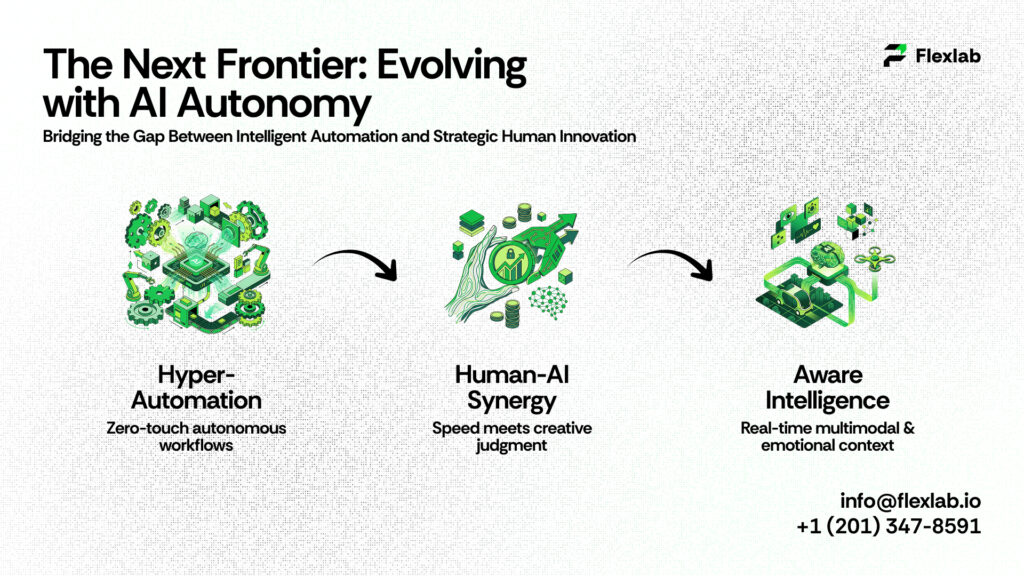
1. The Rise of Hyper-Automation
We are moving past simply automating one task at a time.
- What it means: AI will soon manage entire, complex business processes end-to-end using autonomous systems. For example, it could take a sales order, check inventory, draft the invoice, and schedule the shipment—all without any human input. As a result, businesses can achieve greater speed and accuracy across operations.
- The Impact: This next level of automation will, moreover, fully integrate every system. As a result, it will deliver peak operational efficiency across your entire organization.
2. Human-AI Collaboration
The future is not human versus AI. It’s definitely human plus AI.
- Focus on Synergy: This partnership is often called the Centaur Model. where AI agents provide speed, data analysis, and tireless execution. The human provides the crucial judgment, creativity, and emotional intelligence.
- The Outcome: Together, the combination is not only much smarter but also faster than either party working alone. Consequently, it allows your employees to focus exclusively on high-value, uniquely human tasks.
3. Smarter, More Aware Assistants
AI is rapidly evolving to interact even more naturally with us.
- Multimodal AI: Future AI assistants will process and understand text, voice, images, and video all at the same time. This makes interactions feel truly natural and instantaneous as tools process text, voice, and video simultaneously through intelligent automation.
- Emotionally Aware: Advanced AI will be able to interpret the sentiment and tone in a customer’s voice or text. As a result, this capability allows the AI to adjust its response accordingly. For example, it can offer sympathy when needed or escalate a call when appropriate. Ultimately, these adjustments help improve the quality of every single interaction.
AI Assistant Adoption Roadmap in 5 Steps
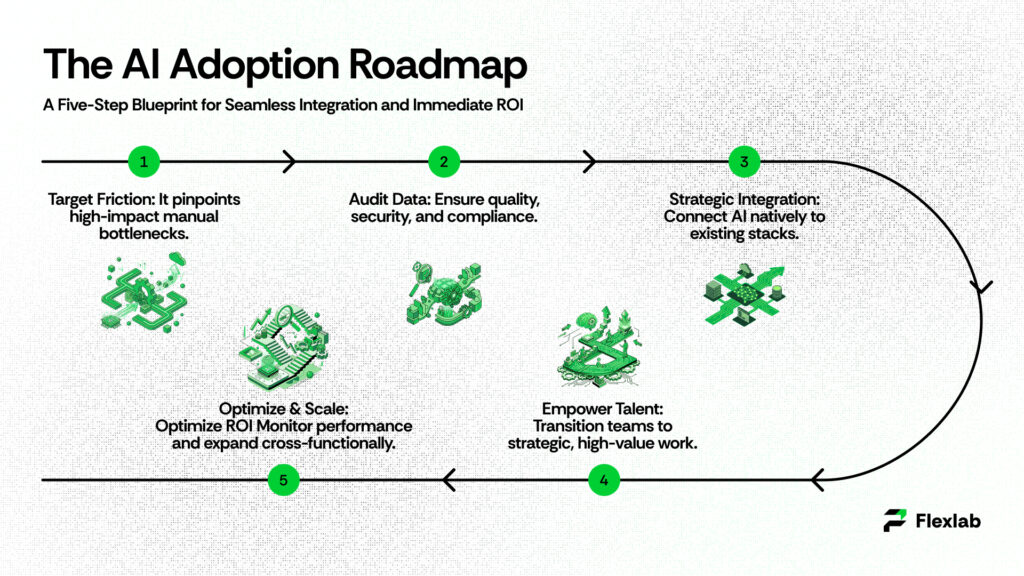
Moving from learning about AI assistants to actually putting them to work can feel overwhelming, but the good news is that you don’t need a massive budget or a complete IT overhaul to get started. The most successful implementations follow a step-by-step, focused approach, guided by clear business goals, so your team can see measurable results without feeling stressed or overburdened.
This roadmap breaks down five practical steps to assist your business in adopting AI assistants efficiently, maximizing ROI, and empowering your employees to focus on high-value work.
1. Identify Your Pain Points
Start by pinpointing the areas where your team is losing the most time or struggling with repetitive work. Don’t buy a tool just because it’s new or trendy. Focus on the process that creates the biggest friction.
- Find the Bottleneck: Is it customer ticket sorting, data entry after sales calls, or scheduling meetings? Start with one high-impact process.
- Set Clear Goals: Define success in measurable terms. For instance, “Reduce scheduling time by 40% in the next quarter.”
- Start Small: A low-risk, high-impact pilot helps prove value quickly and builds excitement across your team.
2. Prepare Your Data
An AI assistant is only as smart as the data it learns from, so quality and accessibility are essential.
- Check Data Quality: Ensure the data is accurate, complete, and up-to-date. For example, if automating customer support, confirm old chat logs are clean and relevant.
- Make Data Accessible: Structure documents and information clearly so the ai can process and understand them.
- Prioritize Security: Protect sensitive or private data and ensure compliance with regulations such as GDPR or HIPAA before the AI interacts with it.
3. Choose the Right Tool and Integrate
Once goals and data are ready, select an AI assistant platform that fits seamlessly with your existing systems.
- Seamless Integration: Select AI automation tools that work smoothly with platforms your team already uses, such as Salesforce, HubSpot, or Microsoft Teams. Avoid creating separate silos.
- Run a Pilot: Start with a small group or one process first. Measure performance against your initial goals to minimize risk.
4. Train Your Team
Successful AI adoption is about people, not just technology. Employees need to understand how the AI will support them.
- Explain the Why: Demonstrate how AI reduces routine work, thereby allowing them to focus on higher-value projects.
- Address Concerns: Reassure staff that AI serves to support, rather than replace, them.
- Define New Roles: Help employees understand how they will interact with AI, manage exceptions, and concentrate on strategy and creativity.
5. Scale and Continuously Optimize
Once the pilot is successful, expand the digital transformation across other departments and gather feedback to refine performance.
- Integrate Fully: Next, roll the AI assistant out across other departments or similar processes.
- Monitor Performance: Then, continuously track metrics to ensure goals are met.
- Gather Feedback: Finally, ask employees and customers for input on what works and what can be improved. Use this information to refine and train the AI over time.
Real-World Success Stories of AI Assistants
Seeing AI assistants in action is far more compelling than just talking about business efficiency. In fact, around the world, companies are increasingly leveraging AI to save time, cut costs, and boost productivity. As a result, these tools are no longer viewed as optional but as strategic investments. Moreover, from customer service to marketing and internal workflows, AI assistants are consistently delivering measurable ROI. Consequently, they are transforming the way teams work across industries. With this in mind, here are three powerful examples that highlight real impact:
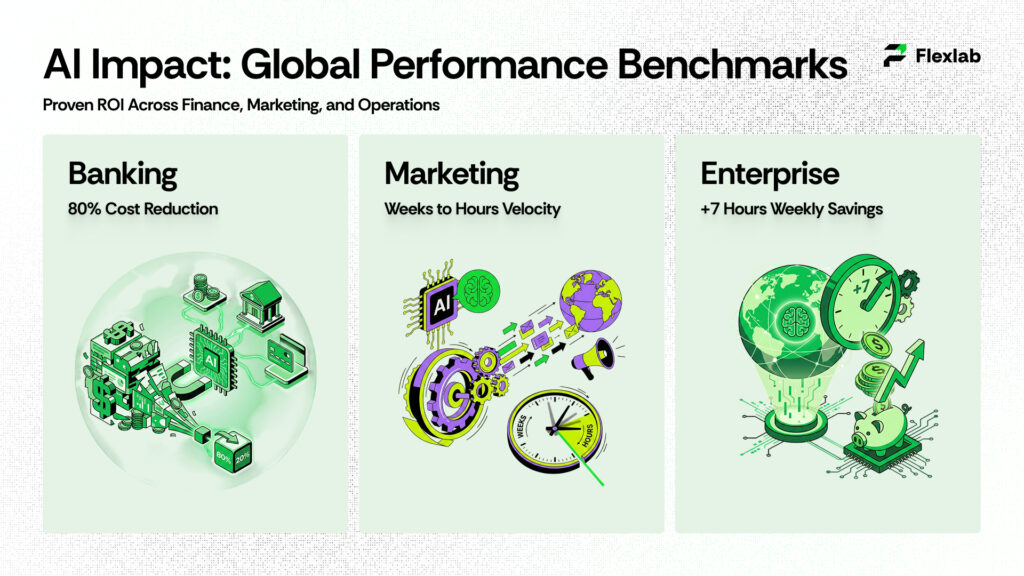
Case Study 1: Cutting Customer Service Costs by 80%
Company: Bank of America (“Erica” AI Assistant)
Challenge:
- High call volume during peak hours, with repetitive questions bogging down human agents
- Slow response times, leading to frustrated customers
AI Solution:
- Implemented an intelligent conversational AI to handle routine tasks like balance inquiries, transfers, and FAQs
- Available 24/7, providing instant answers via chat and voice
Results:
- Massive Cost Reduction: Freed human agents to focus on complex issues, reducing operational costs dramatically
- Improved Customer Loyalty: Faster responses and consistent support boosted customer satisfaction scores
- Efficiency Gains: Handled over 1 billion interactions with minimal human intervention
Case Study 2: Accelerating Marketing Campaigns
Company: L’Oréal and Coca-Cola
Challenge:
- Traditional content creation for campaigns took weeks, often requiring costly external agencies
- Teams struggled to respond quickly to market trends
AI Solution:
- AI assistants generated initial campaign ideas, blog outlines, ad copy, and social media posts within minutes
- Adherence to brand guidelines ensured consistency without manual oversight
Results:
- Time Savings: Concept creation reduced from weeks to hours
- Faster Go-to-Market: Marketing teams launched campaigns quickly, reacting to trends instantly
- Increased ROI: Personalized campaigns and faster execution improved marketing effectiveness
Case Study 3: Turbo-Charging Internal Productivity
Company: MEDITECH (Healthcare Technology)
Challenge:
- Employees spent excessive time on administrative tasks, including note-taking, drafting follow-up emails, and searching internal documents
- Productivity was limited by repetitive, low-value work
AI Solution:
- Centralized AI assistant integrated with the company’s digital workspace
- Automated summarization of meetings, smart scheduling, drafting follow-up emails, and retrieving complex policies
Results:
- Time Savings: Estimated 7 hours saved per employee per week
- Enhanced Productivity: Time redirected toward innovation, client support, and strategic initiatives
- Operational Efficiency: Improved business output without increasing staff size
These real-world examples prove that AI assistants are not just productivity tools; in fact, they are strategic investments that generate measurable ROI, streamline operations, and, as a result, empower teams to focus on high-value work.
Last Words: How AI Assistants Drive Real Growth
AI assistants are not a trend; rather, they are the foundation of modern business efficiency. Throughout this guide, we’ve demonstrated how these intelligent tools consistently deliver measurable AI ROI by cutting costs, boosting revenue, and, most importantly, freeing your most valuable asset—your people—from the burden of repetitive administrative work.
Ultimately, the choice today is simple. On one hand, you can remain tied to outdated inefficiencies; on the other hand, you can strategically embrace AI assistants as the future of productivity. As the roadmap and real-world success stories clearly show, starting small and scaling smart is not only practical but also the most effective path to sustained growth and peak performance.
Grow Smarter with Flexlab & AI Assistants
Are administrative tasks slowing your team down and keeping you from focusing on growth? If so, it’s time to take control and scale smarter. At Flexlab, we don’t just implement technology; instead, we empower businesses with AI-powered systems that streamline operations. Moreover, these solutions eliminate repetitive work and, as a result, enable your team to focus on what truly drives results.
Ready to Grow Your Business?
📞 Book a FREE Consultation Call: +1 (416) 477-9616
📧 Email us: info@flexlab.io
If you want to optimize your operations, our services page clearly shows how we deploy AI Assistants, automation, and modern technology. Ultimately, these solutions are designed to solve today’s most pressing business challenges.
The best way to move forward is with a conversation, so we invite you to contact us to explore custom strategies and accelerate your growth. Reach out to explore strategies, accelerate growth, and stay ahead with expert insights on our blog or follow us on LinkedIn for the latest trends and innovations. For Deeper Learning, Here are a Few Recommended Reads:
- Top 15 AI Business Ideas to Launch in 2025
- How AI Voice Assistants Improve Customer Service Efficiency
- How AI Voice Agents Reduce Customer Wait Times & Improve Response Time
FAQs
Q1: How quickly can businesses see ROI after implementing AI assistants?
Most businesses begin seeing measurable ROI within 30 to 90 days of deployment. AI assistants reduce operational costs immediately by automating repetitive tasks such as scheduling, customer support, and data entry. As adoption scales, productivity gains compound across departments, driving faster decision-making and higher revenue. The key is starting with a focused, high-impact use case rather than automating everything at once.
Q2: What makes AI assistants different from traditional chatbots?
Traditional chatbots follow predefined scripts and handle only basic, rule-based queries. AI assistants, on the other hand, understand context, learn from interactions, and integrate with business systems like CRM, ERP, and analytics platforms. This allows them to automate workflows, provide real-time insights, and support complex decision-making. In short, chatbots answer questions, while AI assistants run processes.
Q3: How much does it cost to implement an AI assistant for a business?
The cost of implementing an AI assistant varies based on complexity, customization, and scale. Basic ai assistants for scheduling or customer support can start at a relatively low monthly cost, while enterprise-grade, custom ai solutions require a higher investment. However, most businesses recover costs quickly through reduced labor expenses, fewer errors, and improved productivity. When measured against long-term efficiency gains and revenue growth, AI assistants often deliver a strong and sustainable ROI.


















One Response