
How Blockchain for Startups Strengthens Transparency and Trust
AI vs Automation | What are NFTS? | AI Development Company
In today’s competitive digital age, trust is a business’s currency. When it comes to blockchain for startups, winning the trust of clients, investors, and partners is often the key to survival and success. Yet, trust is fragile– vague practices, hidden information, and weak data security can easily erode it. This is where blockchain technology comes to flip the game.
Blockchain, often linked with cryptocurrencies, offers much more than being a tool for digital money. It is a distributed digital ledger that helps record transactions in an immutable and tamper-proof manner. For startups, blockchain technology can be revolutionary as it enables them to provide verifiable transactions. Blockchain helps prove authenticity, share data responsibly, and build credibility even in companies where skepticism is high.
This blog will be your guide to how blockchain improves transparency and trust for startups, with practical examples, use cases, and the benefits of blockchain.
Introduction to Blockchain in Simple Words
Blockchain is a cutting-edge technology that supports decentralization. Blockchain nodes act as a distributed database in which data is progressively connected to create an immutable chain after being organized into blocks. It is just like a shared notebook that many people can see and access, but no one can change or erase the content on it. This notebook records every transaction with digital signatures and a time stamp. Every transaction is linked to the previous one, forming a chain. Once something is written and recorded in the notebook, it cannot be deleted or altered, making the record tamper-proof. The blockchain system eliminates the need for intermediaries or middlemen, reduces the fraud risk, and ensures everyone can verify data.
Blockchain was invented way before it was widely used in other industries, mostly because of the rise of cryptocurrencies like Bitcoin. Though blockchain helps make the creation of smart contracts, dApps, DeFi solutions, and digital tokens easier, its applications go beyond virtual currency.
Why Trust and Transparency Matter for Startups?
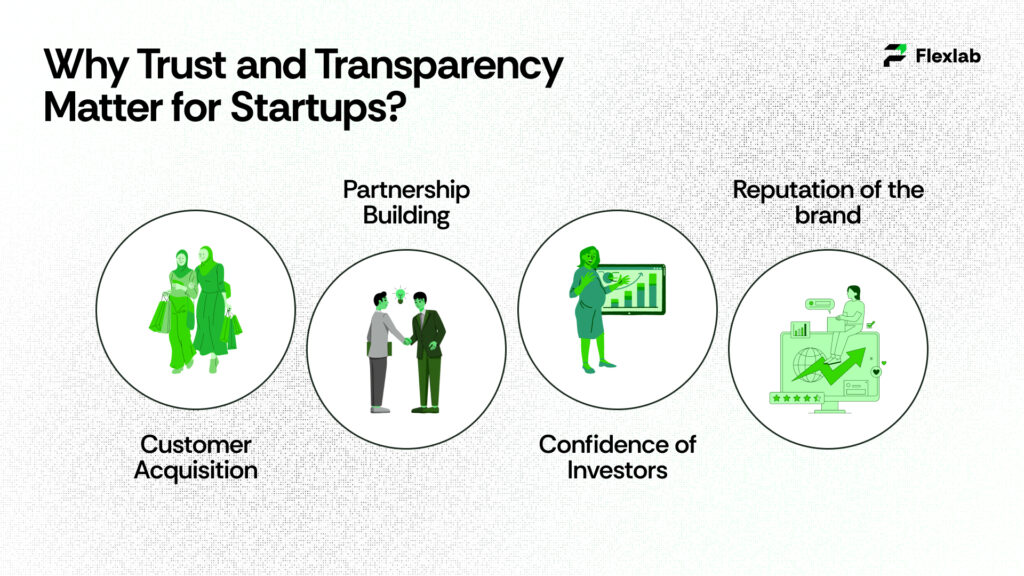
The challenges startups face are uniquely different than the ones faced by big enterprises. Startups are the new players in the market, and due to this, they lack a long track record. Clients, investors, and even stakeholders get skeptical before engaging them. The following are some of the key reasons why trust and transparency are critical for a startup;
- Customer Acquisition: Clients always hesitate to try and spend money on a new brand until they are sure about its authenticity.
- Partnership Building: Businesses try to partner with someone they can trust with their sensitive data.
- Confidence of Investors: Venture capitalists and investors tend to invest in businesses with secure records and clear accountability.
- Reputation of Brand: Trust and transparency build credibility, helping startups compete with big names in the market.
In a nutshell, an honest and reliable startup tends to gain an edge in attracting and retaining stakeholders. Blockchain helps startups build this trust and transparency in multiple ways.
How Blockchain Improves Trust and Transparency for Startups?
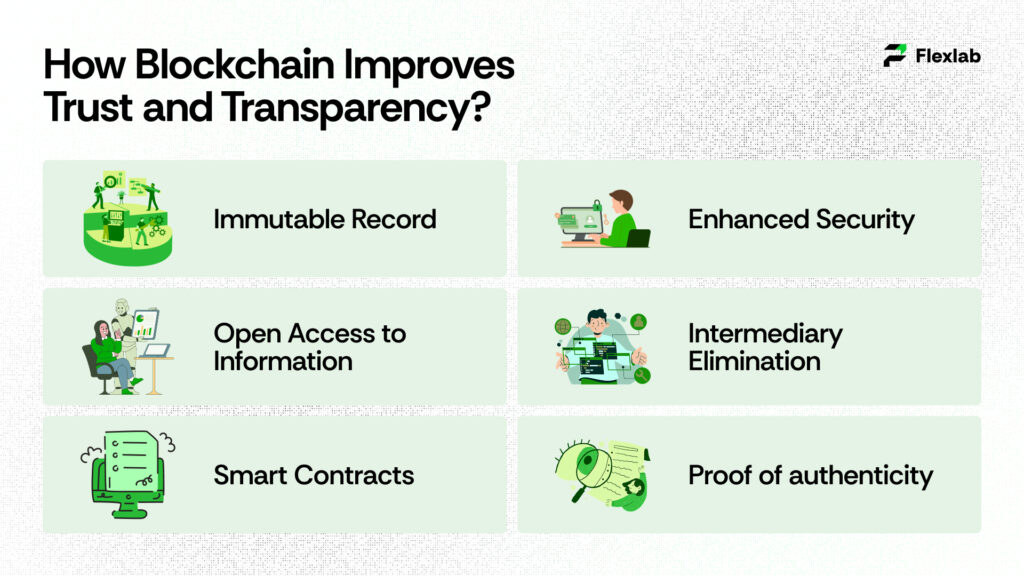
The business world is entering the most revolutionary era, thanks to the blockchain ecosystem. Forward-thinking enterprises, inventors, and investors have integrated blockchain into their business networks. Here are some of the key ways blockchain is improving trust and transparency for startups;
- Immutable Record
- Open Access to Information
- Smart Contracts
- Enhanced Security
- Intermediary Elimination
- Proof of Authenticity
Immutable Record
Blockchain stores and records information in blocks that are permanent and tamper-proof. Once data is recorded, it becomes immutable and cannot be altered or tampered with. Moreover, for startups, blockchain provides transparent financial records, supply chain transparency, and reliable customer interaction logs. As a result, it helps prevent disputes and, at the same time, offers a single, trustworthy source of truth.
Open Access to Information
Blockchain helps startups strengthen their credibility by letting all parties have open access to relevant data. This technology eliminates the need for middlemen. For example, blockchain for supply chain can help provide real-time transparency about product sourcing and delivery. This helps assure customers and participants of quality and authenticity. Additionally, blockchain protocols help startups share secure data across stakeholders and investors, enabling them to demonstrate integrity in operations. This is how blockchain helps startups to stay transparent by giving open access to information to all the partners.
Smart Contracts
Blockchain helps startups gain transparency by leveraging smart contracts, the self-executing digital agreements. Smart contracts automatically execute themselves when predefined conditions are met, eliminating the need for middlemen. With the help of a skilled blockchain developer, startups can get secure and transparent systems that help reduce disputes and delays. When it comes to blockchain for business, startups can make use of smart contracts for vendor payments, licensing agreements, or subjective models. Because the rules and regulations are written in the form of codes, no participant can alter or cancel the deal once agreed upon. This smart contract-based automation helps build confidence among clients, investors, and partners, allowing small businesses to showcase integrity and reliability.
Enhanced Security
In today’s digital era, cybersecurity threats for businesses have tremendously increased. According to a report by IBM, the average global data breach cost has risen to USD 4.88 million this year, directly from last year’s USD 4.45 million. Here comes the blockchain’s cryptographic nature to help make data secure and tamper-proof. With the help of blockchain security, it becomes increasingly difficult for hackers to alter data records. Startups tend to gain more reliability and customer trust when customer data is encrypted and protected. Through blockchain, startups can promise clients’ data integrity and safety. Moreover, the immutable nature of blockchain allows customers, investors, and partners to verify the information in real time. Consequently, this significantly helps reduce the risk of misinformation and fraud.
Intermediary Elimination
Blockchain significantly helps startups gain trust and transparency by eliminating intermediaries and allowing direct peer-to-peer interactions. Conventional systems rely on middlemen, like banks, lawyers, or brokers, to build trust. However, blockchain startups replace these with open, decentralized systems where transactions are verified by consensus. When integrated with IOT devices, blockchain can help collect and validate real-time data, enhancing accuracy and transparency. By cutting out middle layers, startups can help cut costs and showcase fairness, honesty, and reliability. This approach helps startups big time when it comes to winning clients and stakeholders’ trust and confidence.
Proof of Authenticity
Blockchain helps startups win trust and transparency by providing verifiable proof of authenticity of products, data, and services. Through secure blockchain identity management, startups can help validate customer identities securely, helping reduce fraud and ensure regulatory compliance. Resultantly, this helps build trust among customers who know their information is verifiable and protected. With the help of blockchain app development, startups can build platforms that can help track and certify the origin of products, hence providing clients with proof of authenticity.
For example, an art-tech startup can use blockchain to register digital art. This will help prove the artist’s authenticity and protect clients from fraud. Therefore, by providing immutable records and unaltered verification, startups can strengthen their credibility and foster accountability.
Real-World Use Cases of Blockchain in Businesses
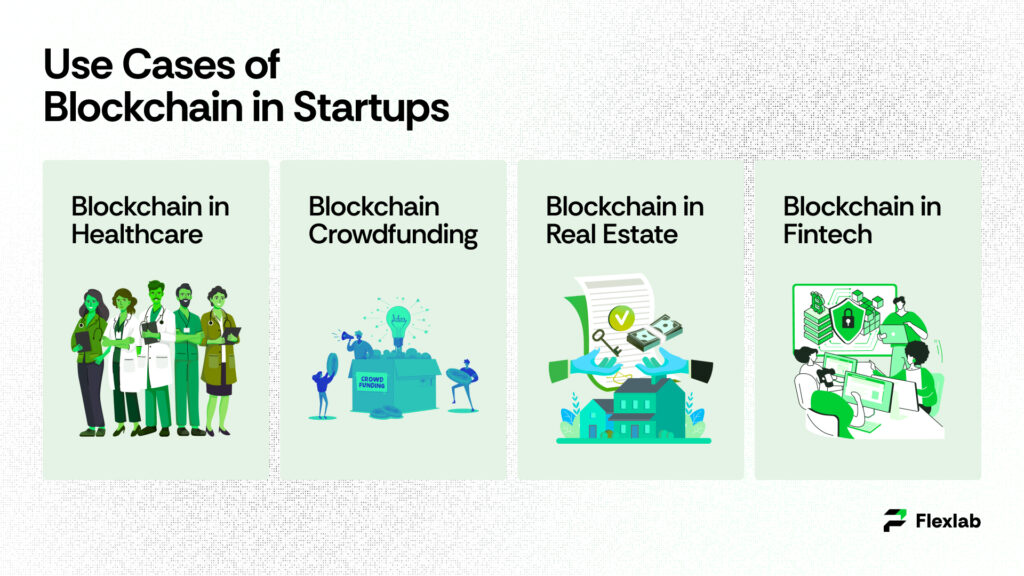
Blockchain technology has significantly evolved beyond its cryptocurrency applications, finding uses across diverse industries. Here are some of the promising use cases of blockchain technology;
-
Blockchain and Healthcare
When it comes to blockchain in healthcare, there are numerous benefits and applications, such as revolutionizing different aspects of data management. One prominent use case of blockchain in healthcare startups is the secure management of patient health records. By integrating blockchain’s immutable and decentralized structure, healthcare organizations ensure the integrity of sensitive patient information. Additionally, new health-tech firms are incorporating blockchain technology to store patient records securely. Resultantly, this creates trust between patients, their caregivers, and healthcare professionals. This approach ensures data privacy, yet the information is accessible to authorized people, like family and healthcare providers.
-
Blockchain Crowdfunding
Blockchain technology reshapes crowdfunding by ensuring transparency, security, and trust between startups and investors. In other words, platforms enable startups to raise capital transparently. Through smart contracts, funds are automatically released when predefined conditions are fulfilled, helping reduce fraud and misuse. Through immutable ledger technology, contributors can see where their money is going, fostering accountability. By eliminating intermediaries, blockchain technology enables global participation, and it also helps cut costs.
-
Blockchain in Real Estate
It has proved to be a transformative force in the real estate industry. Blockchain in real estate has gained significant attention not only from individual property builders and real estate dealers, but also from government bodies seeking to optimize real estate ecosystems. Additionally, blockchain’s application in real estate helps streamline transactions by offering tamper-proof property records and smart contract automation. Therefore, startups can leverage blockchain technology to offer secure and verifiable proof of ownership, ensuring trust and transparency in real estate dealings.
-
Blockchain in Fintech
Blockchain has reshaped the fintech sector with promising enhancements across various financial domains. Moreover, by integrating blockchain technology, fintech platforms can offer more secure, faster, and cheaper payment systems. As a result, customers gain greater confidence in the ongoing digital transformation.
Benefits of Blockchain Beyond Trust and Transparency
No doubt, trust and transparency top the list when it comes to blockchain benefits. However, blockchain technology offers way more business benefits than these.
- Reduced Costs: By eliminating the need for middlemen and intermediaries, blockchain helps businesses significantly cut costs.
- Increased Operational Efficiency: By supporting automated processes, blockchain helps avoid delays, increasing operational efficiency.
- Global Reach: Blockchain technology has made cross-border transactions way easier and safer.
- Innovation Edge: Early blockchain adopters position themselves as reliable and forward-thinking businesses.
Potential Blockchain Challenges Startups Face
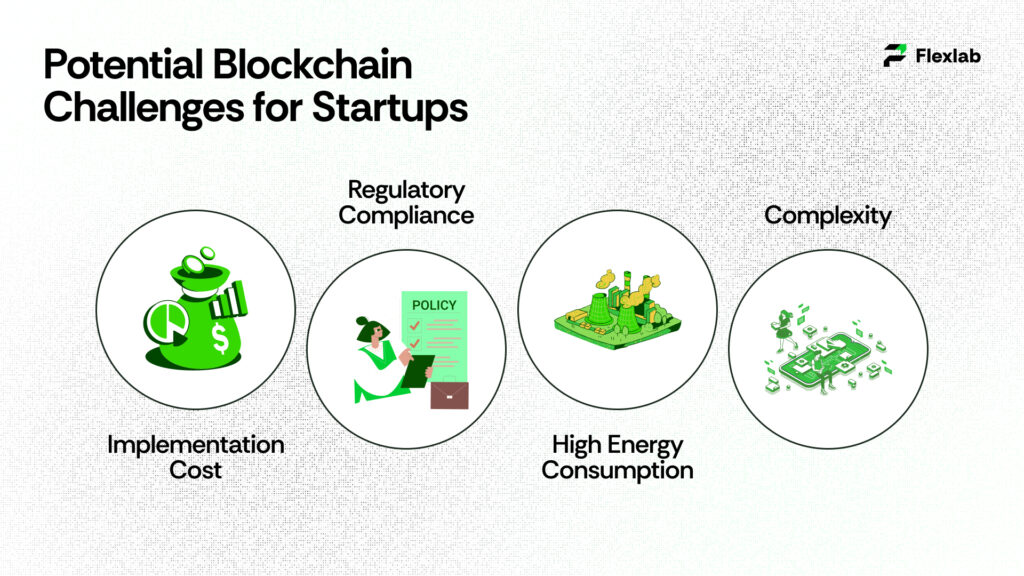
Along with extraordinary benefits, startups have to come across potential challenges while incorporating blockchain into their systems. The following are some of the challenges;
- Implementation Cost: For startups, developing blockchain solutions initially can get really expensive.
- Regulatory Compliance Challenges: The regulatory landscape around blockchain constantly evolves and varies significantly from one jurisdiction to another.
- High Energy Consumption: Some blockchain models consume a significant amount of energy.
- Complexity: Implementing blockchain technology is tough. It needs a deep understanding of distributed systems, cryptographic principles, and consensus mechanisms.
Despite all these challenges, the long-term trust and credibility advantages often outweigh the challenges.
Practical Ways Startups Can Integrate Blockchain
Here are some impactful strategies startups can use to implement blockchain for their operations;
- Tokenization of Assets: Startups can convert equity, property, or intellectual assets into digital tokens to attract investors to make transparent investments
- Identity Verification: Startups can use blockchain technology to authenticate user information, reducing the risk of fraudulent activities.
- Loyalty Programs: Startups can issue blockchain and token-based rewards that are immutable and redeemable across different platforms.
- Certificate of Authentication: Startups should prove the authenticity of their products and credentials with blockchain-powered certificates.
Conclusion: Blockchain Improving Startups
In a world where consumers demand authenticity, investors need transparency, and partners require reliability, blockchain provides extraordinary solutions. Through its ability to provide immutable records, secure data, and open verification, blockchain helps startups stand out in the competitive market.
Though blockchain implementation comes with challenges, the benefits outweigh them. Startups that embrace blockchain technology early not only improve their trust but also position themselves as leaders of the future digital world.
In simple terminology, blockchain is a staircase that startups need to climb to reach next-level scalability and success.
Want a Trusted Company for Blockchain Development?

If you are a startup looking for a trusted blockchain application development company, Felxlab has got you sorted. Whether you are a startup or a big enterprise, our team of experts builds scalable, secure, and future-ready blockchain solutions tailored to your unique business needs. From smart contracts to tokenizing your assets or decentralized application (dApp) development, Flexlab helps bring your digital vision to life. Our team of dedicated software developers helps you save up to 80% of costs while delivering you a new product within 30 days. Or we work for free until we do. Visit our portfolio and contact us today to unlock the power of trust, transparency, and innovation.
To have detailed insights into different topics like AI in digital marketing, multi-agent systems, and blockchain and IoT, visit our blog page.
Ready to Launch Your Blockchain Project?
📞 Book a FREE Consultation Call: +1 (416) 477-9616
📧 Email us: info@flexlab.io
Does ChatGPT use blockchain?
No, ChatGPT does not use blockchain. It operates and functions on cloud-based AI models developed and maintained by OpenAI. Blockchain and AI can complement each other in various applications. ChatGPT itself is not built on blockchain technology.
What Currency does blockchain use?
Blockchain itself does not have a single currency: it’s the underlying technology. Different blockchain types use different currencies, such as Bitcoin (BTC) on the Bitcoin platform or Ether (ETH) on Ethereum. Some types of blockchain also enable custom tokens and stablecoins.
Can we use Python for blockchain?
Yes, Python can be used for blockchain development purposes. Its simplicity, extensive libraries, and flexibility make it ideal for developing smart contracts, creating decentralized apps, or establishing blockchain prototypes. Many developers use Python to test, deploy, and scale blockchain solutions efficiently.






















One Response
Cool blog.