
How AI-Powered Chatbots Are Transforming Healthcare Services in 2025?
AI Automation Tools | AI in Digital Marketing | AI Business Ideas
Healthcare has always been about human connection, but in today’s fast-paced world, that connection is often lost. Long wait times, staff shortages, and unnecessary administrative burdens make it harder for patients to access timely care and for providers to deliver it efficiently.
By blending technology with empathy, AI chatbots for healthcare are changing the entire game. They are helping healthcare organizations provide smarter, faster, and more accessible care experiences. From managing patient inquiries to automating routine workflows, these intelligent assistants are drastically reshaping how care is delivered, accessed, and experienced.
As healthcare systems worldwide embrace digital transformation, conversational AI chatbots are emerging as a vital bridge that connects patients, providers, and technology with precision and compassion. Let’s explore how these AI-powered chatbots are transforming the healthcare industry and redefining patient support.
What Are AI-Powered Chatbots?
AI-powered chatbots are intelligent virtual assistants that use artificial intelligence (AI), machine learning (ML), and natural language processing (NLP) to simulate human-like conversations. They understand context, learn from interactions, and respond in real-time, providing a natural, engaging experience.
AI-driven chatbots continuously adapt and improve with every conversation. Moreover, they can interpret tone, intent, and user behavior, therefore making their responses more relevant and empathetic over time.
In healthcare, these chatbots are more than just digital helpers; they are proactive companions. They can answer patient questions, schedule appointments, send personalized reminders, and even support chronic disease management. When linked to Electronic Health Records (EHRs) or integrated with patient engagement software, they provide data-driven, personalized insights that help to improve both accuracy and patient satisfaction.
For hospitals and clinics, this means reduced administrative workload and improved operational efficiency. Meanwhile, for patients, it means faster access to treatment and care, anytime, anywhere. In fact, with over 60% of healthcare organizations already deploying AI chatbots, their impact is no longer futuristic; instead, it’s happening now, actively transforming how healthcare connects with people.
AI Chatbots in Healthcare: An Overview
In the medical industry, AI applications such as conversational AI in healthcare enable continuous, secure, and efficient communication between patients and healthcare providers. For instance, A patient can ask a virtual health assistant about symptoms and receive instant guidance.
Hospitals can use AI in telemedicine to automate follow-up messages or reminders. Clinics can employ AI chatbots to simplify the billing process, evaluation, and data entry.
By integrating NLP techniques and data collection processes, these bots can deliver accurate insights while maintaining HIPAA compliance certification standards for data privacy.
Key Roles of AI-Powered Chatbots in Healthcare
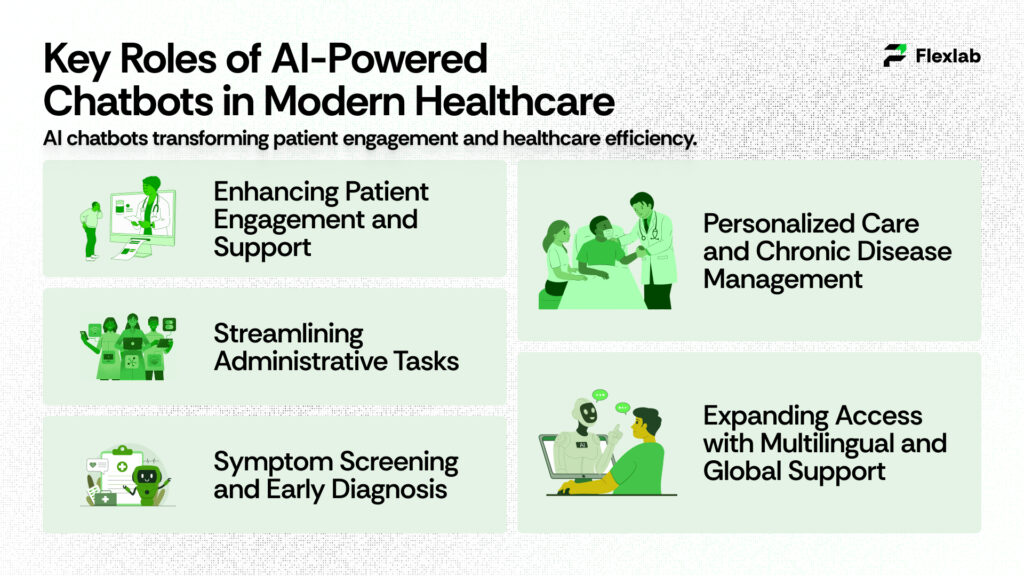
AI chatbots in healthcare play a crucial role in improving communication, optimizing workflows, and supporting clinical efficiency.
1. Enhancing Patient Engagement and Support
Chatbots serve as 24/7 assistants, answering questions, sharing health education, and offering reminders. For example, symptom checkers like Ada use AI to analyze patient input and suggest next steps, while CBT-based bots like Woebot provide emotional support and mindfulness exercises.
2. Streamlining Administrative Tasks
AI chatbots can reduce administrative strain while also enhancing patient satisfaction by automating appointment scheduling, insurance verification, and billing queries.
3. Symptom Screening and Preliminary Diagnosis
With the help of AI and NLP, chatbots can quickly analyze symptoms, assess urgency, and guide patients to the right care. This was especially useful during health crises such as COVID-19, when timely digital screening helped reduce hospital overload.
4. Personalized Care and Chronic Disease Management
These intelligent virtual assistants can send medication reminders and furthermore, monitor vital signs through wearable integrations. In addition, they assist in chronic disease management, such as diabetes or heart conditions.
5. Multilingual and Global Accessibility
By supporting multiple languages, AI chatbots make healthcare communication more inclusive, especially in underserved or rural areas. They help patients express their concerns in the language they are most comfortable with, breaking down barriers that often create trouble between people and proper care.
Benefits of AI-Powered Chatbots in Healthcare
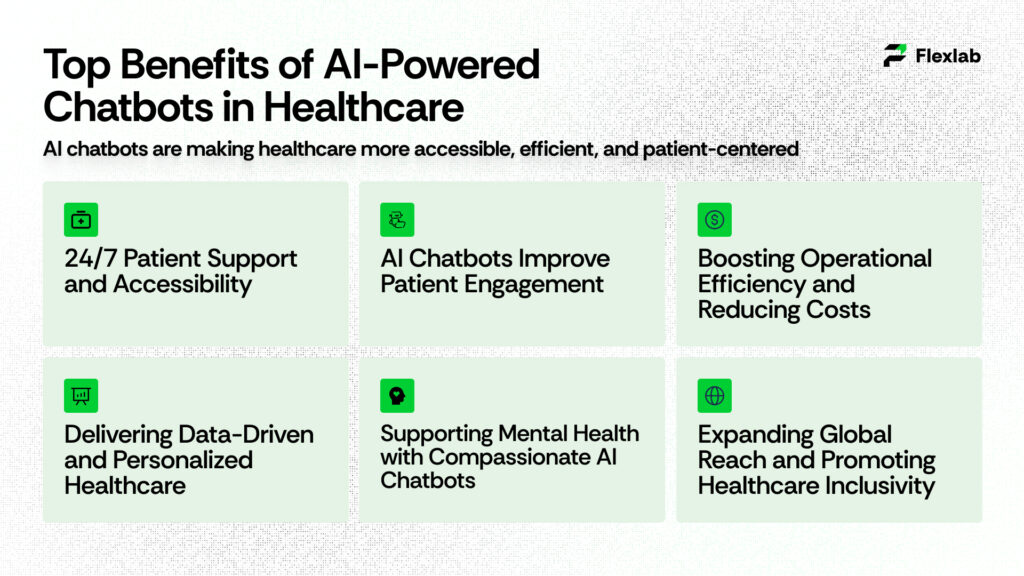
The integration of AI-powered chatbots is quietly transforming the healthcare landscape, not by replacing human care but by making it more accessible, efficient, and personal. These intelligent systems, often referred to as conversational agents, are helping patients feel more connected and supported, while freeing healthcare professionals to focus on what truly matters: healing and human connection. Let’s explore how AI chatbots are making that possible:
1. 24/7 Patient Support and Accessibility
AI chatbots offer round-the-clock assistance, answering questions, booking appointments, or guiding users in emergencies. This constant availability builds trust and gives patients peace of mind, especially during late-night worries or urgent health concerns.
2. Improved Patient Engagement
Staying consistent with treatment can be hard, but AI chatbots help make it easier. By sending personalized reminders, motivational messages, and progress updates, they encourage patients to stay on track with medications or follow-ups. As a result, this consistent engagement helps foster healthier habits and ultimately build a stronger sense of accountability.
3. Operational Efficiency and Cost Savings
AI automation is helping hospitals run smoothly. By handling repetitive administrative tasks such as scheduling, data entry, and follow-up messaging. Chatbots can cut operational costs by up to 30%. This gives doctors and nurses more time to focus on what truly matters, caring for their patients, not chasing paperwork.
4. Data-Driven Personalization
Every patient is unique, and AI chatbots can easily recognize this. By analyzing data from Electronic Health Records (EHRs) and user interactions, they can deliver tailored health advice, track recovery progress, and even flag early warning signs. This makes healthcare more efficient and more personal and preventative.
5. Enhanced Mental Health Support
Mental health care often starts with conversation, and AI chatbots like Woebot and Wysa are making that first step easier. Using techniques from Cognitive Behavioral Therapy (CBT), they provide real-time emotional support, helping users manage stress, anxiety, or loneliness. While they don’t replace therapists, they offer comfort and guidance when it’s needed most.
6. Global Reach and Inclusivity
In a world divided by geography and language, AI chatbots are developed bridges. Multilingual conversational bots facilitate patients to communicate in their preferred language, ensuring no one is left behind due to cultural or linguistic barriers. This inclusivity brings healthcare within reach for people in underserved regions, turning technology into a tool for equity.
Studies show that AI chatbots can handle up to 80% of routine healthcare queries, improving both efficiency and patient satisfaction. Yet their true value lies beyond automation, in how they help patients feel supported and understood.
Now, let’s move from theory to reality. Across the globe, healthcare organizations are already demonstrating how AI chatbots can make care faster, smarter, and more compassionate. Moreover, here are some real-world examples that clearly bring those benefits to life.
Real-World Case Studies: How AI Chatbots Are Transforming Healthcare
Across the world, healthcare organizations are proving that AI-powered chatbots are not just a futuristic idea; they are already making care faster, more personal, and more compassionate. Here are a few inspiring examples that show how technology and empathy can truly work hand in hand.
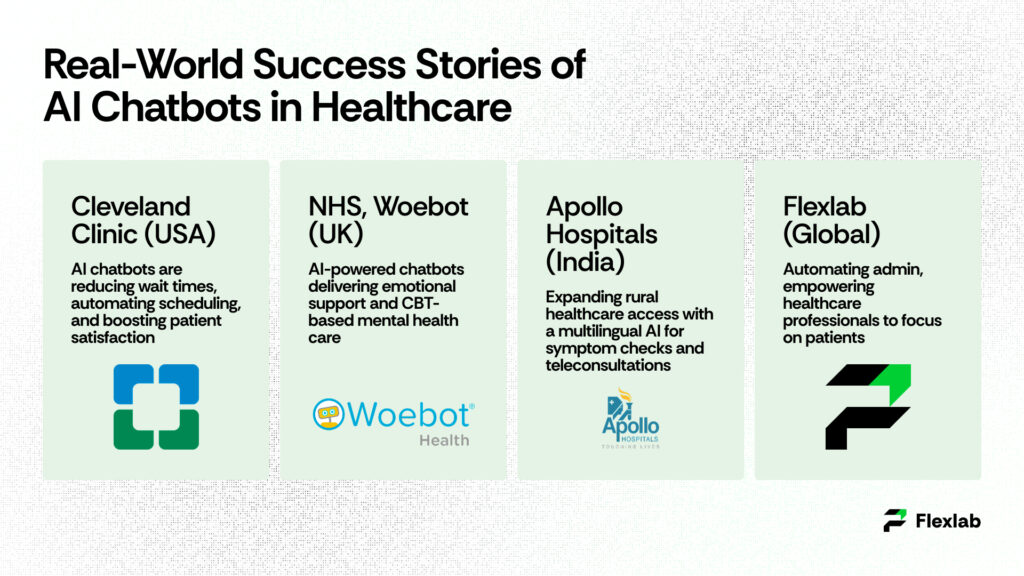
Cleveland Clinic (USA): Reducing Wait Times and Enhancing Efficiency
Challenge:
Cleveland Clinic faced rising patient volumes, long phone queues, and growing administrative pressure. Patients often waited days for appointment confirmations and basic queries.
Solution:
The hospital integrated an AI-powered chatbot into its patient portal to handle appointment scheduling, FAQs, and care navigation. As a result, the system responded instantly to inquiries and also guided patients to the right specialists with greater efficiency.
Impact:
Within six months, call center volume dropped by 32%, and appointment scheduling time fell from days to just five minutes. Patient satisfaction improved by 18%, and staff reported more time for direct patient care.
Patient Perspective:
A patient shared, “It felt like someone finally respected my time. In fact, I got the answers I needed in minutes instead of waiting on hold, which ultimately made the whole experience much easier.”
NHS (United Kingdom): Supporting Mental Health Through Woebot
Challenge:
Mental health support lines across the UK were overwhelmed, leaving many patients waiting weeks to speak to a counselor.
Solution:
The National Health Service (NHS) introduced Woebot, an AI chatbot based on Cognitive Behavioral Therapy (CBT). Through this innovation, users gained a safe and private space to express their feelings, while also tracking their moods and practicing mindfulness exercises between therapy sessions.
Impact:
After just two weeks, over 70% of users reported feeling emotionally supported and better equipped to manage anxiety. Moreover, therapists found that patients who used Woebot between appointments showed both stronger engagement and faster progress.
Patient Perspective:
One user said, “It’s not just a chatbot; it’s like a little companion that listens when I need to talk. Even so, those small conversations consistently helped me feel calmer and less alone.”
Apollo Hospitals (India): Bringing Healthcare to Rural Communities
Challenge:
In rural India, many patients struggled to access doctors or basic health advice. Long travel distances and high costs made care difficult, especially for minor health issues.
Solution:
Apollo Hospitals launched AskApollo, a multilingual AI chatbot available on WhatsApp and their website. Through this platform, patients could describe symptoms in regional languages, thereby receiving preliminary guidance and quickly connecting to teleconsultations.
Impact:
Within the first year, AskApollo handled over 500,000 patient interactions, with 40% coming from underserved regions. It became a lifeline for those who previously had little to no access to medical support.
Patient Perspective:
A patient from a rural community shared, “When the chatbot spoke my local language, I finally felt comfortable explaining my health problems. As a result, for the first time, I received advice I could truly understand, and consequently, it gave me the confidence to seek proper care.”
Flexlab: Empowering Care Through AI Innovation
At Flexlab, our AI chatbot solutions don’t just help patients; they support the people behind the care. By automating repetitive administrative tasks and simplifying communication, our system gave nurses and care teams the space to focus on what truly matters, their patients.
Instead of feeling burdened by endless paperwork and scheduling, nurses felt more supported, less stressed, and more present in every interaction. Doctors, too, reported faster data access and smoother coordination, leading to quicker, more confident decision-making.
Technology may drive the future of healthcare, but compassion will always define it, and that’s the heart of what we build at Flexlab.
These real stories show how AI chatbots can help restore human connection in healthcare, not by replacing care providers, but by giving them more time to do what truly matters: listening, understanding, and healing.
Yet, as these systems become more advanced and widespread, they also raise important questions about privacy, ethics, and emotional sensitivity. Let’s explore some of the key challenges that healthcare organizations must navigate to ensure AI-driven care remains both responsible and compassionate.
Challenges and Ethical Considerations
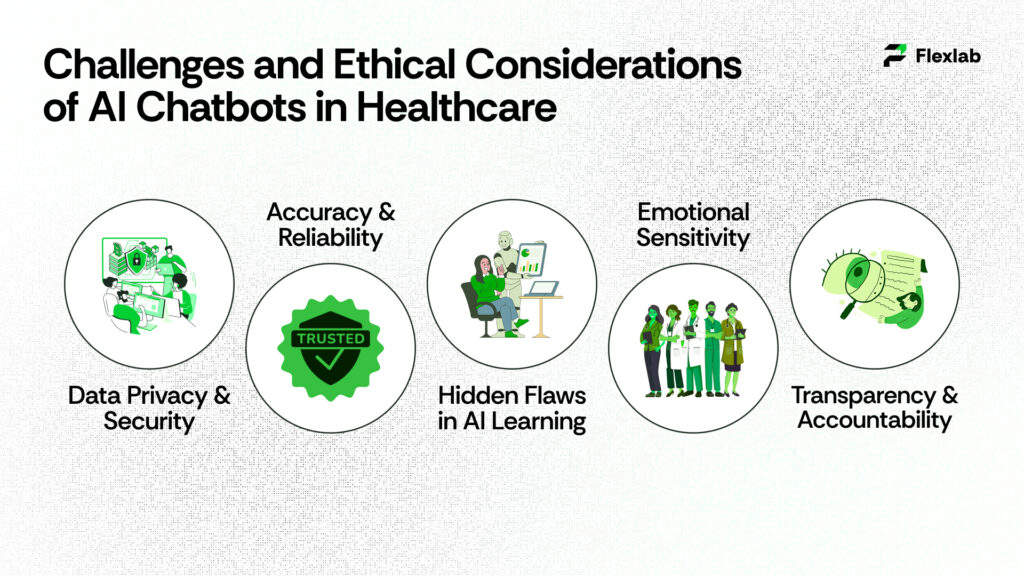
While AI chatbots in healthcare offer remarkable potential, they also bring a set of ethical and operational challenges that can’t be overlooked. Healthcare is totally a human attribute; it involves trust, empathy, and responsibility. Integrating intelligent virtual assistants into that space requires careful balance. Let’s take a look at influential considerations shaping this evolving field.
1. Data Privacy & Security
Every patient interaction involves sensitive personal data. When AI chatbots collect and process that information, they ensure HIPAA compliance, employ strong encryption, and handle data securely. Even a small breach can shatter trust instantly. Patients need to know that their health information is safe, private, and will not be misused.
2. Accuracy & Reliability
AI chatbots can smartly guide patients, but they should never replace qualified medical professionals. While they are excellent for initial screening and general support, diagnosis can be risky when relying solely on them. The best approach is collaboration, where chatbots handle general routine tasks while doctors focus on the more complex ones. Ultimately, it’s not AI versus humans; rather, it’s AI working with humans.
3. Hidden Flaws in AI Learning
AI learns from human data, and that means it can also reflect our imperfections. If the data used to train these systems is not diverse or balanced, the chatbot’s advice might unintentionally favor certain groups over others. Building fairness into AI is not just a technical task; it’s a human responsibility to ensure every patient receives equal care, regardless of their background.
4. Emotional Sensitivity
AI has become remarkably advanced, but empathy is not easy to program. Chatbots may struggle to respond with warmth or understanding in moments of emotional distress, for instance, when a patient shares feelings of fear or grief. That’s why a human-in-the-loop approach is so important. Combining AI’s efficiency with human compassion ensures care that’s both intelligent and deeply human.
5. Transparency & Accountability
Patients deserve to know when they are interacting with an AI system and how their information is being used. Clear communication, informed consent, and transparent data policies build trust and credibility. When chatbots are explainable and accountable, patients feel more confident, not only in the technology but in the people behind it.
As AI in healthcare continues to evolve, addressing these challenges is not just a technical necessity; it’s a moral one. After all, the goal of innovation in healthcare is not just smarter systems; it’s more human care.
While AI chatbots are steadily reshaping how patients interact with healthcare, their evolution is far from over. Every year brings smarter, more empathetic, and deeply integrated systems designed to make healthcare faster and more accessible. Furthermore, to see where the future is headed, let’s explore some emerging AI health bots that are already transforming care in 2026.
Emerging Chatbots in Healthcare for 2026
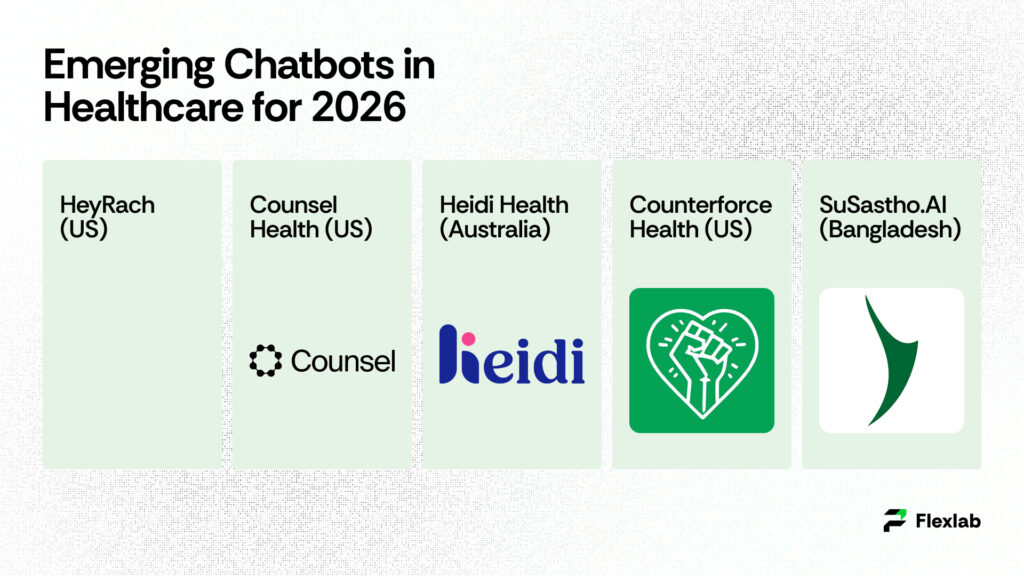
Healthcare is not just getting smarter, it’s becoming more personal. The next generation of AI chatbots in healthcare is not here to replace doctors, but to make care more accessible, empathetic, and proactive. From wellness support to administrative help, these emerging AI tools are transforming how we experience healthcare every day. Here are five rising health bots leading the change in 2026:
| Chatbot Name | Country / Origin | Key Features | Best For |
| HeyRach | United States | A wellness-focused AI companion offering personalized lifestyle tips, emotional check-ins, and guided meditation support. Works seamlessly with wearables. | Everyday wellness and preventive care |
| Counsel Health | United States | Combines AI chat with instant telehealth connections for real-time medical advice and doctor consultations. | Quick medical assistance |
| Heidi Health | Australia | Uses AI to turn doctor-patient conversations into structured notes, reducing paperwork and saving valuable time. | Clinics and healthcare providers |
| Counterforce Health | United States | Helps patients and hospitals appeal insurance denials through automated AI workflows, easing financial stress. | Medical billing and patient advocacy |
| SuSastho.AI | Bangladesh | A multilingual chatbot offering free, local health guidance, bringing healthcare access to remote and underserved regions. | Public health and inclusivity |
As these tools evolve, one thing is clear: the future of healthcare will be built on conversations, not just on consultations.
The Future of AI-Powered Chatbots in Healthcare
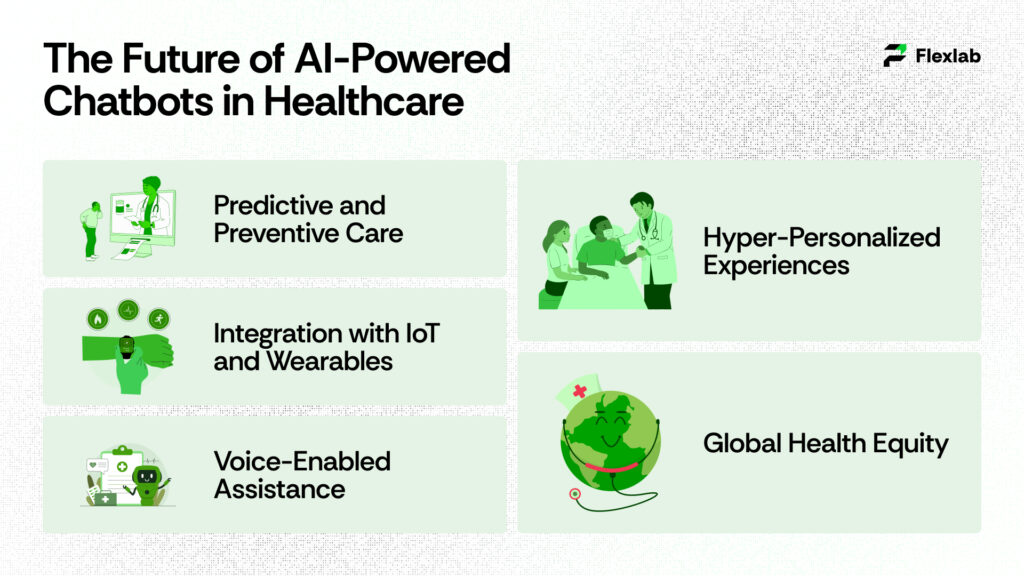
The future of AI in healthcare is about more compassionate care with smarter technology. As healthcare becomes increasingly digital, AI agents will evolve into trusted companions that provide more personalized, predictive, and accessible medical support for everyone.
1. Predictive and Preventive Care
Imagine getting a health alert before symptoms even appear. Soon, AI chatbots will be able to analyze real-time data from your devices to detect early warning signs and suggest preventive actions, shifting healthcare from treating illness to maintaining wellness. Integrated with patient management systems, these intelligent tools will ensure seamless coordination between patient data, treatment plans, and medical teams.
2. Integration with IoT and Wearables
AI chatbots will sync with wearable devices and smart health devices to monitor vital signs, including heart rate, sleep patterns, and blood pressure. This integration means faster insights, real-time alerts, and a deeper understanding of patients’ overall well-being.
3. Voice-Enabled Assistance
As speech recognition technology continues to advance, chatbots will become hands-free health companions. This will make healthcare more inclusive, especially for seniors, visually impaired users, or anyone who prefers speaking to typing.
4. Hyper-Personalized Experiences
Future chatbots will go beyond answering questions. They will remember your health goals, preferences, and medical history to deliver advice that feels truly personal, almost as if talking to a digital health coach who knows you.
5. Global Health Equity
Perhaps the most powerful change lies in access. In fact, multilingual, AI-powered chatbots can help bridge healthcare gaps by guiding patients in their own language. As a result, quality care becomes available even in the most remote corners of the world.
Flexlab, Empowering the Next Generation of Chatbots in Healthcare
At Flexlab, we believe technology should amplify human care, not replace it. We empower healthcare providers with AI-driven solutions that combine innovation, empathy, and security. Moreover, from smart chatbots and automated workflows to virtual assistants that support real-time patient interactions, our HIPAA-compliant AI systems help deliver care that’s faster, smarter, and ultimately more connected.
As pioneers in healthcare automation, we are dedicated to transforming operations and improving patient experiences through intelligent, human-centered design. Partner with Flexlab, your trusted associate in digital health transformation, and discover how AI can empower your organization to work more efficiently while keeping compassion at the core of every interaction. So, are you ready to transform your healthcare operations with AI? Contact us today to bring your vision to life.
Ready to Grow Your Business?
📞 Book a FREE Consultation Call: +1 (416) 477-9616
📧 Email us: info@flexlab.io
Explore our portfolio and see how our services are transforming the future of healthcare. Stay connected on LinkedIn for real stories, fresh ideas, and insights that inspire change. Let’s bring your vision to life, reach out to our team today, and experience how innovation and compassion come together to make a difference.
Looking for inspiration?
Read our latest blog posts for expert insights and thoughtful perspectives on the future of care.
Final Thoughts on AI-Powered Chatbots in Healthcare
AI-powered chatbots are redefining how we experience healthcare, making it more connected, responsive, and personal. By blending intelligent automation with a human touch, they help providers deliver care that’s available anytime, anywhere. Patients get faster answers, smoother experiences, and more compassionate support. But as this technology grows, the focus must remain on trust and responsibility. Protecting patient data, maintaining transparency, and ensuring empathy guide every interaction is key. When designed thoughtfully, AI chatbots won’t just enhance healthcare; they will help restore what matters most: genuine human connection in every conversation.
Can AI chatbots replace doctors in the future?
No, AI chatbots are designed to support, not replace, healthcare professionals. While they can handle administrative tasks, symptom checks, and basic health education, they lack the human judgment and empathy required for complex medical decisions. In the future, chatbots will continue to act as valuable assistants that enhance doctors’ efficiency and improve patient access, rather than replacing medical expertise.
How can hospitals ensure ethical use of AI chatbots?
Hospitals can promote ethical AI use by first implementing strict data privacy measures and by also ensuring transparency in how chatbots handle patient information. Furthermore, maintaining human oversight in decision-making processes is crucial. In addition, regular audits, diverse training datasets, and compliance with regulations such as HIPAA or GDPR are essential for maintaining patient trust and ultimately preventing bias.
Are AI chatbots effective in rural or low-resource healthcare settings?
Yes, AI chatbots can make a significant impact in rural or underserved areas where access to healthcare professionals is limited. They can provide basic medical guidance, health education, and triage support in multiple languages, often through simple mobile devices. This helps bridge the healthcare accessibility gap and ensures that crucial medical information reaches everyone, regardless of location or income.





























3 Responses
Thank you for your sharing. I am worried that I lack creative ideas. It is your article that makes me full of hope. Thank you. But, I have a question, can you help me? https://www.binance.com/fr-AF/register?ref=JHQQKNKN
Practical advice that I can actually use. Thank you!