
Common Challenges in Smart Contract Development for Beginners
Blockchain Trends | Private Blockchain Development | Blockchain Database
Curious to learn about how smart contract development automates agreements, eliminates slow approvals, and removes costly intermediaries, boosting efficiency and trust in business operations.
In 2025, over $15 billion is locked in decentralized finance (DeFi) platforms, while applications such as non-fungible tokens (NFTs) and asset tokenization are transforming industries. Yet many organizations still rely on inefficient, manual processes that drain resources and slow growth.
This beginner-friendly guide covers what smart contracts are and how they operate. Moreover, it explains how smart contract development helps enterprises reduce costs, enhance security, and scale applications in DeFi, NFTs, and automated business operations across the digital economy.
Understanding Smart Contracts: Automating Blockchain Transactions
A smart contract is a self-executing program stored on a blockchain that automates agreements and transactions once pre-defined conditions are met. Think of it as a vending machine: you insert a coin, it verifies payment, and delivers your product, no human intervention required. Similarly, smart contracts verify, execute, and record transactions automatically, ensuring accuracy, trust, and efficiency.
Key Business Advantages of Smart Contracts
- Transparency: All actions are recorded on the blockchain, making auditing and tracking effortless.
- Immutability: Once deployed, contracts cannot be altered, guaranteeing integrity and reducing disputes.
- Automation: Manual approvals and intermediaries are eliminated, streamlining workflows and lowering costs.
- Security: Advanced cryptographic protocols protect digital assets and sensitive information.
- Scalability: Businesses can integrate smart contracts into existing systems and seamlessly expand operations.
Consequently, a DeFi lending platform can automatically execute loans and repayments, while NFT marketplaces enforce ownership transfers and royalties without manual intervention.
Why Smart Contracts Are Critical for Businesses
In today’s fast-paced digital economy, inefficiencies, delays, and reliance on intermediaries can cost businesses time, money, and trust. By leveraging smart contract development in decentralized finance (DeFi) and other blockchain applications, companies can overcome these obstacles. As a result, they can execute agreements, manage assets, and automate processes securely and efficiently.
Top advantages for enterprises include:
- Trustless Operations: Code enforces agreements automatically, reducing human error and ensuring reliability.
- Cost Reduction: Avoid fees paid to banks, lawyers, or brokers by automating transactions and approvals.
- Automation & Speed: Transactions execute instantly when pre-defined conditions are met, accelerating workflows and improving service delivery.
- Auditability: Every action is recorded on the blockchain, providing a verifiable, tamper-proof trail for compliance and reporting. As a result, organizations can maintain transparency and meet regulatory requirements with confidence.
- Global Reach: Operate seamlessly across borders, interacting with clients, vendors, and partners without intermediaries.
Accordingly, a DeFi platform can automate lending, borrowing, and token swaps, while NFT marketplaces automatically enforce ownership transfers and royalties, without manual intervention.
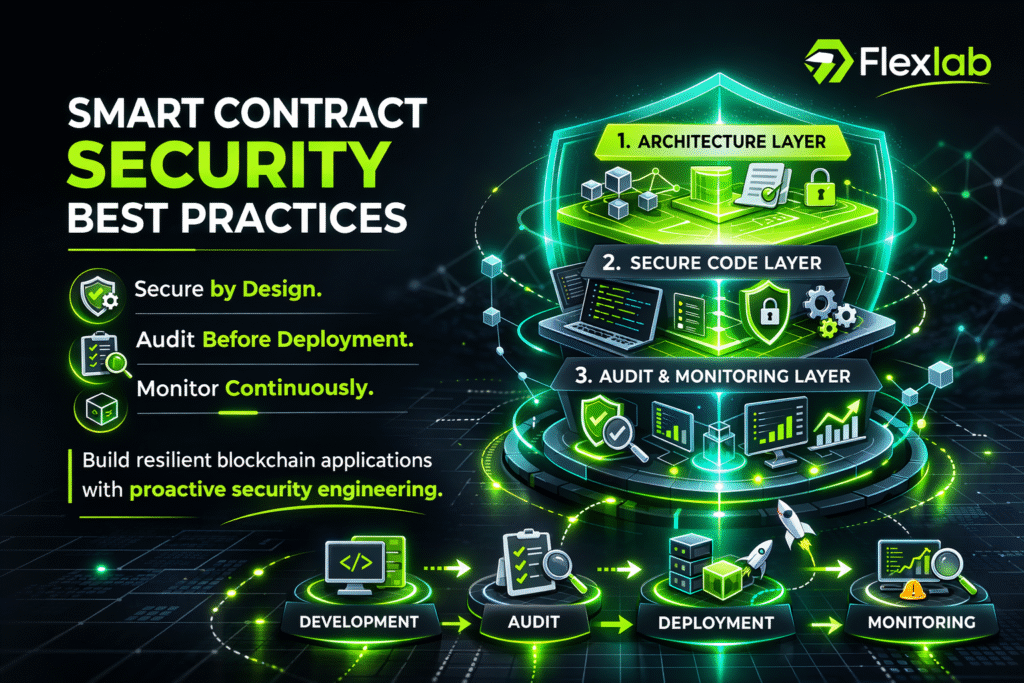
The Smart Contract Development Lifecycle (SCDLC)
Implementing smart contracts successfully requires a structured approach to ensure security, efficiency, and alignment with business objectives.
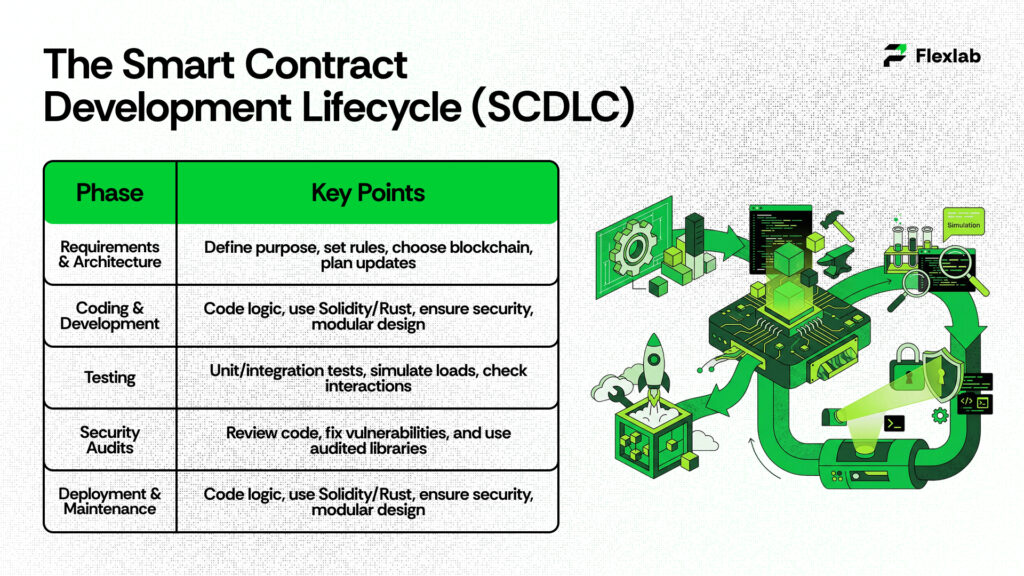
1. Requirements & Architecture
Define the contract’s purpose, IF/THEN conditions, blockchain platform (Ethereum, Solana, Polygon), and plan for upgrades with proxy patterns.
2. Coding & Initial Development
Ensure smart contract security by writing robust Solidity or Rust code and applying cryptographic techniques. Additionally, follow modular design principles to make your contracts maintainable and reusable. Finally, leverage audited libraries such as OpenZeppelin to enhance security and reliability.
3. Rigorous Testing
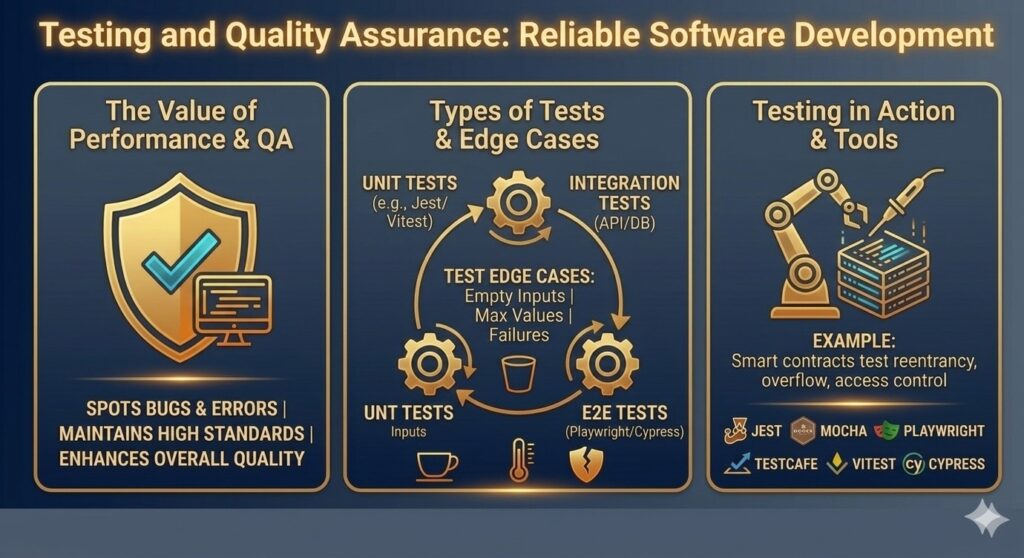
Ensure thorough testing by conducting unit and integration tests. Additionally, simulate high loads and edge cases to identify potential weaknesses. Finally, verify interactions with wallets and APIs to confirm seamless functionality and reliability.
4. Security Audits
It is essential to engage professional security audits to identify potential vulnerabilities. For example, audits can uncover issues such as reentrancy attacks, access control flaws, and integer overflows, helping ensure the safety and reliability of smart contracts.
5. Deployment & Maintenance
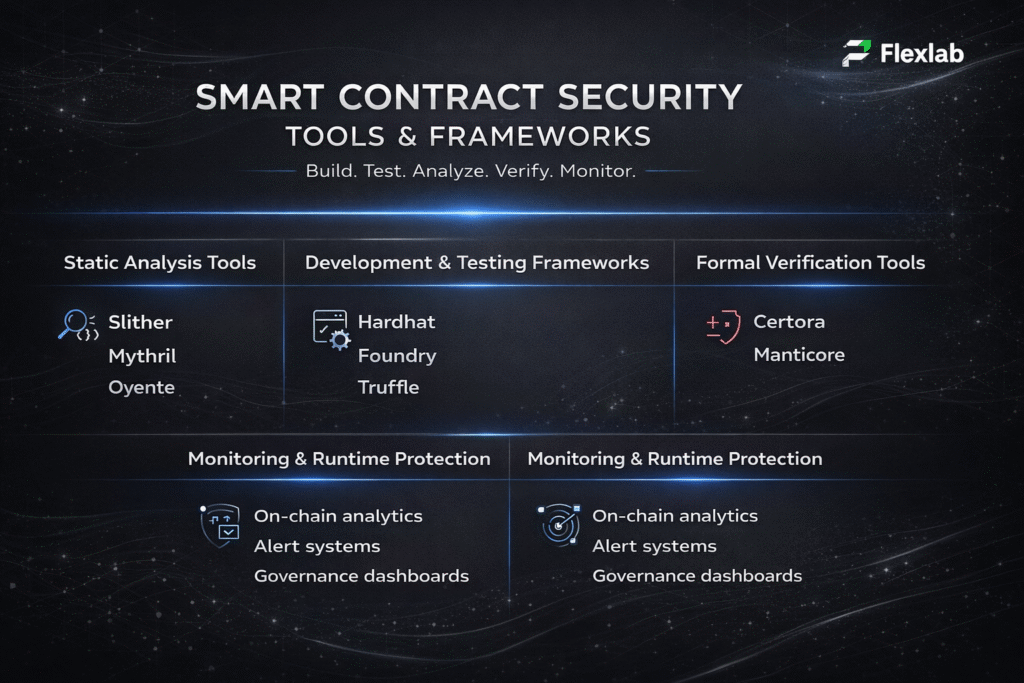
Deploy smart contracts using deployment tools like Hardhat, Truffle, and MetaMask on testnets before moving to the mainnet. Additionally, continuously monitor contracts to ensure they perform as expected and remain secure.
Ultimately, following this lifecycle ensures that smart contract platforms deliver secure, efficient, and scalable solutions, providing businesses with reliable automation and reducing operational risk.
Tools That Simplify Smart Contract Development
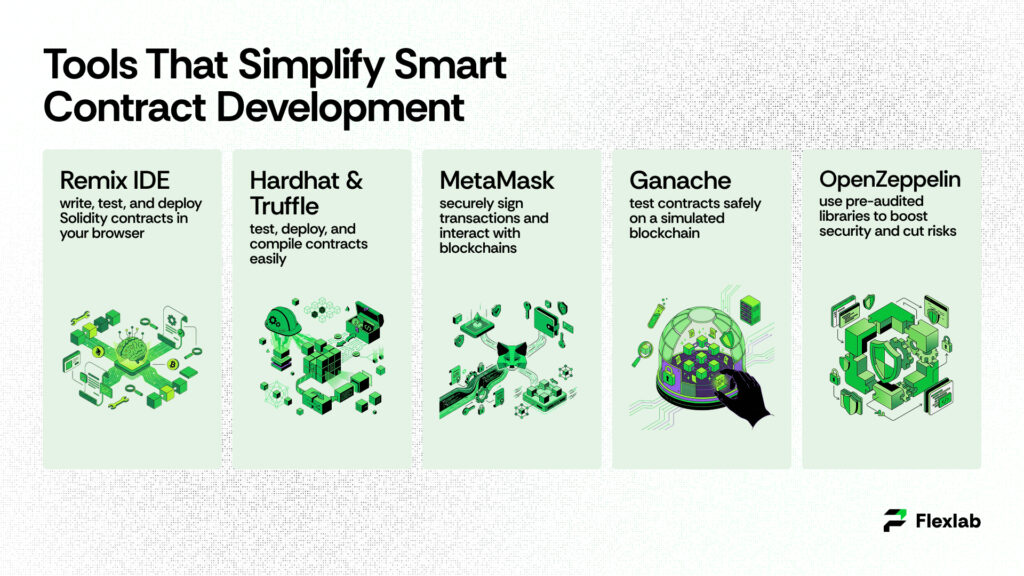
Implementing smart contract development efficiently requires the right set of tools. These tools streamline coding, testing, deployment, and security, allowing businesses to focus on strategy while ensuring contracts perform flawlessly.
1. Remix IDE
Remix IDE is a browser-based, beginner-friendly environment ideal for writing, testing, and deploying digital contracts.
Moreover, it allows users to experiment with Solidity code without a complex setup. As a result, businesses exploring blockchain technology can accelerate prototyping and streamline early-stage development. Overall, Remix simplifies initial experimentation and reduces the barrier to adopting smart contract development.
2. Hardhat & Truffle
Hardhat and Truffle are robust frameworks that support local blockchain testing, automated deployment, and smart contract compilation. Hardhat’s plugin ecosystem and debugging tools allow developers to simulate real-world conditions, while Truffle’s suite simplifies contract migration and integration testing. Together, these frameworks ensure that contracts are production-ready and compatible with blockchain networks.
3. MetaMask
MetaMask is a widely used crypto wallet that connects smart contracts to end users. In addition, it enables secure transaction signing and allows developers to test smart contracts within real-world workflows. Furthermore, its multi-chain support makes it ideal for DeFi platforms and NFT applications. As a result, MetaMask plays a critical role in bridging blockchain technology with practical user experiences.
4. Ganache
Ganache provides a simulated private blockchain environment. It allows developers to test contracts safely before public deployment. It supports transaction simulation, account management, and state inspection, minimizing risk when scaling operations.
5. OpenZeppelin
OpenZeppelin provides pre-audited, reusable libraries for tokens, governance, access control, and upgradable contracts. By leveraging these libraries, businesses can enhance smart contract security and ensure compliance with industry standards.
In short, these tools simplify smart contract development, minimize potential errors, and save time. Consequently, businesses can focus on strategic growth while ensuring that all technical aspects—from coding to deployment—remain secure, scalable, and reliable.
Essential Smart Contract Security Practices for Businesses
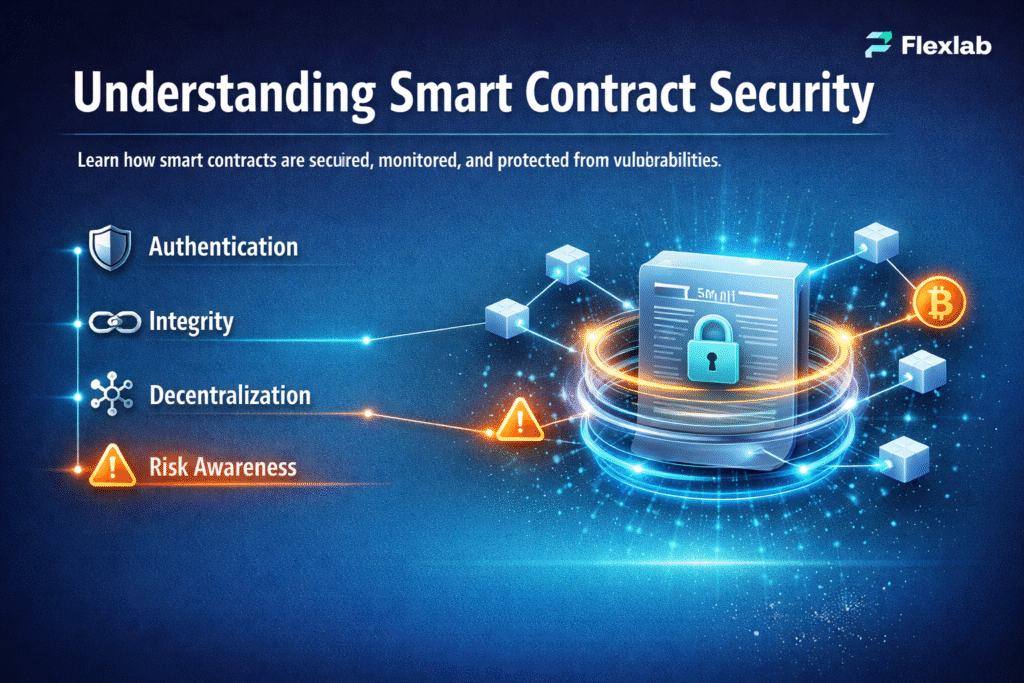
In today’s digital landscape, smart contract security is not optional. Even minor vulnerabilities can result in catastrophic financial losses and reputational damage. Businesses must adopt proven strategies to protect digital assets, DeFi platforms, and NFT operations.
Key Vulnerabilities to Watch
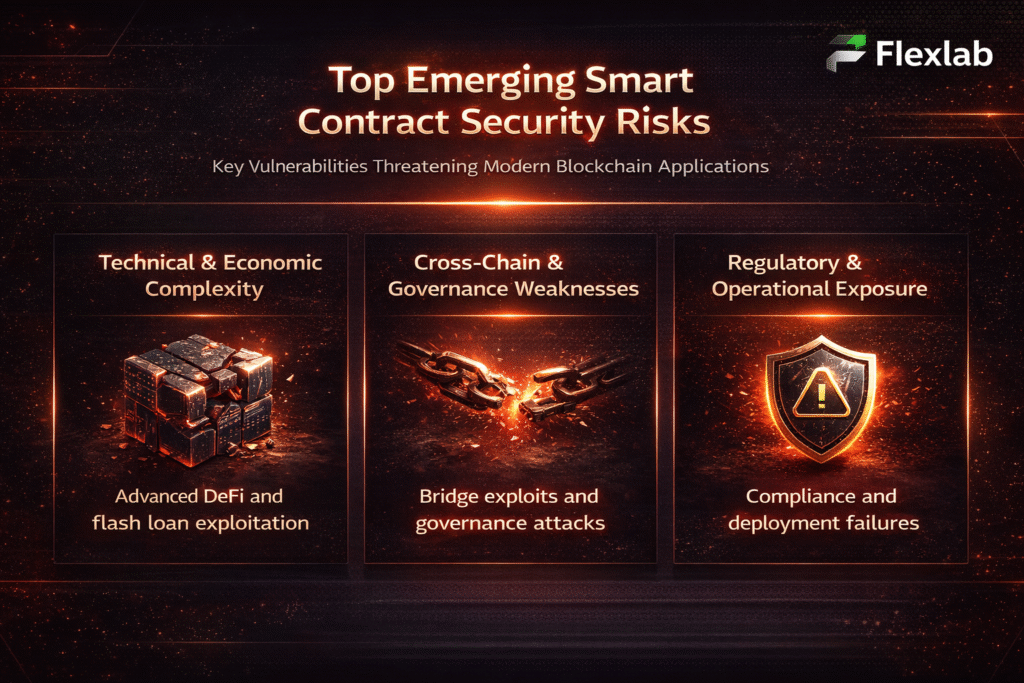
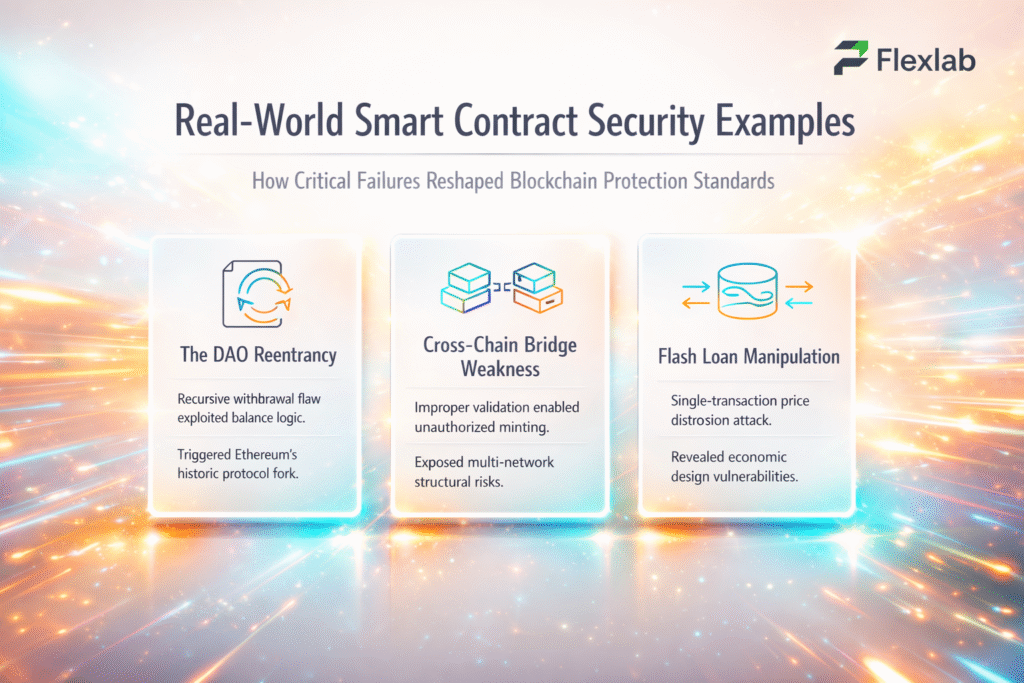
- Reentrancy Attacks: External contracts repeatedly call a function to drain funds before the transaction completes.
- Integer Overflow & Underflow: Numeric values exceeding storage limits can cause unexpected behavior.
- Unauthorized Access / Role Mismanagement: Weak access controls can allow unauthorized users to execute sensitive functions.
Best Practices for Robust Security
- Use Proven Libraries: Leverage OpenZeppelin and other audited code libraries for tokens, governance, and upgradable contracts.
- Keep Contracts Simple & Modular: Reduces complexity and minimizes error opportunities.
- Conduct Comprehensive Security Audits: Hire professional auditors to identify vulnerabilities before deployment.
- Integrate Cryptographic Protocols: Ensure all contracts and assets are encrypted and tamper-proof.
- Regularly Test in Safe Environments: Use Ganache, local testnets, and sandbox platforms to simulate potential attack scenarios.
Ultimately, following these security practices protects funds, builds trust, ensures compliance, and keeps operations secure, transparent, and resilient.
Real-World Applications for Your Business
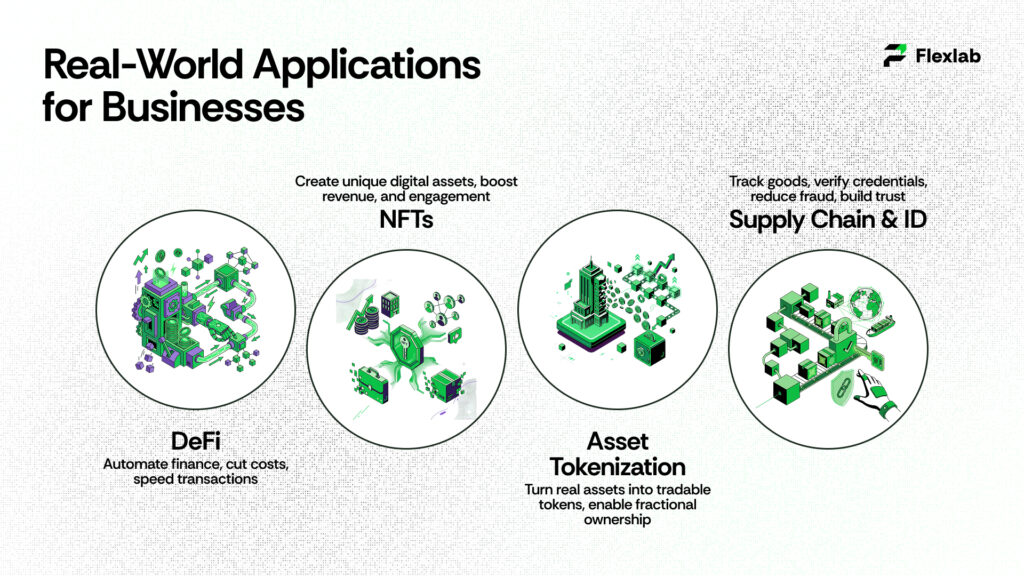
Smart contract development is a practical tool that can transform your business operations. By leveraging digital contracts, companies can automate complex workflows, enhance transparency, and reduce operational risks. Let’s explore how different applications can immediately benefit your enterprise.
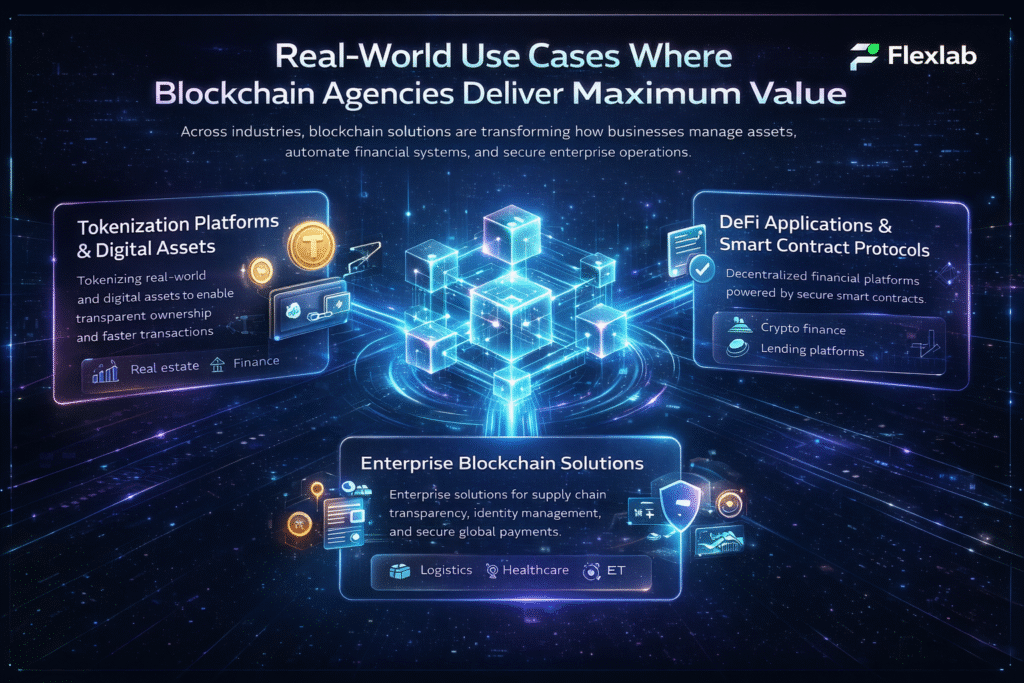
1. Decentralized Finance (DeFi)
Through DeFi platforms, businesses can automate lending, borrowing, and trading processes without intermediaries. Consequently, this reduces operational costs, accelerates transactions, and improves accuracy. Examples include yield farming, stablecoins, token swaps, and other digital contract-based solutions. By integrating cryptographic protocols and secure blockchain networks, enterprises can achieve trustless operations while maintaining compliance and security.
2. Non-Fungible Tokens (NFTs)
NFTs provide verifiable digital ownership for assets such as art, collectibles, or in-game items. By using smart contract platforms, businesses can issue digital assets that are unique, traceable, and tamper-proof. This not only creates new revenue streams but also strengthens engagement with customers, gamers, and content creators by offering verifiable ownership and royalties.
3. Asset Tokenization
Asset tokenization allows companies to represent real-world assets such as real estate, stocks, commodities, or intellectual property as tradable on-chain tokens. Consequently, this enhances liquidity, enables fractional ownership, and simplifies compliance. Furthermore, tokenized assets can be seamlessly integrated into blockchain platforms, opening avenues for innovative investment models and global access.
4. Supply Chain & Identity Management
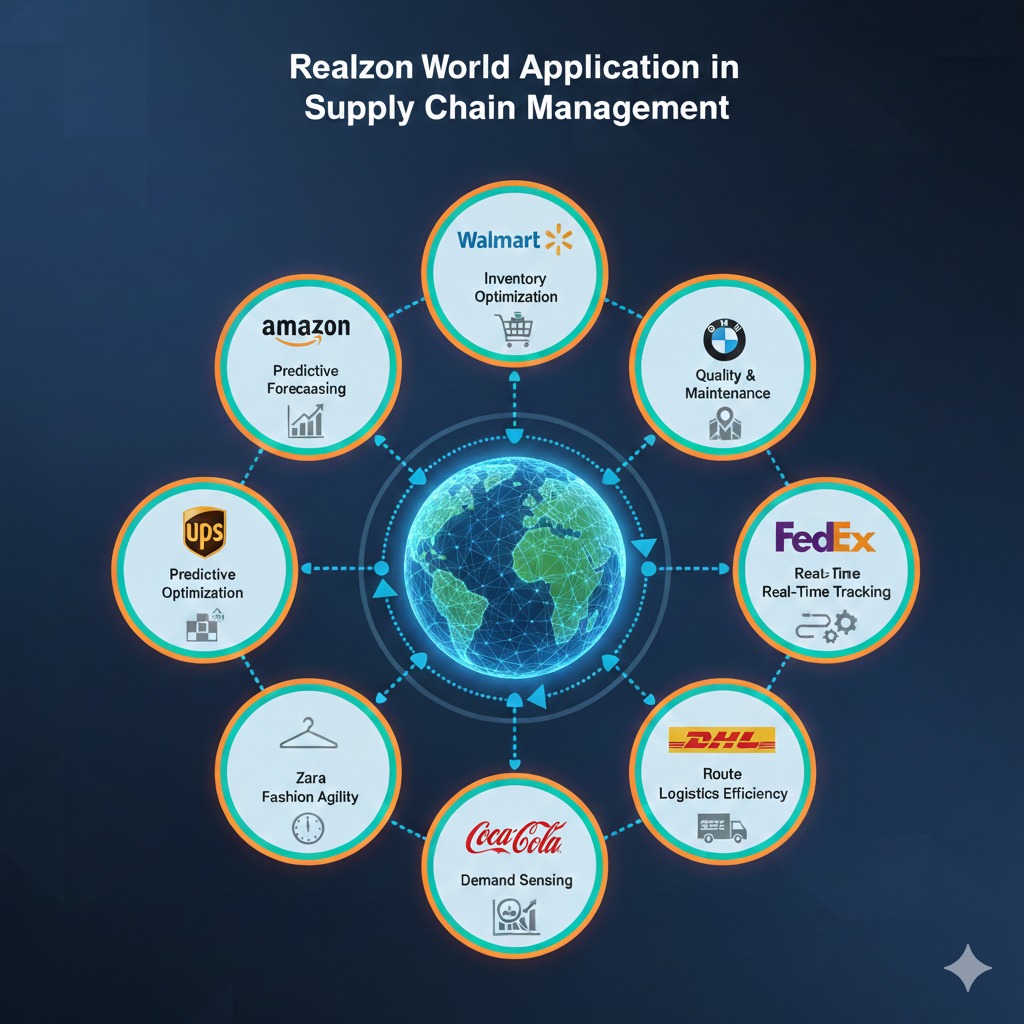
Smart contracts enable transparent tracking of goods and verification of credentials. Consequently, businesses can monitor every step in the supply chain, ensuring authenticity, reducing fraud, and minimizing disputes. Similarly, in identity management, crypto wallets and cryptographic techniques provide secure credential verification, streamline access management, and automate compliance processes. As a result, these technologies enhance both operational efficiency and trust.
Enterprise-Scale Smart Contract Solutions
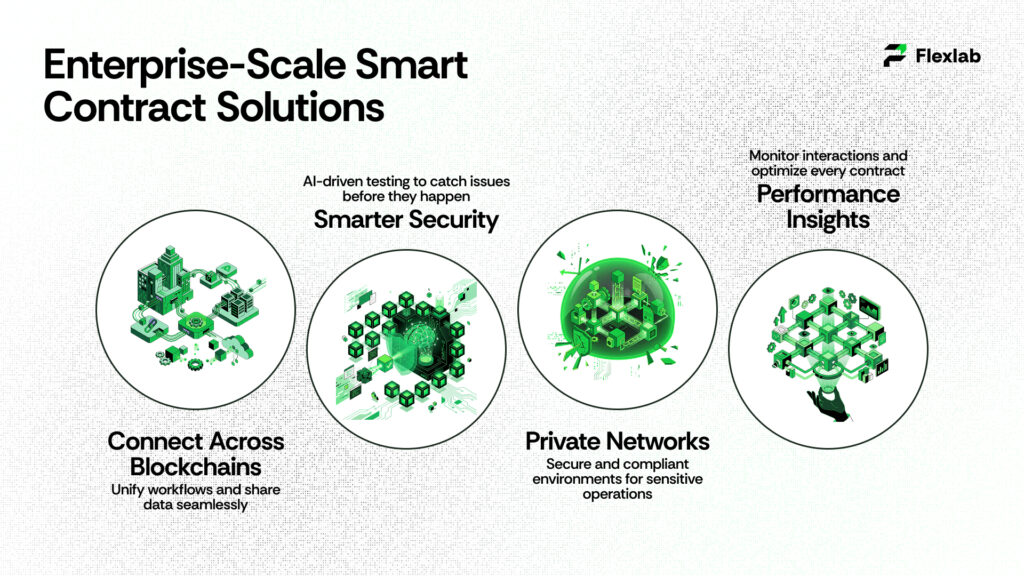
For businesses seeking to leverage smart contract development at scale, simply deploying contracts is not enough. Advanced solutions are essential to ensure seamless integration, robust security, and operational efficiency across multiple platforms. By implementing these strategies, enterprises can fully harness the potential of blockchain technology while minimizing risk and increasing transparency.
1. Cross-Chain Compatibility for Multi-Platform Blockchain Networks
Modern enterprises often use multiple blockchain platforms, each serving different purposes. Consequently, cross-chain compatibility allows smart contracts to communicate and operate across these diverse networks. This ensures data consistency, reduces manual reconciliation, and provides businesses with flexibility to optimize workflows across platforms.
2. AI-Assisted Integration Testing and Smart Contract Security
Integration testing is essential to ensure that your contracts interact correctly with other systems, wallets, or APIs. By using AI-assisted testing tools, this process is enhanced, as they can automatically detect potential issues, simulate various scenarios, and optimize smart contract security. As a result, businesses can identify and prevent vulnerabilities—such as reentrancy attacks, access control flaws, or logic errors—before going live.
3. Enterprise-Grade Private Blockchain Environments
For sensitive data or regulated industries, private blockchain networks offer controlled access, ensuring confidentiality and compliance. Companies can deploy digital contracts in these environments to manage internal processes, supply chains, or asset tokenization projects, all while maintaining the benefits of blockchain immutability and transparency.
4. Automated Application Binary Interface (ABI) Monitoring
The application binary interface (ABI) is critical for smart contract interaction with external systems. Automated ABI monitoring allows businesses to track contract interactions, detect anomalies, and optimize performance. Consequently, it ensures that digital assets are managed efficiently, reduces operational errors, and supports smooth integrations with crypto wallets and other blockchain-enabled applications.
The Future of Smart Contract Development in 2026 and Beyond
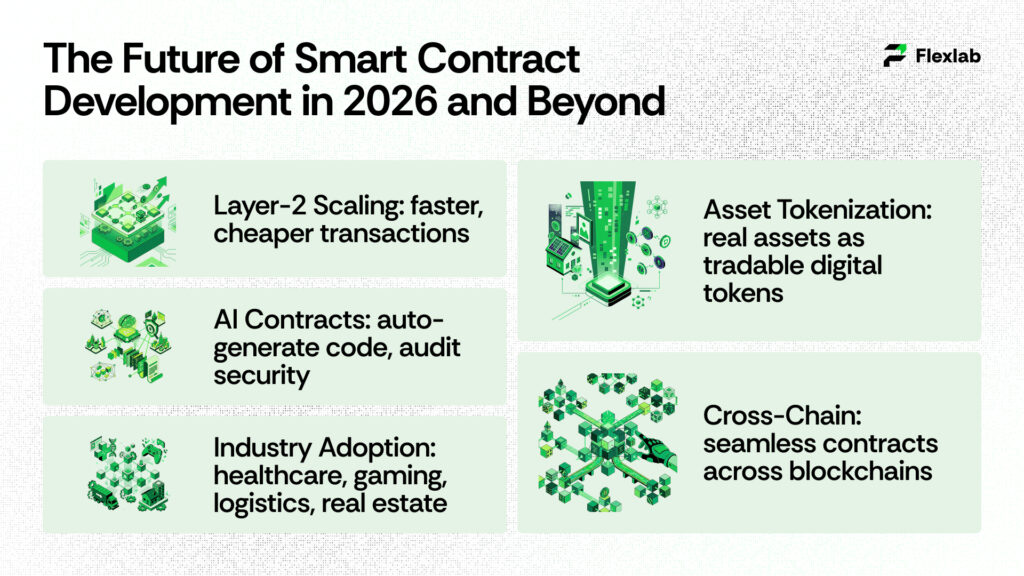
Looking ahead, smart contract development is set to transform not just the tech industry but every sector that relies on secure, transparent, and automated transactions. Businesses that stay ahead of these emerging trends will gain a significant competitive advantage in the rapidly evolving world of blockchain technology.
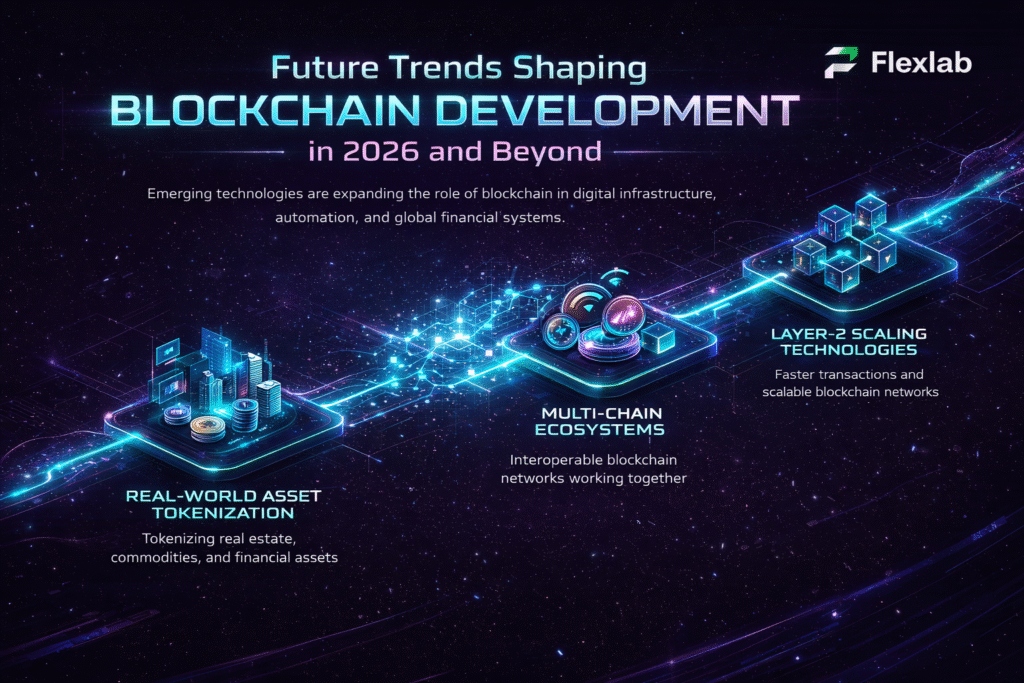
1. Layer-2 Scaling Solutions
To address high network fees and slow transaction speeds, Layer-2 solutions such as Arbitrum, Optimism, and zkSync are becoming increasingly popular. By building on top of existing blockchain networks, these technologies enable smart contracts to execute more quickly and cost-effectively. As a result, decentralized finance (DeFi) platforms and other enterprise applications become more accessible and efficient for users.
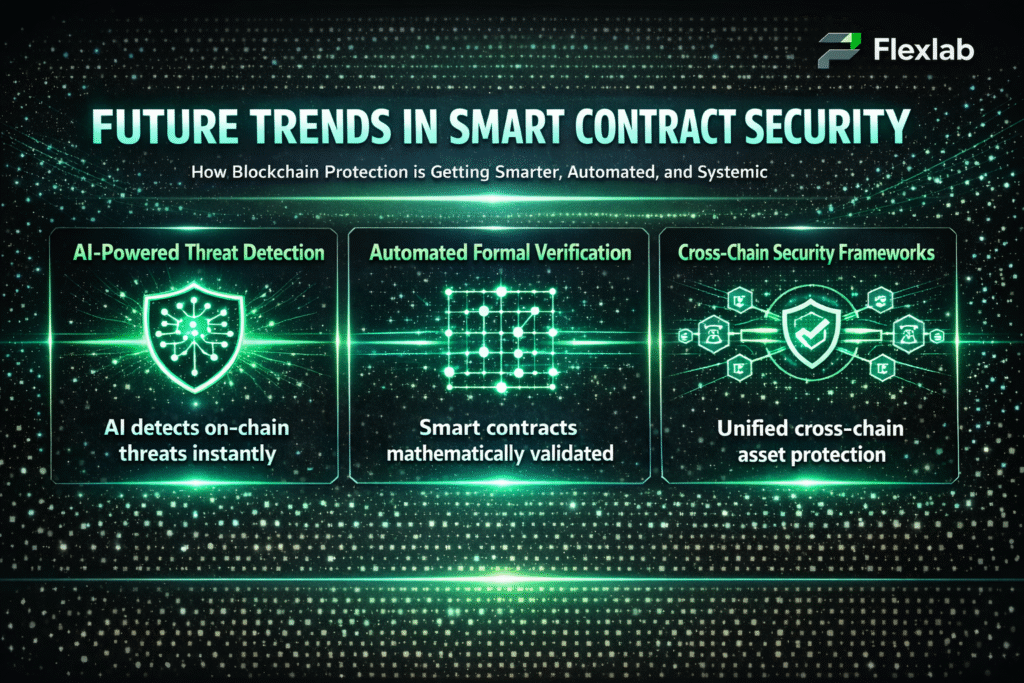
2. AI-Enhanced Contract Creation and Auditing
Artificial intelligence is to play a pivotal role in smart contract development. AI can assist in automatically generating code, performing rigorous security audits, and detecting potential vulnerabilities before deployment. This not only reduces human error but also accelerates the deployment tools process, ensuring digital contracts are safe and efficient.
3. Broader Industry Adoption
While finance has been an early adopter, industries such as healthcare, logistics, gaming, and real estate are increasingly integrating smart contracts. From automating insurance claims to managing supply chain data or securing digital assets, smart contract platforms are becoming central to enterprise innovation.
4. Enhanced Asset Tokenization
The tokenization of real-world assets, including real estate, commodities, and intellectual property, is set to expand significantly. By converting these assets into tradable digital assets, businesses can improve liquidity, enhance transparency, and create new revenue streams, all powered by smart contracts and cryptographic protocols.
5. Cross-Chain and Interoperable Ecosystems
Since blockchain networks multiply, cross-chain compatibility will become increasingly important. Businesses will benefit from interoperable smart contracts that can operate across multiple platforms, seamlessly connecting crypto wallets, decentralized apps, and enterprise systems.
In short, embracing these future trends helps your enterprise stay ahead in 2026 and beyond. By leveraging Layer-2 scaling, AI-assisted auditing, widespread industry adoption, enhanced asset tokenization, and cross-chain interoperability, companies can fully unlock the potential of smart contract development. As a result, they gain greater efficiency, stronger security, and new business opportunities.
Accelerate Your Business with Flexlab’s Smart Contract Development

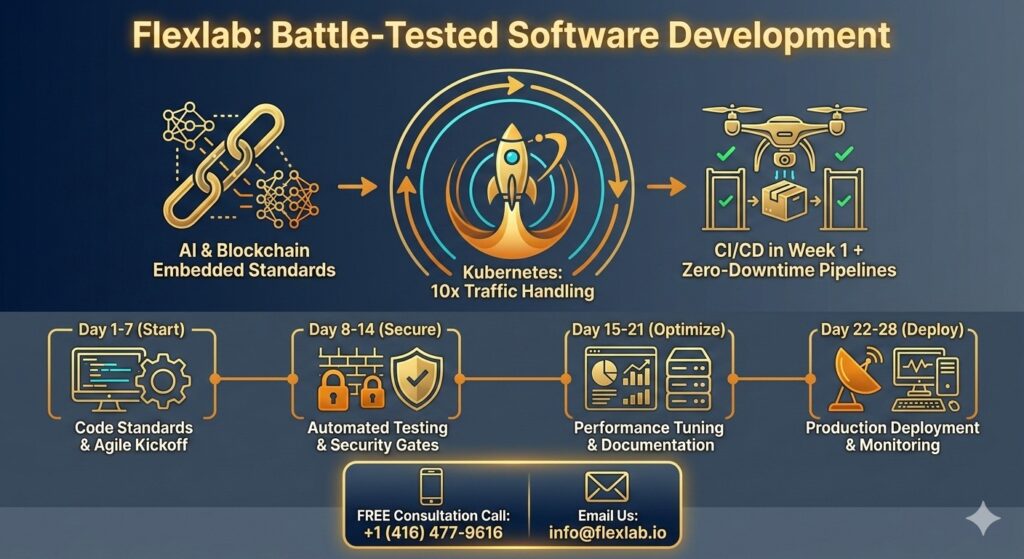
Your smart contract partner can determine whether your project scales or stalls. Flexlab delivers secure, high-performance, enterprise-grade blockchain solutions that accelerate growth, automate workflows, and keep you ahead of the competition. From DeFi to NFTs, we build systems that work flawlessly from day one.
Ready to Launch Your Blockchain Project?
📞 Book a FREE Consultation Call: +1 (416) 477-9616
📧 Email us: info@flexlab.io
Our team brings deep expertise in blockchain architecture, Web3 automation, and end-to-end decentralized development. We handle validation, audits, optimization, and post-launch support, so you can innovate boldly without worrying about the technical details.
Discover how we transform ideas into real blockchain products through our portfolio. Explore the AI, blockchain, and automation solutions on our services page. Move forward with a secure, scalable implementation by reaching out and contact us. Stay informed with expert insights, practical frameworks, and industry trends on our blog. Follow us for updates and behind-the-scenes innovation on LinkedIn. Transform your operations, eliminate inefficiencies, and unlock new revenue opportunities. For deeper learning, here are a few recommended reads:
- The Role of Blockchain Audit in DeFi, NFTs, and Web3 Security
- How Does Blockchain for Startups Improve Transparency and Trust?
- Why Flexlab is Your Best Choice for AI and Blockchain Application Development?
Final Thoughts on Smart Contract Development
In conclusion, smart contract development is revolutionizing the way businesses operate by enabling secure, automated, and transparent transactions. From digital contracts to decentralized finance (DeFi) and asset tokenization, these innovations help reduce costs, minimize risks, and unlock new growth opportunities. By partnering with experts and leveraging blockchain platforms, companies can confidently implement smart contracts. As a result, they drive efficiency, build trust, and create long-term value in the digital economy.
FAQs
1: How do smart contracts interact with real-world data?
Smart contracts rely on oracles, which are trusted data providers, to fetch information from the real world, such as prices, weather, or delivery confirmations. These oracles feed the data into the blockchain, allowing smart contracts to execute automatically based on real-world events. As a result, even complex workflows—like DeFi transactions or NFT marketplaces—can run with greater automation and accuracy.
2: Can smart contracts be upgraded after deployment?
Yes, but with careful planning. Smart contracts are immutable by default, meaning their code cannot be changed after deployment. To allow upgrades, developers use proxy patterns or modular architectures, which let them update the contract’s logic without changing its blockchain address. This ensures flexibility, security, and long-term scalability for enterprise applications.
3: What industries can benefit most from smart contract development?
Smart contracts are widely applicable beyond finance. Industries such as supply chain, real estate, healthcare, gaming, and insurance can benefit from automated, secure, and transparent workflows. For example, supply chain companies can track goods and verify authenticity, real estate businesses can automate property sales and rentals, and healthcare providers can securely manage patient records and consent. These solutions reduce costs, prevent fraud, and improve operational efficiency.










One Response