What to Look for in a Reliable NFT Marketplace Development Company
White Label Crypto Exchange | Public vs Private Blockchain | Blockchain Audit
Are you looking for the right NFT marketplace development company? If yes, then you’re at the right place. In 2026, the NFT market reaches $60B, with gaming at 38% of volume, and 70% of custom platforms crash due to bad partners. Creators and brands race to launch tailored marketplaces, but hacks drain millions, and clunky UX kills users. Let’s dive into help insights about NFT marketplace development. Its benefits and factors to consider while choosing the NFT company.
Let’s get started!
What is NFT Marketplace Development?
Before learning how to choose the right NFT marketplace development company, let’s first review what NFTs are. NFT marketplace development is the process of creating a blockchain-based platform. The platform allows users to mint, buy, and trade non-fungible tokens. You can tokenize and exchange digital assets such as art, music, digital collectibles, or real estate securely on these platforms. However, it is not about launching a listing page. It’s about engineering the core logic. NFT marketplaces connect creators, collectors, and traders in one digital space.
Have a glance at the major components that develop an NFT marketplace:
- Blockchain platform: The NFT marketplace can be built on a blockchain like Ethereum, Solana, Flow, etc. This enables digital scarcity and transparency.
- Smart Contract: This self-executing smart contract development automates NFT minting, ownership transfers, and secure transactions on the blockchain.
- Integration of digital wallet: Users seamlessly connect their crypto wallets with Metamask or Binance Smart Chain and enable NFT buying, selling, and management easily.
- User-friendly minting tools: Built-in tools and an intuitive interface allow users to smoothly convert digital files into verifiable NFTs with just a few clicks.
- Advanced search & filters: It allows users to easily browse and find their desired NFTs by category, price, rarity, or creator.
- Flexible Bidding Option: It supports different bidding mechanisms, such as fixed-price sales, Dutch auctions, English auctions, and more, to suit diverse trading preferences.
- Tracking of secondary sales & royalties: It automates tracking of resale history. Moreover, creators earn programmable royalties on every future transaction.
In a nutshell, unlike traditional marketplaces, the product doesn’t exist on centralized servers here. NFT marketplaces run on decentralized, tamper-proof systems powered by smart contracts and cryptographic hash functions for blockchain security. It builds one that demands deep insight into blockchain logic. Unlike just surface-level code or UI.
Benefits of Developing Your NFT Marketplace
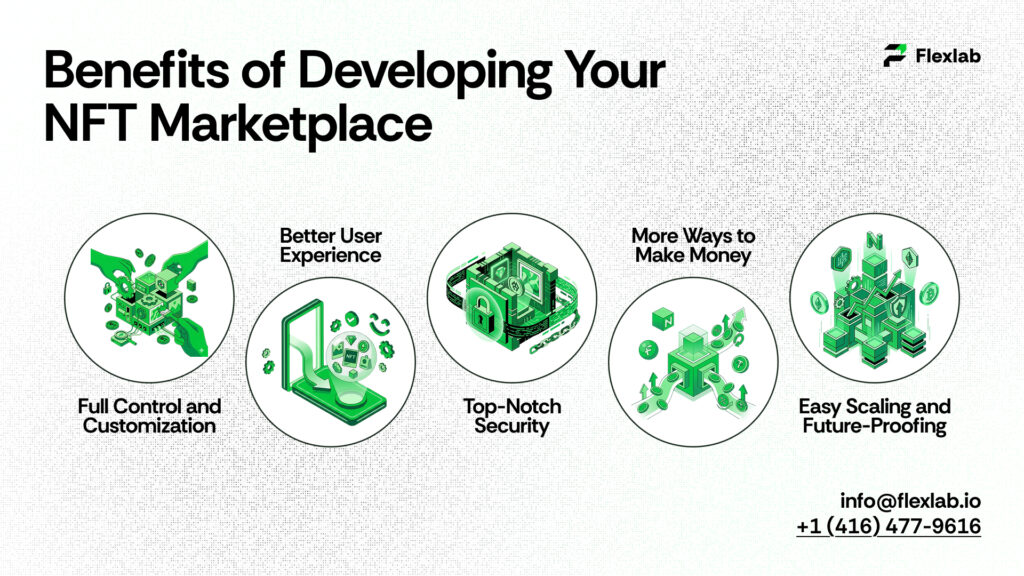
Building your own NFT marketplace lets you skip the limits of big platforms like OpenSea and create something tailored just for you. Hence, it’s a smart move for businesses, creators, or anyone wanting full control in the booming NFT world.
- Full Control and Customization
- Better User Experience
- Top-Notch Security
- More Ways to Make Money
- Easy Scaling and Future-Proofing
1. Full Control and Customization
You get to design everything your way, whether it’s about look and feel to special features like custom auctions or loyalty perks, using a white-label solution. Thus, there is no more dealing required with someone else’s rules or fees; it’s all branded to match your vibe and audience.
2. Better User Experience
Make the site super easy and fun to use, boosting how much time people spend there and how often they buy or sell. Moreover, a smooth, branded setup keeps users coming back and helps your community grow strong.
3. Top-Notch Security
Build your own strong defenses, such as custom encryption and security audit, to protect assets better than off-the-shelf options. Consequently, this builds trust and keeps hackers at bay, strengthening user confidence.
4. More Ways to Make Money
Charge your own listing or transaction fees, add premium tools, or offer crypto options. Additionally, own all data and user info, thereby opening doors to new revenue without sharing the pie.
5. Easy Scaling and Future-Proofing
Grow unlimited with cloud development, adding trends like VR fast. Ties into how to create an nft marketplace tailored for the future.
Key Considerations When Choosing an NFT Marketplace Development Company
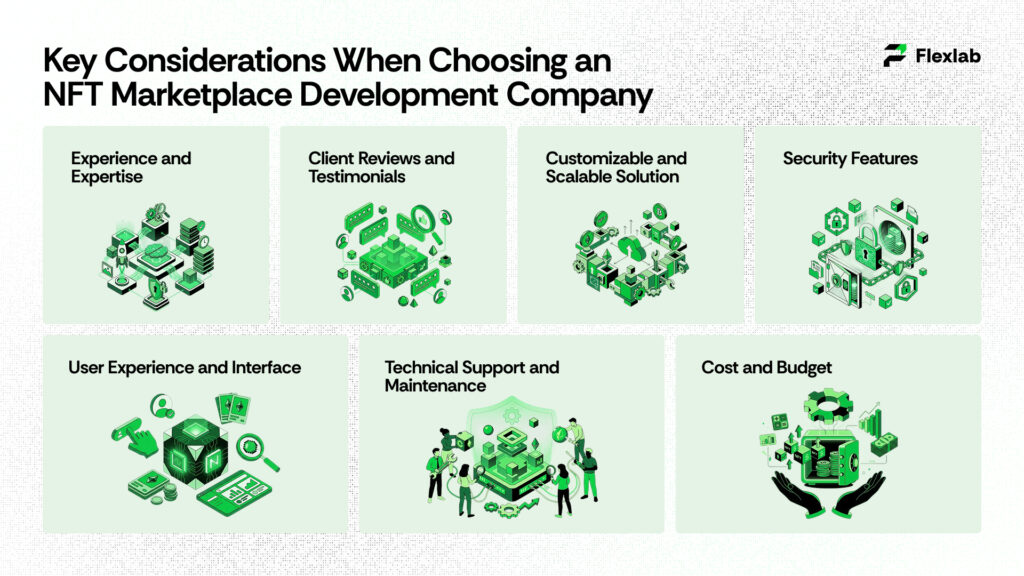
Seasoned developers turn complex blockchain development challenges into scalable platforms that thrive under real traffic. Look for proven wins in Solana development, multi-chain setups, and NFT use cases beyond basic art drops. Let’s read some of the key factors while choosing the NFT marketplace development company:
- Experience and Expertise
- Client Reviews and Testimonials
- Customizable and Scalable Solution
- Security Features
- User Experience and Interface
- Technical Support and Maintenance
- Cost and Budget
Experience and Expertise
Start examining the company’s track record in NFT marketplace development to whom you want to work. Firstly, you have to see their expertise and experience in this field. Review their portfolio of completed projects and examine their proven success record, with a focus on projects involving enterprise blockchain integration and smart contracts. Experienced and seasoned firms deliver reliable platforms that handle real-world demands.
Client Reviews and Testimonials
Client reviews and testimonials provide you with valuable insights about the company’s reliability, professionalism, and quality of work. Check platforms like Clutch, visit LinkedIn, and Google Business profile for reviews from past clients. As a matter of fact, positive feedback and high rating represents the ability of an NF exchange development company and speak about their results. Additionally, you can ask for a reference for credibility.
Customizable and Scalable Solution
Every NFT marketplace has unique needs based on supported assets and target customers. Confirm whether they are providing customized solutions so that you can alter the platform according to your personal needs and preferences. Furthermore, ensure the NFT company offers scalable solutions that support global traffic growth without performance issues.
Security Features
Security is non-negotiable and an integral part of any given non-fungible token marketplace. Choose the company that primarily focuses on securing digital assets and user data from cyber threats. Ask about their security measures and protocols, including encryption, audited smart contracts, multi-factor authentication, and fraud prevention. Hence, a robust security system will safeguard your marketplace from intrusiveness, hacks, fraud and create long-term trust.
User Experience and Interface
The success of an NFT marketplace relies on its user experience (UI) and interface (UX). Therefore, it must be intuitive, visually appealing, engaging, and easy to navigate. Moreover, evaluate the company’s past work to ensure it prioritizes user-centric design that boosts engagement, and review its UI/UX design services.
Technical Support and Maintenance
After launching your NFT marketplace, it’s time for post-launch support and maintenance to keep it running smoothly. Therefore, choose an NFT development company that provides responsive technical assistance, regular updates, automation testing, and a CI/CD pipeline for seamless operations. This way, any issues that occur after launch can be fixed instantly. Additionally, strong customer service ensures quick resolutions and ongoing security.
Cost and Budget
Balance cost with value by requesting detailed quotes for different NFT development services and then comparing offerings. However, avoid cutting corners on quality or security for short-term savings. Additionally, consider long-term ROI, including scalability and maintenance, to ensure the best investment.
Examples of Top 5 NFT Marketplaces
NFTs are blowing up, and a bunch of marketplaces are leading the pack. Here are five big ones that creators, collectors, and investors love:
-
OpenSea
OpenSea is one of the biggest and best-known spots for NFTs. You can find all kinds of digital stuff like art, digital collectibles, domain names, and even virtual worlds. Furthermore, it works on blockchains like Ethereum and Polygon, so it’s super flexible. Additionally, the easy-to-use design and smart search tools make it a breeze to browse, buy, and sell.
-
Rarible
This is a decentralized marketplace on Ethereum where creators mint, buy, and sell NFTs without middlemen. What makes it cool is that the governance token holders vote on platform decisions. Moreover, its community-run nature gives users a real sense of ownership and keeps everyone hooked.
-
Foundation
Foundation is a curated spot for digital art NFTs, specifically all about helping up-and-coming artists shine in the crypto world. Instead of open auctions, they hand-pick the best work, thus ensuring top quality. As a result, it’s pulled in a loyal crowd of art lovers and collectors who crave fresh, standout pieces.
-
Nifty Gateway
Nifty Gateway is super user-friendly and makes blockchain infrastructure easy for regular folks. Backed by the Winklevoss twins, it lets you buy with regular money (not just crypto), which is perfect for newbies. Moreover, they team up with big-name artists and brands for limited drops, thus drawing in collectors hunting exclusive goodies.
-
SuperRare
SuperRare is a social platform for digital art that links creators with buyers. Every piece is a one-of-a-kind NFT, so it’s all about rarity and value. Moreover, you can chat with artists, join auctions, and show off your collection in virtual galleries. Ultimately, its focus on quality, scarcity, and community makes it a favorite for art fans.
These five are some of the top marketplaces in the fast-changing NFT world. Whether you’re an artist dropping your work, a collector grabbing unique digital treasures, or an investor checking out the scene, they’ve got you covered.
Top Use Cases of NFT Marketplace Development Services
NFT marketplace development company services power all sorts of cool real-world apps beyond just trading digital art. They’re exploding in gaming, music, and more, letting businesses create custom platforms for unique needs. Let’s have a look at NFT use cases below:
Digital Art and Collectibles
Artists easily create unique NFTs from paintings, photos, or memes, permanently proving ownership. Meanwhile, collectors snap up these rare pieces that hold lasting value, like supercharged trading cards.
Gaming Assets and In-Game Items
Game devs easily mint NFTs for weapons, skins, or characters that players truly own and can trade across games. Consequently, no more losing your loot when the server shuts down.
Music and Entertainment Royalties
Musicians seamlessly drop tracks or albums as NFTs, automatically earning royalties on every resale. Meanwhile, fans gain exclusive access, merch, or concert tickets bundled right in.
Virtual Real Estate and Metaverse
Buy, sell, or build on digital land in metaverses like Decentraland. Moreover, NFTs make virtual properties scarce and tradable, just like real estate.
Fashion and Physical Goods
Similarly, brands create NFT-linked physical items, like sneakers with digital twins, for exclusivity. Thus, wear the real thing while flexing the NFT version online.
Supply Chain Tracking
Additionally, companies use NFTs to verify product authenticity from factory to shelf, effectively fighting fakes in luxury goods or food. Conveniently, scan for full history anytime.
Sports Memorabilia and Events
Finally, teams issue NFTs for highlights, player cards, or tickets that unlock VIP perks. Fans seamlessly trade them like fantasy sports on blockchain.
How to Build an NFT Marketplace
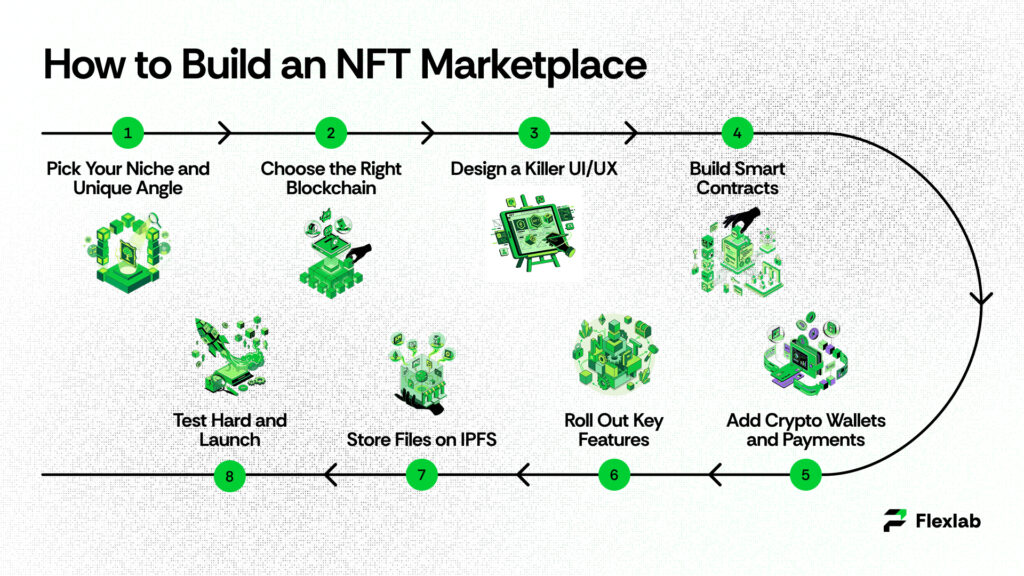
Building an NFT marketplace from scratch gives you full control over your platform, unlike just minting single NFTs. It’s more involved but worth it for businesses or creators wanting a custom hub. Here’s how to do it step by step guide.
1. Pick Your Niche and Unique Angle
Firstly, figure out your focus, like art, gaming items, music, or sports collectibles, to stand out. Then, nail your USP, such as super-low fees or exclusive artist drops, so users pick you over OpenSea.
2. Choose the Right Blockchain
Secondly, go with Ethereum for max trust and buyers (but watch the high gas fees). Meanwhile, Polygon is for cheap and fast transactions, or Solana is for speed. Test on their networks first to match your traffic needs.
3. Design a Killer UI/UX
Make it dead simple; clean menus, fast search, easy buying/selling. Moreover, users hate clunky sites, so sketch wireframes focusing on mobile-first browsing and one-click wallet connects.
4. Build Smart Contracts
Code in Solidity for minting NFTs, listing them, auctions, and royalties. Moreover, use tools like Hardhat or Thirdweb to speed things up and avoid bugs, and get them audited to dodge hacks.
5. Add Crypto Wallets and Payments
Hook up MetaMask, WalletConnect, or Coinbase Wallet so users log in seamlessly. Integrate crypto payments like ETH, USDC, or even fiat ramps for newbies.
6. Roll Out Key Features
Add search filters, bidding (fixed price, auctions), creator dashboards, and royalty tracking (like 10% on resales). Additionally, include profiles, chats, and social sharing to build community.
7. Store Files on IPFS
Importantly, dump NFT images/videos/metadata on decentralized storage like IPFS via Pinata. Since it’s cheap, permanent, and far superior to centralized servers that can vanish anytime.
8. Test Hard and Launch
First, run everything on testnets (like Goerli or Mumbai) to catch bugs, security holes, and load issues. Then, fix problems, deploy to mainnet, market on Twitter/Discord, and continuously update based on user feedback.
Emerging Trends in NFT Marketplace
NFT marketplaces are leveling up big time in 2026, moving way beyond just art flips to real utility in gaming, AI, and everyday stuff. Trends are all about making them faster, greener, and more connected.
-
Cross-Chain Everything
Platforms now link various blockchains such as Ethereum, Solana, Polygon, and other digital assets, enabling seamless trading without extra fees. As a result, users are no longer limited to a single chain. Moreover, your NFTs can move freely across multiple ecosystems, ensuring greater flexibility and accessibility.
-
AI Smarts Everywhere
AI suggests buys, spots fakes, generates art, and even predicts prices. In short, it makes a personal curator that personalizes your feed and keeps things legit.
-
Real-World Assets (RWAs)
Tokenize houses, cars, art, or stocks as NFTs for easy trading and proof of ownership. Meanwhile, brands like Budweiser are jumping in for loyalty perks and new cash streams.
-
Gaming and Metaverse Boom
Gaming NFTs dominate (38% of volume), letting you own and sell in-game gear across worlds. Moreover, metaverse land and events are hot, blending virtual and real life.
-
DeFi Mashups
Stake, lend, or farm with NFTs for passive income. For example, turn static art into loan collateral or yield earners right on the marketplace.
-
Greener and Social Vibes
Eco-friendly blockchains cut energy use, while social features and DAOs let communities vote and engage. Big brands and social media are all in for NFT marketing strategy wins.
6 Reasons 17 Clients Chose Flexlab for NFT Success
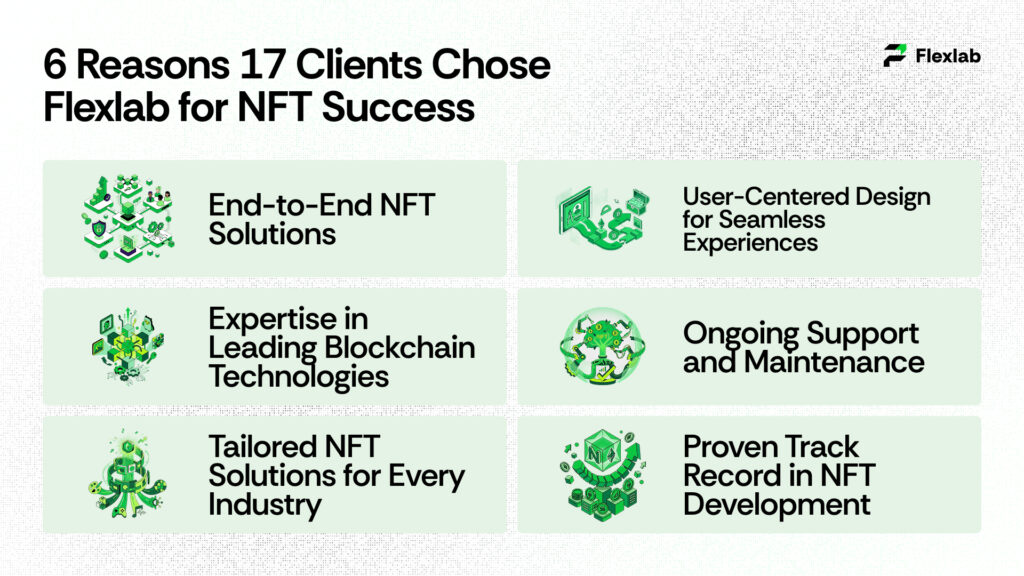
In the fast-growing world of NFTs (Non-Fungible Tokens), choosing the right development partner can make all the difference between success and failure. Flexlab stands out as a leader in NFT development, offering a comprehensive suite of services that cater to both creators and businesses looking to enter or expand in the NFT space. Here’s why FlexLab’s NFT development services are the best choice for your project:
- End-to-End NFT Solutions
- Expertise in Leading Blockchain Technologies
- Tailored NFT Solutions for Every Industry
- User-Centered Design for Seamless Experiences
- Ongoing Support and Maintenance
- Proven Track Record in NFT Development
How Flexlab Saved Flite.city $200K in NFT Fraud
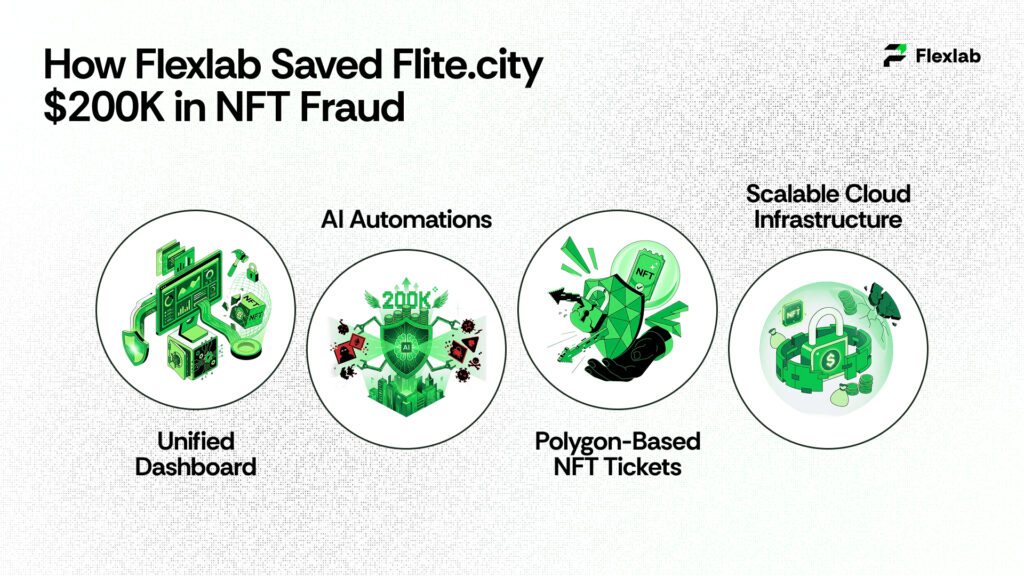
Flite.city is a great example of how FlexLab’s NFT development services can transform industries. Flite.city operates in the events and marketplace sector and faced challenges like manual processes, ticket fraud, and system crashes during high-traffic events.
What Flexlab Built for Flite.city?
- Unified Dashboard: Integrated ticketing, CRM, scheduling, and analytics into one platform.
- AI Automations: Smart chatbots and workflow automations to handle queries and operations.
- Polygon-Based NFT Tickets: These tickets featured dynamic QR codes, resale controls, and were powered by blockchain for transparency and fraud reduction.
- Scalable Cloud Infrastructure: A system capable of handling large volumes of users without crashes during high-attendance events.
Moreover, explore our blockchain and AI blog and discover AI Automation Services, Day Trading Strategies, Custodial vs Non-Custodial Wallet, and Crypto Trading Bot.
Conclusion: NFT Marketplace Development Company
To sum up, choosing the right NFT marketplace development company requires careful consideration of various factors, such as experience, customization options, security measures, UX design, technical support, and maintenance. Check these factors closely to pick a partner that fits your project vision and guides you through the NFT world with success.
Are you ready to build your NFT marketplace? Contact us now and visit our LinkedIn page for more helpful details.
Ready to Launch Your $1M NFT Marketplace?
📞 Book a FREE Consultation Call: +1 (416) 477-9616
📧 Email Us: info@flexlab.io
How much does it cost to build an NFT marketplace?
Building an NFT marketplace development company costs anywhere from $40,000 to $200,000+ in 2026, depending on features like smart contracts, wallets, and security. Basic ones start at $10k-$50k, while advanced gaming or multi-chain versions hit $150k or more.
Is NFT legal or illegal?
NFTs are legal in both the USA and Canada. The USA treats them as digital property (SEC regulates investment-like ones); Canada views them as taxable assets (CRA capital gains apply). No bans on creating or trading.
Can I convert NFT to real money?
Yes, you can easily cash out NFTs for real money: Sell on OpenSea or Rarible for crypto (like ETH), send to an exchange like Binance or Coinbase, swap to USD/PKR, then withdraw to your bank after KYC. Fees are low, but expect taxes on profits