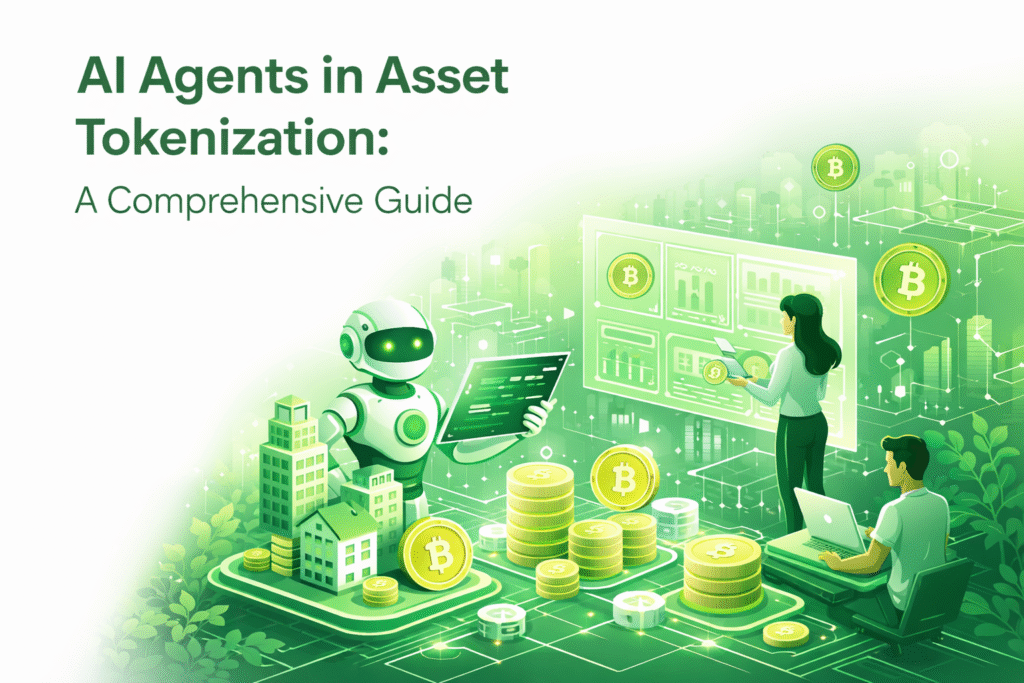
The Role of AI Agents in Asset Tokenization
AI in FinTech | Agentic AI vs Generative AI | Best AI Tools
Asset tokenization is rapidly transforming how assets are owned, traded, and managed in the digital economy. By converting physical and financial assets into secure, tradable digital tokens on a blockchain, businesses and investors can bypass slow paperwork, reduce reliance on intermediaries, and gain access to fractional ownership opportunities. The rise of digital ownership is reshaping investor expectations, making accessibility, liquidity, and efficiency more critical than ever.
As AI and blockchain continue to converge, intelligent systems are becoming essential for managing complex tokenized ecosystems at scale. According to Econ Market Research, the global asset tokenization market reached over $2,496 billion in 2026 and is projected to grow significantly through 2035, reflecting increasing demand for faster settlement, transparent systems, and broader investor access.
In this blog, you will learn what asset tokenization is, how it works, the role of AI agents in modern systems, key real-world use cases, and the challenges and opportunities shaping the future of tokenized markets.
Understanding Asset Tokenization and Its Impact
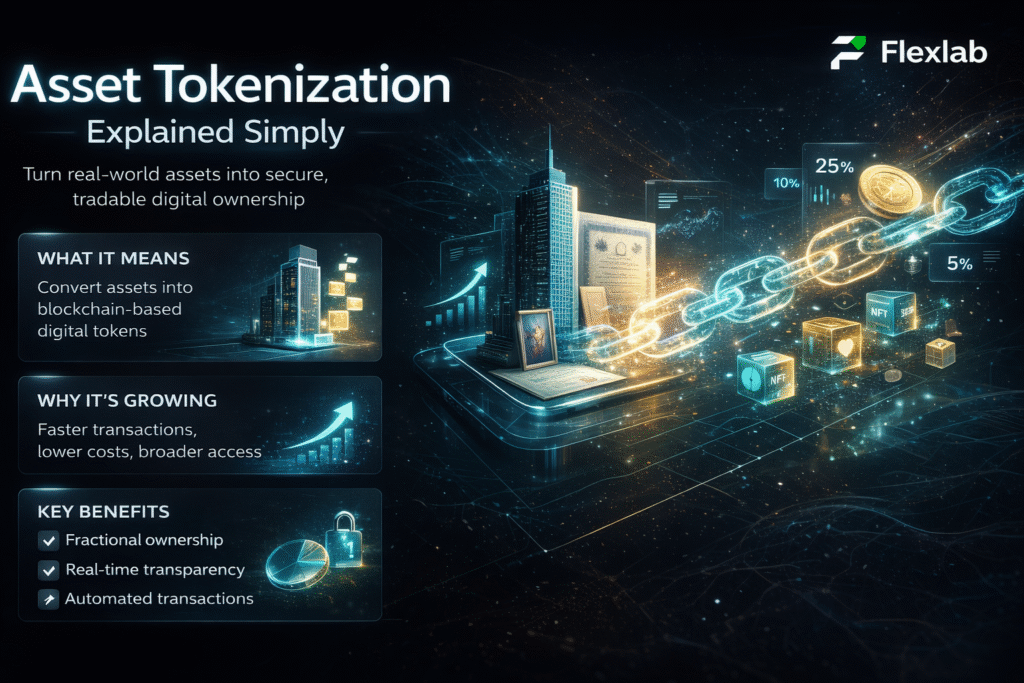
Asset tokenization is revolutionizing the way ownership and investment work across industries. Representing physical and financial assets as secure digital units on a blockchain enables faster transactions, greater transparency, and broader market access. This shift is not just a technical upgrade; it’s redefining how real-world asset tokenization is approached and opening opportunities for fractional ownership, democratized investment, and streamlined compliance.
What Is Asset Tokenization
Asset tokenization converts the rights to an asset, such as a building, a bond, or an artwork, into digital tokens that can be traded or managed on a blockchain. These tokens represent legal claims, cash flows, or voting rights. This approach eliminates cumbersome paperwork, reduces reliance on intermediaries, and ensures ownership can be verified instantly. As a result, tokenization creates efficiency while maintaining security, transparency, and traceability for both individuals and institutions.
Growth of Real World Asset Tokenization
The adoption of asset tokenization has accelerated in recent years, particularly in financial markets, real estate, and collectibles. Institutions are increasingly exploring tokenization to improve liquidity and broaden access for investors. Reports indicate that markets experimenting with tokenized assets are seeing faster settlement times, improved recordkeeping, and lower operational costs. The growth is also driven by regulatory clarity in certain jurisdictions, which makes tokenized assets a viable alternative to traditional ownership models for both retail and institutional investors.
Benefits of Digital Ownership
Digital ownership through asset tokenization provides transparency, security, and flexibility. Owners can track transactions in real time, verify authenticity, and participate in fractional ownership opportunities. This also allows for programmable features, such as automated dividend payments or voting rights, via smart contracts. Investors gain better access to previously illiquid markets, and businesses can optimize capital efficiency. Overall, digital ownership strengthens trust between participants and enables a more inclusive and efficient investment ecosystem.
Core Architecture of Tokenization Blockchain
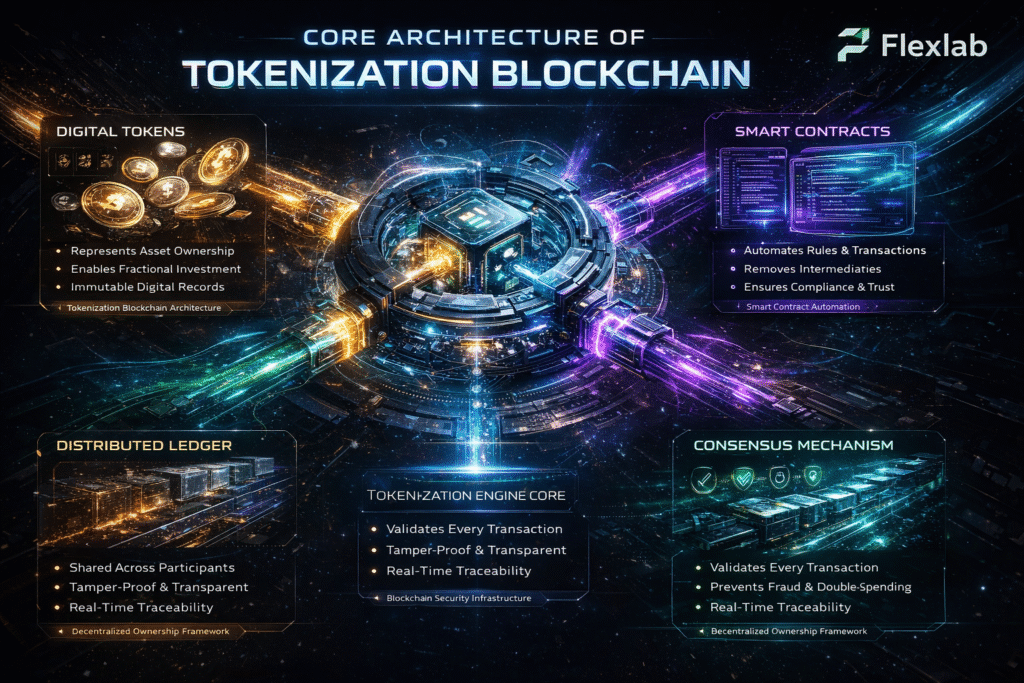
Understanding the core architecture of a tokenization blockchain is crucial to appreciating how asset tokenization works securely and efficiently. This architecture combines distributed ledgers, smart contracts, and consensus mechanisms to ensure ownership is transparent, tamper-proof, and verifiable. It also enables the management of digital tokens across multiple participants while supporting compliance and traceability. A clear grasp of this system is essential for investors, developers, and businesses exploring tokenized assets.
Digital Tokens and Their Role
Digital tokens represent ownership rights or claims over an asset on a blockchain. Each token is a unique record linked to an underlying asset, whether it’s real estate, a bond, or infrastructure assets. Tokens can carry programmable features such as voting rights, dividend distributions, or resale restrictions. By enabling fractional ownership, digital tokens make previously illiquid assets accessible to a wider audience, improve market efficiency, and provide a verifiable, immutable record for all transactions.
Smart Contracts as Rule Enforcers
Smart contracts are self-executing code stored on the blockchain that automates actions based on pre-defined rules. They handle tasks like payments, ownership transfers, and compliance triggers, reducing human error and operational delays. By using smart contracts, tokenized assets maintain security, transparency, and enforceable agreements without intermediaries. This is particularly important in regulated markets, as it ensures that all transactions follow consistent rules while reducing costs and improving trust among participants.
Consensus Mechanisms for Trust and Security
Consensus mechanisms, such as Proof of Stake or Proof of Authority, maintain a consistent and secure ledger across all blockchain participants. They verify transactions, prevent double-spending, and protect against tampering. For real-world asset tokenization, these mechanisms are critical because they ensure that ownership records are accurate and trustworthy, which strengthens investor confidence. Robust consensus protocols also make it possible for digital ownership systems to scale while maintaining security and integrity.
Role of AI Agents in Asset Tokenization
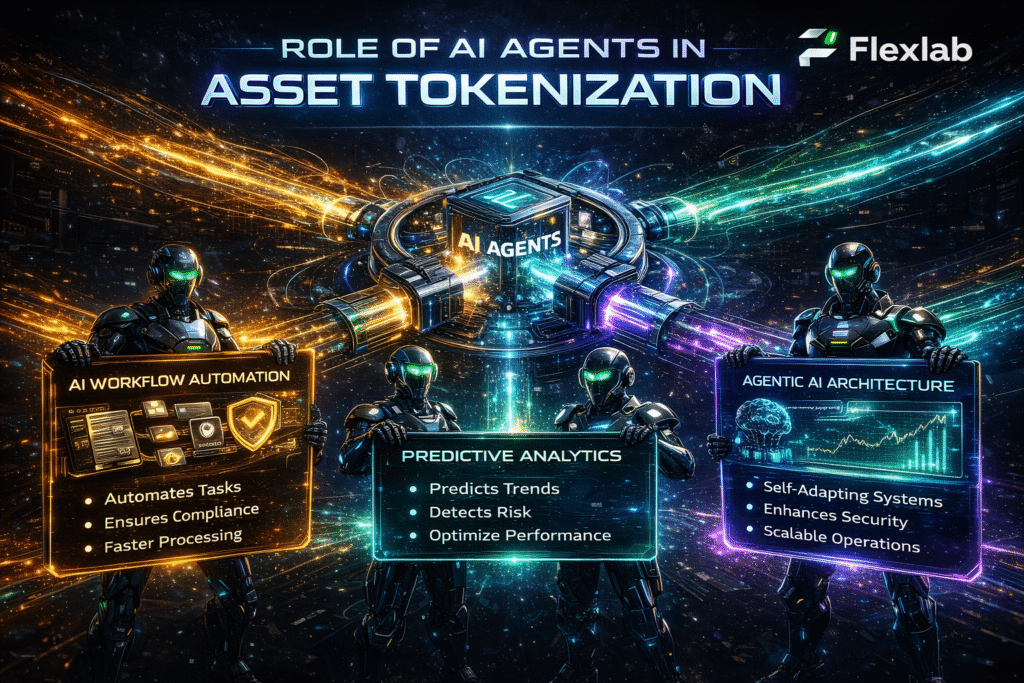
AI agents are becoming essential in modern tokenized ecosystems, bridging the gap between complex blockchain systems and practical asset management. By integrating AI and blockchain, these intelligent software agents automate repetitive workflows, monitor market activity, and support compliance. They help firms scale digital ownership operations efficiently while reducing human error. Understanding the role of AI agents is critical for businesses, investors, and developers exploring real-world asset tokenization opportunities.
AI Workflow Automation for Tokenized Assets
AI agents excel at AI workflow automation, handling repetitive tasks such as verifying investor documents, checking for regulatory compliance, and managing onboarding processes. By automating these workflows, organizations reduce processing time, minimize errors, and allow human teams to focus on higher-level decisions. In tokenized asset systems, this automation ensures transactions are accurate, compliant, and executed quickly. Firms leveraging AI-driven workflows can maintain trust, improve efficiency, and enhance the overall experience for investors in real-world tokenized markets.
Predictive Analytics for Smarter Decisions
AI agents use AI predictive analytics to analyze historical and real-time data, helping identify market trends, pricing shifts, and potential risks. In tokenized assets like securities, real estate, or infrastructure, predictive models provide actionable insights for investors and asset managers. By anticipating market changes, AI agents enable proactive decision-making, reduce exposure to fraud or volatility, and optimize portfolio performance. This integration of AI enhances digital asset management, making tokenized markets more reliable and data-driven.
Agentic AI Architecture for Adaptive Systems
Advanced tokenized platforms often deploy agentic AI architecture, where AI agents operate autonomously, coordinate actions, and adapt to evolving conditions. These architectures combine artificial intelligence technologies such as reasoning, anomaly detection, and memory to handle complex tasks. For asset tokenization, agentic AI ensures that operational processes, compliance checks, and ownership tracking remain efficient and accurate. By leveraging adaptive AI, businesses can scale tokenized systems while maintaining security, transparency, and trust.
Real-World Use Cases of Asset Tokenization
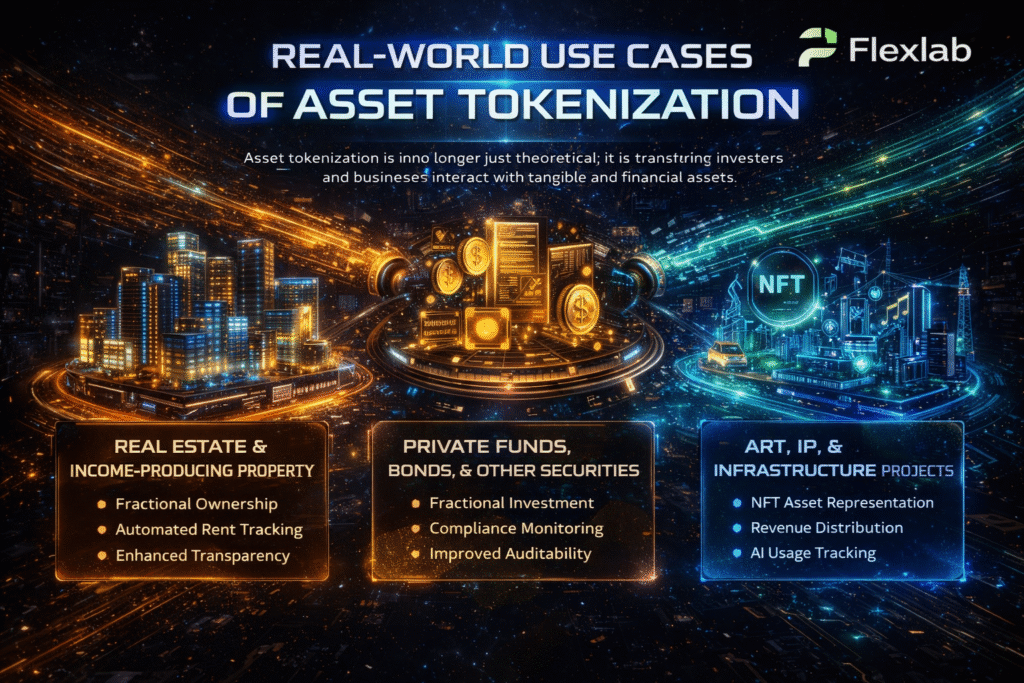
Asset tokenization is no longer just theoretical; it is transforming how investors and businesses interact with tangible and financial assets. From real estate and private funds to art and infrastructure, tokenization creates tradable digital tokens that improve liquidity, transparency, and access. These real-world tokenization use cases demonstrate how AI agents support monitoring, compliance, and workflow automation, ensuring that operations are efficient, accurate, and trustworthy. Understanding these use cases helps investors and businesses evaluate practical benefits while maintaining regulatory standards.
-
Real Estate & Income-Producing Property
Real estate tokenization allows properties to be divided into tradable digital tokens, enabling fractional ownership and easier transfer of assets. AI agents assist by tracking rent payments, updating ownership records, and sending automated investor notifications. They can also flag irregularities in lease agreements or market data, improving operational accuracy. This combination of tokenization and AI reduces administrative workload while enhancing transparency for all participants. Investors can access smaller entry points into lucrative markets, making real estate investment more inclusive and efficient.
-
Private Funds, Bonds, and Other Securities
Tokenization of private funds and bonds allows fractional investment in previously inaccessible markets. AI agents monitor compliance with investor caps, track distribution deadlines, and ensure reporting obligations are met. By combining the tokenization of assets with predictive monitoring, financial institutions reduce operational risk and improve portfolio transparency. This system also enhances auditability, providing regulators and investors with verifiable records without slowing processes, which is essential in maintaining trust and meeting modern regulatory standards.
-
Art, Intellectual Property, and Infrastructure Projects
Non-fungible tokens (NFTs) are increasingly used to represent ownership of art, music royalties, and other intellectual property rights. In addition, these assets are commonly traded on the best NFT marketplaces, where transparency, liquidity, and authenticity are essential for both investors and creators.
Infrastructure projects, such as energy or transport assets, are also tokenized to allow broader investor participation. AI agents support these markets by tracking usage rights, revenue splits, and maintenance signals. They help automate reporting, flag anomalies, and keep ownership records up to date. This integration of AI ensures that tokenized creative and infrastructure assets remain secure, transparent, and efficiently managed.
Benefits and Importance of Asset Tokenization
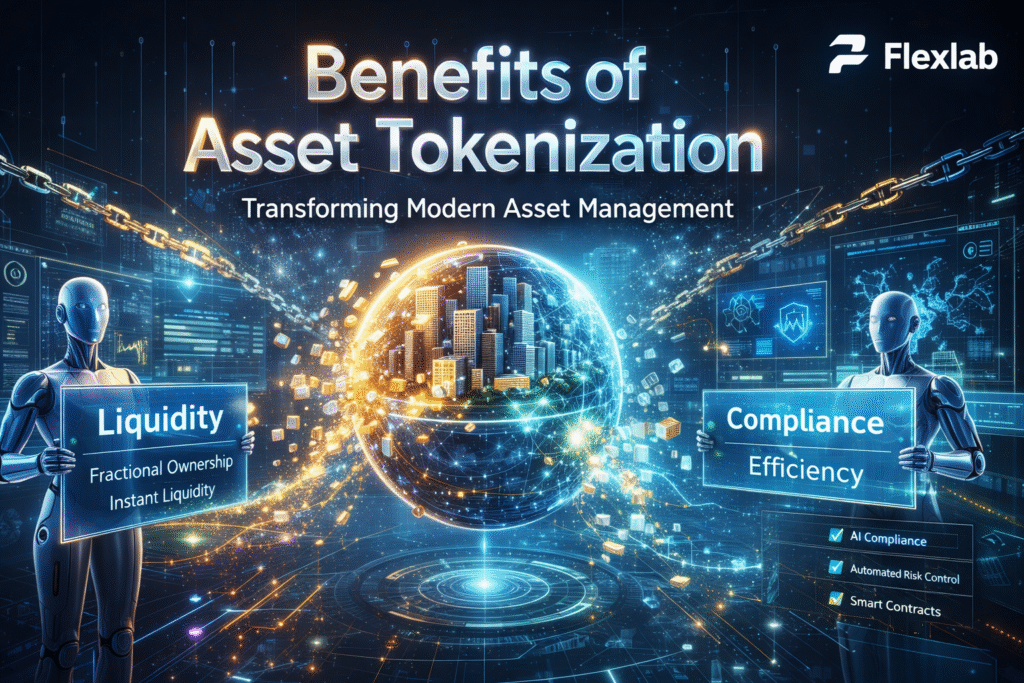
The growing adoption of asset tokenization highlights its ability to reshape modern financial systems. By combining blockchain infrastructure with advanced tools like digital asset management, businesses can streamline operations, reduce inefficiencies, and unlock new investment opportunities. This approach not only enhances transparency and accessibility but also supports better risk control and governance. As markets evolve, understanding the key benefits of tokenization becomes essential for investors and organizations aiming to stay competitive.
Increased Liquidity and Fractional Ownership
One of the most significant advantages of asset tokenization is improved liquidity. Traditionally, assets like real estate or infrastructure are difficult to sell quickly. Tokenization divides these assets into smaller, tradable units, allowing investors to buy and sell portions easily. This fractional ownership model lowers entry barriers and opens investment opportunities to a broader audience. It also enables faster transactions, making markets more dynamic and efficient compared to traditional systems that rely heavily on intermediaries.
Improved Compliance and Risk Management
Tokenized systems benefit from advanced tools such as compliance automation tools, which help monitor transactions and ensure regulatory requirements are met. These tools reduce manual oversight, minimize errors, and provide real-time alerts for potential risks. AI agents further enhance compliance by analyzing patterns and flagging unusual activities. This combination improves transparency and builds trust among investors, regulators, and institutions, making tokenized markets more secure and reliable in highly regulated environments.
Efficient Operations and Cost Reduction
Asset tokenization significantly reduces operational costs by eliminating intermediaries and automating processes. With the support of regulatory compliance software, businesses can streamline reporting, auditing, and recordkeeping. This automation minimizes delays and ensures accuracy across transactions. Additionally, smart contracts execute predefined rules automatically, reducing administrative overhead. As a result, organizations can operate more efficiently, scale faster, and allocate resources toward growth rather than manual processes, making tokenization a cost-effective solution for modern asset management.
Governance, Risks, and Future Outlook
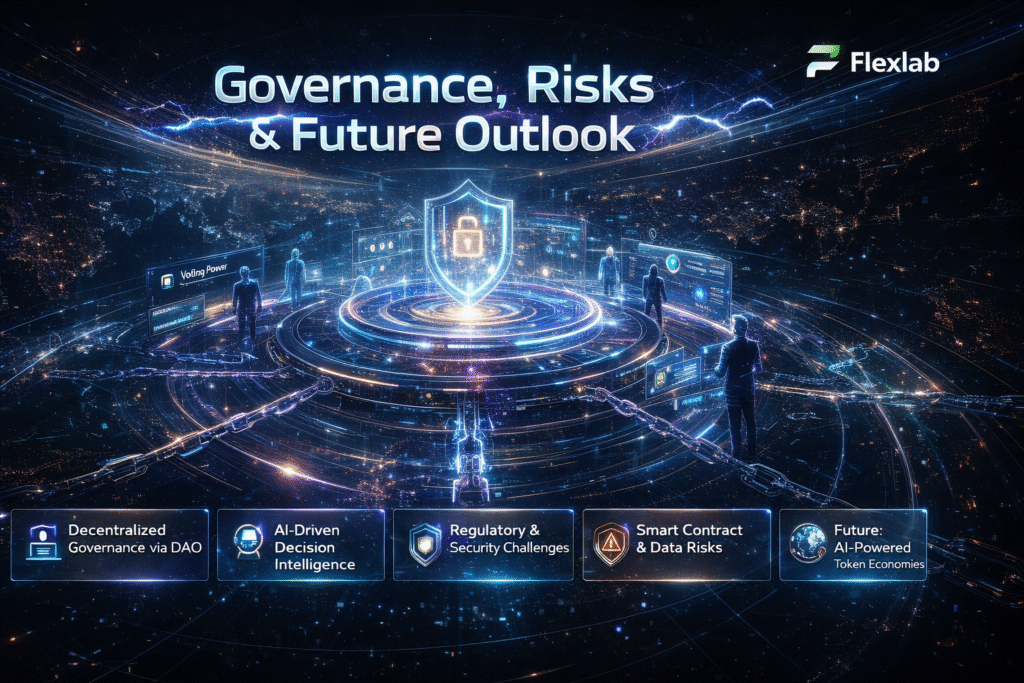
As asset tokenization continues to evolve, governance and risk management become critical for long-term success. In addition to technical infrastructure, systems must incorporate clear rules, accountability, and oversight. The concept of decentralized autonomous organization is emerging as a new governance model, enabling transparent and community-driven decision-making. However, alongside innovation, businesses must also address legal uncertainties, data risks, and operational challenges to build sustainable and trustworthy tokenized ecosystems.
Governance Through Decentralized Systems
Governance in tokenized ecosystems is increasingly supported by decentralized autonomous organization models, which allow stakeholders to participate in decision-making through voting mechanisms. Instead of relying solely on centralized authorities, these systems distribute control among participants, improving transparency and accountability. Moreover, AI agents can assist by analyzing proposals, tracking voting outcomes, and ensuring rules are followed. As a result, governance becomes more efficient, inclusive, and aligned with the community interests.
Key Risks and Regulatory Challenges
Despite its advantages, asset tokenization comes with several risks. For instance, regulatory uncertainty across different jurisdictions can create legal complications for investors and businesses. In particular, insights from Katten’s analysis of real-world asset tokenization emphasize how differences in legal frameworks, ownership rights, and enforcement mechanisms can impact tokenized systems. Therefore, businesses must adopt clear legal structures and compliance strategies.
Additionally, data quality issues, smart contract vulnerabilities, and security threats may impact system reliability. Therefore, organizations must implement strict auditing processes, access controls, and testing frameworks. By addressing these risks proactively, businesses can build trust, ensure compliance, and reduce the chances of operational failures in tokenized markets.
Future of AI Agents in Tokenized Markets
Looking ahead, the role of AI agents is expected to expand significantly, especially with the rise of AI agent development services tailored for blockchain ecosystems. These services enable businesses to deploy intelligent systems that automate workflows, enhance compliance, and improve decision-making. Furthermore, advancements in artificial intelligence technologies will allow AI agents to handle more complex tasks with greater accuracy. As adoption grows, AI-powered tokenized systems will become more scalable, efficient, and capable of supporting global digital economies.
Build Smarter Tokenization Systems with Flexlab
You’ve seen where the market is heading, and more importantly, how fast it’s evolving. The real question is: are you building for what’s next, or staying stuck in outdated systems?
At Flexlab, we design and deploy AI-powered tokenization ecosystems that don’t just function; they scale, adapt, and outperform. Whether you’re exploring real-world asset tokenization, refining your digital asset strategy, or integrating AI agents into blockchain workflows, this is where execution turns into real results. This isn’t a future trend; it’s already happening. The only question is: will you lead, or struggle to catch up?
Ready to Transform Asset Tokenization with AI Agents?
📞 Book a FREE Consultation Call: +1 (416) 477-9616
📧 Email Us: info@flexlab.io
If you want to see how this works in practice, explore our services. Or, if you’re ready to take action, contact us and start building a system designed for scale, speed, and long-term advantage. You can also stay connected and follow our latest innovations on LinkedIn.
If you’re exploring broader AI applications, you can also dive into topics such as the benefits of AI in supply chains or discover Innovative AI Applications through our blog. And if you’re evaluating the best AI Automation Agency, you’ll find the insights through our blog resources. Then let’s make it happen.
Asset Tokenization with AI Agents Key Takeaways
Asset tokenization is changing how ownership, investment, and value exchange work in today’s digital economy. By turning physical and financial assets into digital tokens, businesses and investors can move faster, reduce friction, and unlock new opportunities that were difficult to access before.
As AI agents become more integrated into these systems, they bring greater efficiency, better decision-making, and improved scalability. At the same time, long-term success depends on getting the fundamentals right, including governance, compliance, and user trust.
Looking ahead, the combination of AI and tokenization will continue to shape how assets are managed and traded across global markets. Consequently, organizations that take a practical, well-structured approach today will be better positioned to stay competitive and create lasting value over time.
What types of assets can be tokenized?
A wide range of assets can be tokenized, including real estate, stocks, bonds, art, commodities, and even intellectual property. In addition, infrastructure assets and private funds are increasingly being converted into digital tokens. This flexibility allows businesses to unlock liquidity from traditionally illiquid assets. As a result, investors gain access to diversified opportunities that were previously limited to large institutions.
How do AI agents improve asset tokenization systems?
AI agents enhance asset tokenization by automating workflows, monitoring transactions, and improving decision-making through data analysis. For example, they can handle compliance checks, detect risks, and optimize asset performance in real time. In addition, AI predictive analytics helps identify trends and prevent fraud. This makes tokenized systems more efficient, secure, and scalable for businesses and investors.
Is asset tokenization safe and legally compliant?
Asset tokenization can be safe and compliant when supported by strong legal frameworks, secure smart contracts, and regulatory compliance tools. However, regulations vary by region, which can create challenges for businesses. Therefore, organizations must implement proper governance, audits, and security measures. When done correctly, tokenization offers a transparent and reliable way to manage digital ownership.