Custodial vs Non Custodial Wallet: Which One Suits You?

Custodial vs Non-Custodial Wallet: Everything You Need to Know

Understanding the Difference Between Custodial and Non-Custodial Wallet

Multi-Agent Systems | Web3 Technology | AI Development Company

A custodial vs non-custodial wallet is one of the most important decisions in the world of cryptocurrency. Crypto is no longer a niche experiment—it’s a global financial movement. Whether you are buying your first $100 worth of crypto or managing a six-figure portfolio, one question matters more than most realize: Where will you store your digital assets?

That’s where your crypto wallet storage comes in handy. 

This is where the debate of custodial vs non-custodial wallets begins. It sounds technical, but at its core, it’s a matter of trust, control, security, and responsibility.

Blockchain technology has gained immense attention from ordinary investors, business leaders, and developers. These business leaders and developers are researching how to integrate these wallets seamlessly into their ecosystems to provide an approach that is significantly better than conventional financial systems.

If you want a clear, human explanation of which wallet is right for you, you are in the right place. By the end of this blog, you’ll know exactly which kind of wallet is best for your goals and experience level.

Why Wallets Matter More Than You Think?

A crypto is not like a physical wallet; it does not hold your money or coins. Instead, it helps protect the keys that let you access and control these coins on a blockchain network. If you lose these keys, you lose your crypto. Hand your keys to the wrong person, and they can take everything that you have. 

That’s exactly why picking the right type of wallet is the foundation of safe crypto ownership. This brings us to two major categories of crypto wallets;

  1. Custodial Wallets– where your keys are in someone else’s custody.
  2. Non-Custodial Wallets– where you protect your own keys. 

It sounds pretty simple and straightforward, but your choice of wallet is going to have a huge impact on your crypto security

An Introduction to Custodial Wallet

What is a custodial wallet? A custodial wallet is like using a bank. A custodial wallet is basically a wallet in which the private keys are held by a third party. A company– usually an exchange such as Coinbase, Binance, or Kraken- manages your private keys, stores your funds, and deals with security matters on your behalf. It means that the third party has complete control over your funds, while you only have to permit sending or receiving payments. 

With the help of a custodial wallet, consumers get a clean interface, a user-friendly app, and the ease of resetting their password if they forget it. 

If you are a beginner, this setup can feel like a sigh of relief. You don’t have to worry about losing seed phrases, and there’s no technical complexity involved. Best of all, it keeps the process stress-free.

How Does It Work?
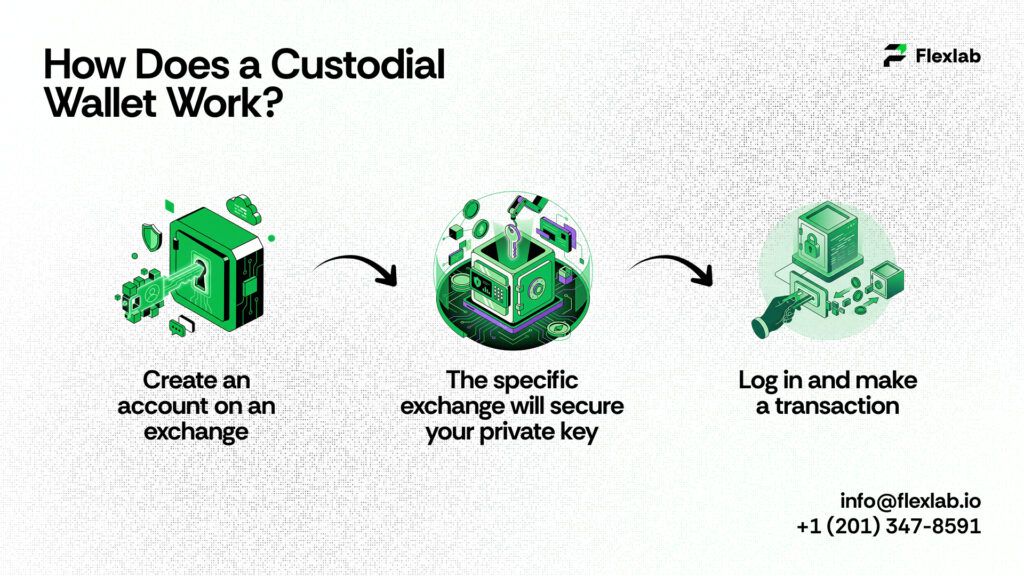
How Does a Custodial Wallet Work

Before jumping into which crypto wallet suits your work best, let’s demystify how each of them works. Here is an explanation of how a custodial wallet works; 

  1. Users create an account on an exchange or crypto service.
  2. The specific exchange or crypto service stores your crypto and secures the private keys.
  3. You log in and make a transaction whenever you want.

You get the access, they keep the control. 

This leads to the famous phrase in crypto; 

‘Not your keys, not your crypto.’

However, that does not necessarily mean that custodial wallets are not good. In fact, they are trusted and used by millions of users. 

Some of the most popular examples of best custodial wallets are: Free Wallet, Coinbase, Binance, Bitgo, BitMex, and Blockchain.com

The best part about custodial wallets is that there’s no seed phrase or native crypto knowledge needed; if you can run an email account, you can operate a custodial wallet.

What are Non-Custodial Wallets?

What is a non-custodial wallet? A non-custodial wallet gives you full control over your assets. You yourself hold the private keys, signing authorities, and seed phrase. No middlemen. No company or exchange is storing your funds. Hence, no one can freeze your digital assets. Basically, non-custodial wallets are self-custody wallets that directly connect you to decentralized networks, allowing interaction with DeFi and other decentralized applications. Non-custodial wallets use private key and public key pairs to access assets and allow users to execute transactions. 

Another advantage of a self-custody wallet is not having to wait for withdrawal approvals, resulting in faster transaction times.
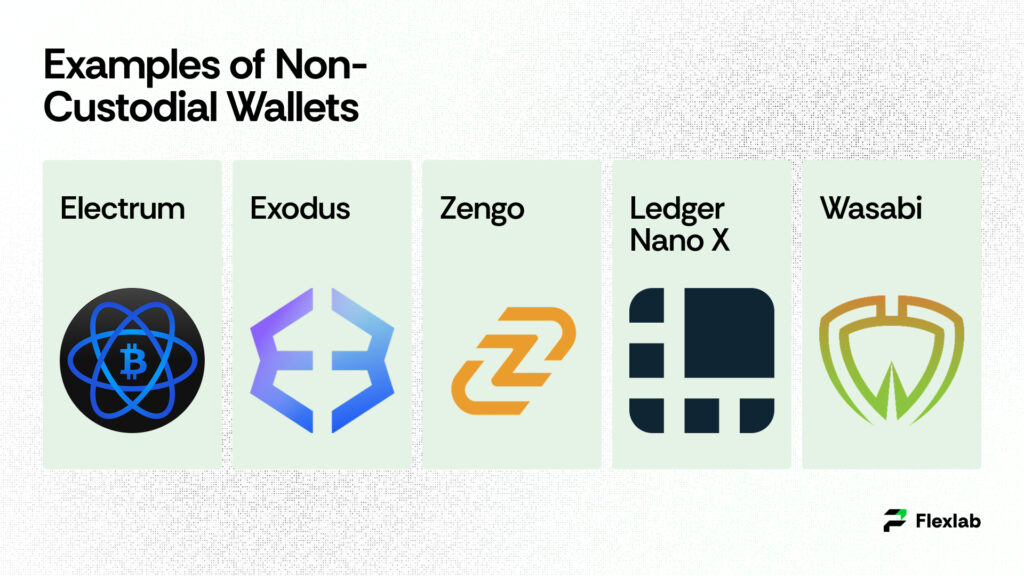
Examples of Non-Custodial Digital Wallets

Examples of non-custodial wallets include Mobile wallets (Trust Wallet, MetaMask, Exodus), paper wallets, hardware wallets, or cold wallets (Ledger, Trezor, Keystone), Browser extensions (Phantom), and Desktop apps (Electrum, Atomic Wallets). 

With great power comes great responsibility, and that’s exactly the trade-off here. 

Difference Between Custodial and Non-Custodial Wallets
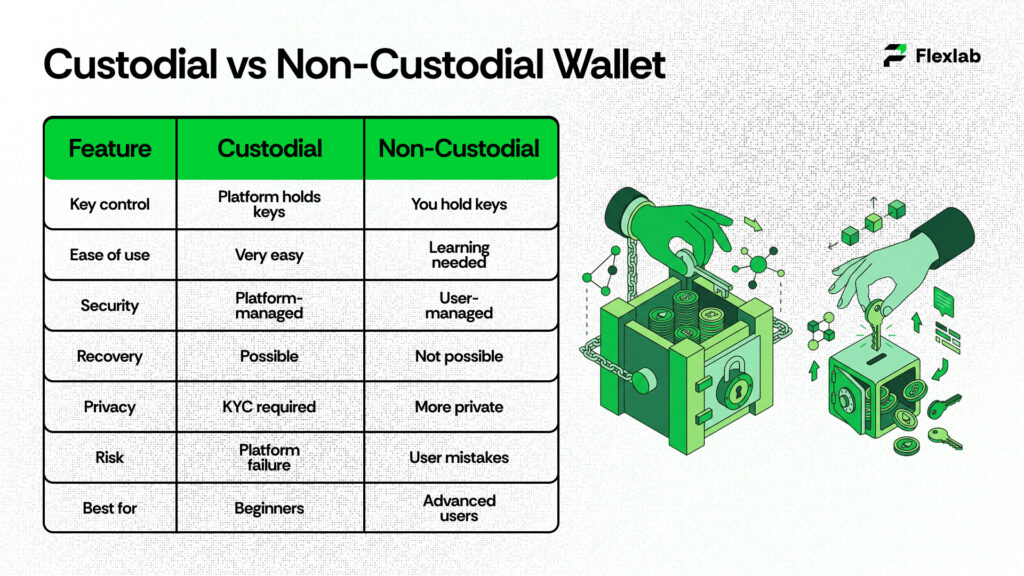
Difference Between Crypto Digital Wallets

1. Custodian of Private Keys

The most important factor to consider while comparing a custodial vs non-custodial wallet is who actually holds and has access to private keys. When it comes to custodial wallets, third-party or middlemen hold and manage the private keys. Whereas, in the case of non-custodial wallets, all the blockchain protocols and cryptocurrency transactions are in control of the user. So, if you want to create a wallet where you can be your own bank and safeguard your virtual assets, go with the idea of creating non-custodial blockchain wallets. 

However, if you want someone else to store and protect your digital assets, you grant them permission to send or receive assets. 

2. Transaction Type

Another key factor to consider when comparing custodial and non-custodial crypto wallets is the type of transaction. The transactions are reflected on the chain in real time in non-custodial wallets. But transactions are not reflected in the case of custodial wallets. Non-custodial wallets lead the show when it comes to the type of transaction. 

3. Security

In the case of a custodial wallet, all the sensitive user information is stored in hot and cold storage, which can be hacked by data intruders. For this reason, the custodial wallets may have security concerns unless the authoritative exchange or party implements strong security measures.

Non-custodial wallets give you full ownership of your assets, and all the sensitive information and data remain with users. This reduces the risk of data being stolen or leaked if managed responsibly. However, it is still possible if the user shares the data with the wrong person or if the device gets stolen. Both custodial and non-custodial wallets are highly secure, yet they both face some security concerns. 

4. Possibility of Recovery and Backup

When it comes to backup and recovery options, non-custodial crypto wallets lag behind custodial wallets because once you lose the seed phrase, they are gone for good. 

The custodial wallets keep the private key with themselves, so even if you lose the access or login information, you can still regain access by requesting the third party or the crypto exchange. However, it is not possible in the case of custodial wallets, where the user is the sole authority. The non-custodial wallets work the best for experienced traders ready to carry the great responsibility of storing the private keys safely. 

Since it’s extremely difficult to recover or retrieve the lost private key, the users of non-custodial wallets need to be extra careful. 

5. Transaction Time and Cost

With the custodial wallet, every transaction needs approval from the central authority. Consequently, there could be a delay in the transaction going through. On custodial wallets, the transaction costs are typically higher because of the involvement of custodians and other intermediaries. 

Non-custodial wallets can authenticate transactions without involving centralized exchanges, so they are usually quicker than custodial wallets. Transaction costs on non-custodial wallets are usually lower because there are fewer or no commission-seeking intermediaries. 

6. Offline Accessibility

Custodial wallets need an internet connection to reach centralized servers and access blockchain data. Therefore, custodial wallets can only operate online, making them prone to cyber attacks. 

On the contrary, non-custodial wallets can operate both online and offline. A non-custodial wallet can work both from a web browser and a mobile application. However, a hardware wallet is the safest, because users can make transactions even offline, thereby protecting private keys from hackers. 

7. Account Creation

For custodial wallets, users are required to complete Know Your Customer (KYC) and Anti-Money Laundering (AML) forms for security and crypto regulatory compliance. This can be a lengthy and time-consuming process. 

On the other hand, non-custodial wallets do not require KYC or AML form completion. Therefore, creating a non-custodial wallet may be quicker to set up. 

Which One Should You Choose?

The majority of crypto users end up using both(custodial vs non-custodial wallet). However, here is an easy guide depending on your situation; 

Use Custodial Wallets If:

  • You’re new to crypto
  • You want a simple, beginner-friendly app experience
  • You prefer recovering access if you lose your password
  • You don’t want to or are unable to manage private keys
  • You trade or swap crypto often

In short, custodial crypto wallets are great for beginners, traders, and casual users.

Use Non-custodial Wallets If:

  • You prefer having complete ownership
  • You tend to hold crypto long-term
  • Privacy is your foremost priority
  • You use DeFi, NFTs, or Web3 apps
  • Above all, you don’t want to rely on crypto exchanges

Consequently, non-custodial users are ideal for advanced users, long-term holders, and Web3 explorers. 

Future of Wallets: Where is It Going?
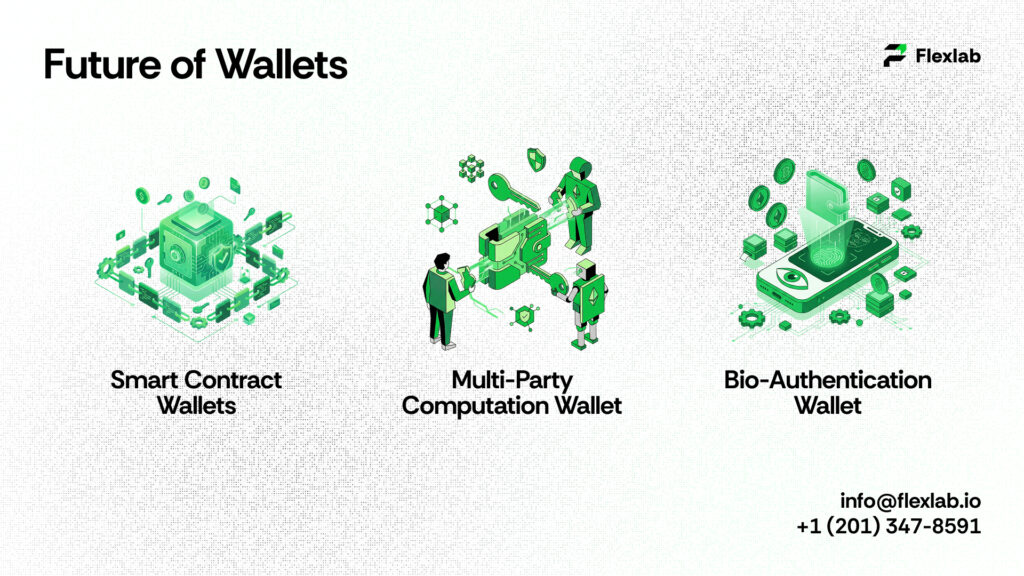
Future of Digital Wallets

The future of wallets lies somewhere in the middle of custodial vs non-custodial wallet. We are already seeing technological advancements in this field with the invention of:

  • Smart Contract Wallets: Smart contract wallets let you recover access without seed phrases. Examples of smart contract wallets include Argent and Safe Wallet. These wallets combine the convenience of custodial with the control and independence of non-custodial. 
  • Multi-Party Computation (MPC) Wallet: In multi-party computation, keys are split into multiple parts, so no one fully controls them— not you, not the company or exchange. It is an emerging protocol for safer and secure self-custody. 
  • Bio-authentication wallet: Bio-authentication wallets combine face ID pr fingerprint with encrypted hardware security. This is still evolving, but it could make crypto custody far more user-friendly. 

Final Verdict: Custodial vs Non-Custodial Wallet

There is no universal winner. Only a wallet that fits your priorities and goals. Users can choose a custodial wallet if they are looking for ease. However, if your priority is to be independent or to have complete control over your assets, choose a non-custodial wallet. Also, you can choose both when you need balance, and most people do. 

Crypto is not just about investment; it’s about empowerment. It does not matter which wallet you pick; in fact, the most important step is understanding how your choice affects your control, your assets’ security, and your financial freedom. Now that you have in-depth information about custodial and non-custodial wallets, you can make your decision confidently.

Start Your Crypto Journey with Flexlab

Start Your Crypto Journey with Flexlab

Now that you have in-depth information about custodial vs non-custodial wallet, it is time to utilize them the right way. 

Starting your crypto journey should not feel risky or confusing. And for this very purpose, Flexlab has you sorted. Flexlab makes it simple to buy and sell cryptocurrency with a clean, beginner-friendly, and easy-to-use platform built for real people, not just for experts. Flexlab lets you seamlessly integrate your crypto wallets, so your assets are in your control from day one. Connect your existing wallet or set up one, then manage, send, and receive crypto without hopping on different platforms. With clear transaction flows and secure wallet connections, Flexlab removes the friction that often holds beginners back. Whether you’re holding long-term or making regular moves, Flexlab gives you a smooth, reliable way to interact with your wallet and grow confidently in the crypto space.

Ready to Grow Your Business?

📞 Book a FREE Consultation Call: +1 (201) 347-8591
📧 Email us: info@flexlab.io

Discover real-world success stories in our portfolio, explore our solutions, and get your blockchain development solutions today. Contact us or have a look at our services. See firsthand what our clients say about us and how you can start your crypto journey with us.

To have more detailed insights into different topics, explore our blog page for more blogs like public vs private blockchain, benefits of using white label crypto exchanges for startups, and what is multimodal AI? 

FAQs

1. Is PayPal a custodial wallet?

Yes, the global payment giant PayPal has integrated a custodial wallet for its payment operations. PayPal allows users to buy, sell, and hold bitcoin through its custodial wallet integration across its platform. PayPal manages the private keys and cryptocurrency storage on behalf of users. 

2. Can I lose my crypto with a non-custodial wallet?

Non-custodial wallets eliminate third-party vulnerabilities, but there’s a trade-off. If you lose your private key or seed phrase, there’s no way to regain access or recover your crypto. So, yes, security of your non-custodial wallet is in your hands. 

3. What is the 30-day rule in crypto?

The 30-day rule in crypto usually refers to a tax rule where you can’t sell a crypto asset at a loss and buy the same asset again within 30 days to claim that loss for tax benefits. It’s meant to prevent “wash trading” for tax reduction, though how it applies depends on your country’s tax laws.

Leave a Reply

Your email address will not be published. Required fields are marked *

How Can AI Assistants Enhance Business Efficiency?

Generative AI | AI-Powered ChatbotsMultimodal AI 

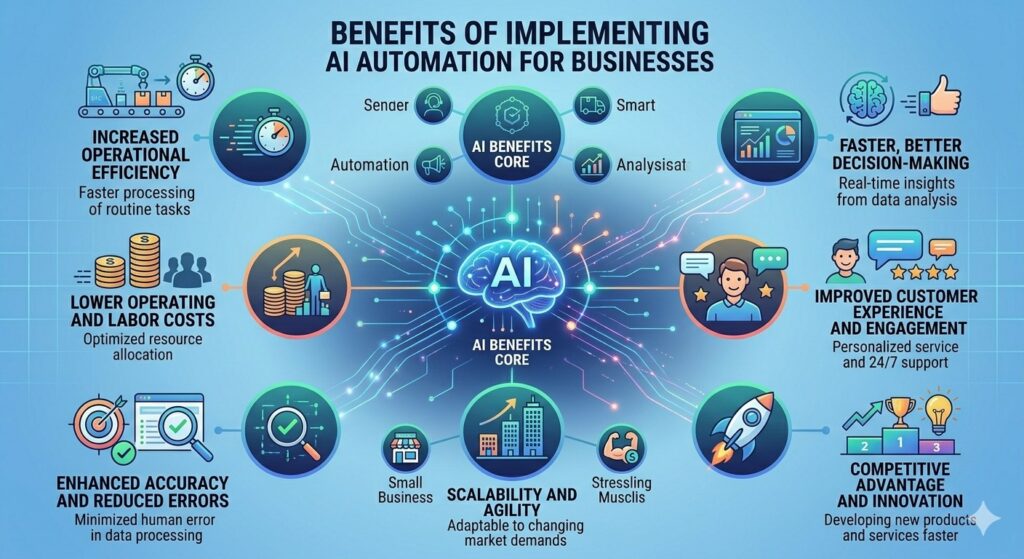
AI Assistants are transforming how businesses operate by enhancing efficiency, productivity, and decision-making at scale. Organizations can eliminate repetitive work, reduce manual effort, and refocus teams on high-value initiatives that drive sustainable growth.

In fact, research shows many employees lose an average of 15 hours every week to routine administrative tasks. This loss slows growth, delays decision-making, and costs businesses real money. The challenge today isn’t working harder, it’s working smarter through the strategic deployment of an AI assistant for business. These tools transform complex, repetitive tasks into automation, creating seamless workflows that allow teams to focus on high-value work.

In this guide, we explore how AI assistants improve business efficiency across departments, deliver measurable ROI, and support long-term business growth.

Unlocking Productivity: Where AI Assistants Truly Shine

AI assistants using digital tools to improve workplace productivity

An AI virtual assistant takes on routine tasks, freeing your human team to focus on high-value work that requires creativity and strategic thinking. This creates a measurable difference in AI productivity and day-to-day operations.

1. Automation of Repetitive Tasks

One of the most immediate benefits of AI Assistants is reclaiming hours lost to repetitive administrative work. By automating these tasks, businesses reduce manual effort, minimize errors, and allow employees to focus on higher-value projects.

  • Scheduling Made Effortless: AI Assistants automatically analyze multiple calendars, find optimal meeting times, send invitations, and manage reminders. This eliminates endless email back-and-forth, speeding up coordination across teams.
  • Accurate Data Entry: AI extracts information from forms, receipts, and emails, then logs it directly into CRM or ERP systems. This ensures reliable, error-free data while saving valuable time.
  • Streamlined Email Management: AI summarizes long email threads and drafts contextual responses. These digital tools flag only messages requiring human attention, so teams can focus on meaningful work.

2. Enhancing Customer Experience (24/7/365)

AI assistants transform customer engagement by providing instant, consistent, and scalable support 24/7.

  • Instant Answers and Intelligent Routing: First, routine questions are handled immediately, which significantly reduces wait times. Meanwhile, for more complex issues, AI gathers relevant context and then directs customers to the right human expert. As a result, businesses can ensure faster and more effective resolutions.
  • Personalization at Scale: In addition, AI analyzes customer history to deliver highly personalized services. Consequently, it enables proactive support rather than reactive responses. Ultimately, this approach enhances customer satisfaction, strengthens loyalty, and improves overall sales performance.

3. Data-Driven Decision-Making

Your business generates vast amounts of data. Using workflow automation. AI assistants convert this into actionable insights for smarter and faster decisions.

  • Real-Time Insights and Forecasting: AI continuously monitors operational data and market trends, identifying patterns and potential bottlenecks. Predictive capabilities allow businesses to move from reactive to proactive strategies.
  • Risk Management: AI flags financial irregularities or compliance risks early, helping prevent costly mistakes and regulatory penalties.

4. Streamlining Internal Workflows

AI acts as a digital coordinator, keeping projects and internal processes running smoothly. Using AI algorithms, organizations can handle routine employee questions about policies, benefits, and PTO, allowing HR teams to focus on complex employee relations. Therefore, employees can ask questions in natural language, and AI quickly pulls the correct policy or document from the company’s knowledge base, eliminating frantic searches and improving business efficiency.

AI Assistants Customized for Business Units

Efficiency isn’t just theory; it’s about real, measurable results. Business process automation transforms how departments operate, allowing teams to focus on high-value, strategic work while automating repetitive tasks.

Virtual agents tailored for different business departments

1. Sales: Close Deals Faster Than Ever

Your sales team should focus on building strong relationships. AI assistants handle the heavy lifting.

  • Lead Scoring: AI analyzes prospect data instantly and prioritizes leads most likely to convert. This saves hours of wasted time and improves focus.
  • Conversation Intelligence: The AI listens to sales calls, automatically extracting key actions, next steps, and competitor mentions. Manual note-taking is no longer required.
  • Automated Follow-Up: AI drafts and schedules personalized follow-up emails, using customer feedback analysis to determine the perfect moment to engage.

2. Marketing: Personalization at Scale

Marketing’s biggest challenge is reaching the right person with the right message. AI assistants make personalization scalable and accurate.

  • Content Generation: AI drafts blog outlines, social media posts, and email subject lines, giving your writers a massive head start and speeding up innovation in campaign delivery.
  • Predictive Ad Spend: AI monitors ad performance in real-time and shifts budget automatically to the best-performing demographics. You get better ROI without manual adjustments.

3. HR & Operations: Supporting Your People

HR teams need time for people, not paperwork. Using robotic process automation handles the bulk of routine employee support.

  • Onboarding Assistance: AI guides new hires through paperwork and training modules seamlessly, thereby reducing HR workload.
  • Resume Screening: In addition, AI scans thousands of applications and ranks candidates based on skills, which frees recruiters to focus on interviewing top talent.

4. Finance & Accounting: Streamline Financial Operations

AI assistants help finance teams reduce errors, save time, and make better data-driven decisions.

  • Automated Reporting: AI generates reports and dashboards instantly, helping teams track performance without manual data compilation.
  • Invoice & Expense Management: Using automated invoice processing reconciles expenses and flags anomalies, saving hours of administrative work.

Measuring Success: The High ROI of AI Assistants

Every investment needs to prove its worth, and AI assistants deliver. They don’t just feel faster; they generate measurable financial returns through operational savings and long-term revenue growth. The benefits come in two key ways:

Dashboard showing ROI metrics from Intelligent business systems

1. Immediate Cost Reduction 

AI assistants deliver rapid ROI by cutting operational expenses.

Labor Savings: By automating repetitive, manual tasks, AI allows your current team to focus on higher-level work, thereby reducing the need to hire additional staff.

Customer Service Costs: Moreover, AI chatbots handle up to 80% of routine inquiries, which lowers the average cost of each customer interaction from dollars to mere cents.

Fewer Errors: In addition, AI ensures consistency and accuracy in data entry, billing, and compliance checks, minimizing costly mistakes and rework.

2. Built-In Revenue Growth 

AI assistants actively enable your business to earn more.

Boost Sales Productivity: AI not only qualifies leads but also manages scheduling, thereby freeing sales reps to focus on closing deals. As a result, you can expect a noticeable increase in the number of deals completed each quarter.

Higher Conversion Rates: AI marketing tools not only personalize ads but also provide tailored recommendations based on real-time customer behavior. Consequently, this approach drives higher conversions.

Faster, Data-Driven Decisions: AI not only delivers instant insights on market trends but also provides real-time data on internal performance. As a result, leaders can make quick, strategic decisions, staying ahead of competitors and gaining a significant competitive edge.

Concludingly, investing in AI produces measurable ROI by reducing costs, increasing revenue, and empowering your team to focus on strategic priorities.

Managing Risk, Security and Ethics for AI Assistants 

Implementing AI assistants is a powerful strategic move, but it also comes with real responsibility. Addressing security and ethics is not optional; it is essential for responsible, long-term adoption.

1. The Challenge of Algorithmic Bias:

Algorithmic bias is a serious issue that demands ongoing attention. AI assistants learn from the data they are trained on, and that data shapes their decisions.

Problem: If historical hiring, lending, or operational data contains bias, AI assistants can learn and amplify it. This can result in unfair or discriminatory outcomes that negatively impact employees, customers, and business credibility.

Solution: Organizations must regularly audit AI outcomes to ensure fairness. Therefore, training data should be diverse, clean, and representative of real-world populations. From day one, fairness should be treated as a core requirement, not an afterthought.

2. Protecting Data Privacy and Security:

AI assistants often process large volumes of sensitive information, making data protection a top priority.

Problem Handling customer PII, financial records, or proprietary business data introduces significant risk. Without proper safeguards, organizations face potential data breaches, loss of trust, and costly penalties for non-compliance with regulations such as GDPR or HIPAA.

Solution: Only enterprise-grade AI solutions should be used. As a result, these platforms provide strong encryption, robust access controls, and built-in security protocols. Furthermore, clear data governance policies must be established to define what information AI assistants can access, how it is used, and how long it is retained. Ultimately, these measures ensure security, compliance, and long-term trust.

3. Accountability and Transparency:

When AI is involved in decision-making, accountability must always remain clear.

Problem: In some cases, it can be difficult to understand why an AI assistant reached a particular conclusion. This “black box” problem makes it harder to explain decisions, resolve errors, or assign responsibility when something goes wrong.

Solution: Human oversight is essential. For high-impact decisions, such as financial approvals or compliance actions, humans should always have the final say. Organizations should also prioritize AI solutions that support Explainable AI (XAI), making decision logic more transparent and easier to understand.

Furthermore, responsible AI matters because when security, ethics, and transparency are built into AI adoption, AI assistants become a trusted asset rather than a liability. By managing risk proactively, businesses can scale ai with confidence, protect stakeholders, and ensure sustainable and responsible innovation.

What’s Next: The Future of AI Assistants

If you think AI assistants are powerful now, the technology is advancing quickly. Staying competitive means understanding where the future of AI is heading next.

Concept illustration of future workplace technology and automation

1. The Rise of Hyper-Automation

We are moving past simply automating one task at a time.

  • What it means: AI will soon manage entire, complex business processes end-to-end using autonomous systems. For example, it could take a sales order, check inventory, draft the invoice, and schedule the shipment—all without any human input. As a result, businesses can achieve greater speed and accuracy across operations.
  • The Impact: This next level of automation will, moreover, fully integrate every system. As a result, it will deliver peak operational efficiency across your entire organization.

2. Human-AI Collaboration

The future is not human versus AI. It’s definitely human plus AI.

  • Focus on Synergy: This partnership is often called the Centaur Model. where AI agents provide speed, data analysis, and tireless execution. The human provides the crucial judgment, creativity, and emotional intelligence.
  • The Outcome: Together, the combination is not only much smarter but also faster than either party working alone. Consequently, it allows your employees to focus exclusively on high-value, uniquely human tasks.

3. Smarter, More Aware Assistants

AI is rapidly evolving to interact even more naturally with us.

  • Multimodal AI: Future AI assistants will process and understand text, voice, images, and video all at the same time. This makes interactions feel truly natural and instantaneous as tools process text, voice, and video simultaneously through intelligent automation.
  • Emotionally Aware: Advanced AI will be able to interpret the sentiment and tone in a customer’s voice or text. As a result, this capability allows the AI to adjust its response accordingly. For example, it can offer sympathy when needed or escalate a call when appropriate. Ultimately, these adjustments help improve the quality of every single interaction.

AI Assistant Adoption Roadmap in 5 Steps

Step-by-step roadmap for enterprise AI adoption

Moving from learning about AI assistants to actually putting them to work can feel overwhelming, but the good news is that you don’t need a massive budget or a complete IT overhaul to get started. The most successful implementations follow a step-by-step, focused approach, guided by clear business goals, so your team can see measurable results without feeling stressed or overburdened.

This roadmap breaks down five practical steps to assist your business in adopting AI assistants efficiently, maximizing ROI, and empowering your employees to focus on high-value work.

1. Identify Your Pain Points

Start by pinpointing the areas where your team is losing the most time or struggling with repetitive work. Don’t buy a tool just because it’s new or trendy. Focus on the process that creates the biggest friction.

  • Find the Bottleneck: Is it customer ticket sorting, data entry after sales calls, or scheduling meetings? Start with one high-impact process.
  • Set Clear Goals: Define success in measurable terms. For instance, “Reduce scheduling time by 40% in the next quarter.”
  • Start Small: A low-risk, high-impact pilot helps prove value quickly and builds excitement across your team.

2. Prepare Your Data

An AI assistant is only as smart as the data it learns from, so quality and accessibility are essential.

  • Check Data Quality: Ensure the data is accurate, complete, and up-to-date. For example, if automating customer support, confirm old chat logs are clean and relevant.
  • Make Data Accessible: Structure documents and information clearly so the ai can process and understand them.
  • Prioritize Security: Protect sensitive or private data and ensure compliance with regulations such as GDPR or HIPAA before the AI interacts with it.

3. Choose the Right Tool and Integrate

Once goals and data are ready, select an AI assistant platform that fits seamlessly with your existing systems.

  • Seamless Integration: Select AI automation tools that work smoothly with platforms your team already uses, such as Salesforce, HubSpot, or Microsoft Teams. Avoid creating separate silos.
  • Run a Pilot: Start with a small group or one process first. Measure performance against your initial goals to minimize risk.

4. Train Your Team

Successful AI adoption is about people, not just technology. Employees need to understand how the AI will support them.

  • Explain the Why: Demonstrate how AI reduces routine work, thereby allowing them to focus on higher-value projects.
  • Address Concerns: Reassure staff that AI serves to support, rather than replace, them.
  • Define New Roles: Help employees understand how they will interact with AI, manage exceptions, and concentrate on strategy and creativity.

5. Scale and Continuously Optimize

Once the pilot is successful, expand the digital transformation across other departments and gather feedback to refine performance.

  • Integrate Fully: Next, roll the AI assistant out across other departments or similar processes.
  • Monitor Performance: Then, continuously track metrics to ensure goals are met.
  • Gather Feedback: Finally, ask employees and customers for input on what works and what can be improved. Use this information to refine and train the AI over time.

Real-World Success Stories of AI Assistants

Seeing AI assistants in action is far more compelling than just talking about business efficiency. In fact, around the world, companies are increasingly leveraging AI to save time, cut costs, and boost productivity. As a result, these tools are no longer viewed as optional but as strategic investments. Moreover, from customer service to marketing and internal workflows, AI assistants are consistently delivering measurable ROI. Consequently, they are transforming the way teams work across industries. With this in mind, here are three powerful examples that highlight real impact:

Business team reviewing successful automation case studies

Case Study 1: Cutting Customer Service Costs by 80%

Company: Bank of America (“Erica” AI Assistant)

Challenge:

  • High call volume during peak hours, with repetitive questions bogging down human agents
  • Slow response times, leading to frustrated customers

AI Solution:

  • Implemented an intelligent conversational AI to handle routine tasks like balance inquiries, transfers, and FAQs
  • Available 24/7, providing instant answers via chat and voice

Results:

  • Massive Cost Reduction: Freed human agents to focus on complex issues, reducing operational costs dramatically
  • Improved Customer Loyalty: Faster responses and consistent support boosted customer satisfaction scores
  • Efficiency Gains: Handled over 1 billion interactions with minimal human intervention

Case Study 2: Accelerating Marketing Campaigns

Company: L’Oréal and Coca-Cola

Challenge:

  • Traditional content creation for campaigns took weeks, often requiring costly external agencies
  • Teams struggled to respond quickly to market trends

AI Solution:

  • AI assistants generated initial campaign ideas, blog outlines, ad copy, and social media posts within minutes
  • Adherence to brand guidelines ensured consistency without manual oversight

Results:

  • Time Savings: Concept creation reduced from weeks to hours
  • Faster Go-to-Market: Marketing teams launched campaigns quickly, reacting to trends instantly
  • Increased ROI: Personalized campaigns and faster execution improved marketing effectiveness

Case Study 3: Turbo-Charging Internal Productivity

Company: MEDITECH (Healthcare Technology)

Challenge:

  • Employees spent excessive time on administrative tasks, including note-taking, drafting follow-up emails, and searching internal documents
  • Productivity was limited by repetitive, low-value work

AI Solution:

  • Centralized AI assistant integrated with the company’s digital workspace
  • Automated summarization of meetings, smart scheduling, drafting follow-up emails, and retrieving complex policies

Results:

  • Time Savings: Estimated 7 hours saved per employee per week
  • Enhanced Productivity: Time redirected toward innovation, client support, and strategic initiatives
  • Operational Efficiency: Improved business output without increasing staff size

These real-world examples prove that AI assistants are not just productivity tools; in fact, they are strategic investments that generate measurable ROI, streamline operations, and, as a result, empower teams to focus on high-value work.

Last Words: How AI Assistants Drive Real Growth

AI assistants are not a trend; rather, they are the foundation of modern business efficiency. Throughout this guide, we’ve demonstrated how these intelligent tools consistently deliver measurable AI ROI by cutting costs, boosting revenue, and, most importantly, freeing your most valuable asset—your people—from the burden of repetitive administrative work.

Ultimately, the choice today is simple. On one hand, you can remain tied to outdated inefficiencies; on the other hand, you can strategically embrace AI assistants as the future of productivity. As the roadmap and real-world success stories clearly show, starting small and scaling smart is not only practical but also the most effective path to sustained growth and peak performance.

Grow Smarter with Flexlab & AI Assistants

Flexlab: Enterprise automation solutions driving business growth

Are administrative tasks slowing your team down and keeping you from focusing on growth? If so, it’s time to take control and scale smarter. At Flexlab, we don’t just implement technology; instead, we empower businesses with AI-powered systems that streamline operations. Moreover, these solutions eliminate repetitive work and, as a result, enable your team to focus on what truly drives results.

Ready to Grow Your Business?

📞 Book a FREE Consultation Call: +1 (201) 347-8591
📧 Email us: info@flexlab.io

See how we transform ideas into real solutions in our portfolio, from custom automation to blockchain products. Meanwhile, if you want to optimize your operations, our services page clearly shows how we deploy AI Assistants, automation, and modern technology. Ultimately, these solutions are designed to solve today’s most pressing business challenges.

The best way to move forward is with a conversation, so we invite you to contact us to explore custom strategies and accelerate your growth. Reach out to explore strategies, accelerate growth, and stay ahead with expert insights on our blog or follow us on LinkedIn for the latest trends and innovations. For Deeper Learning, Here are a Few Recommended Reads:

FAQs

Q1: How quickly can businesses see ROI after implementing AI assistants? 

Most businesses begin seeing measurable ROI within 30 to 90 days of deployment. AI assistants reduce operational costs immediately by automating repetitive tasks such as scheduling, customer support, and data entry. As adoption scales, productivity gains compound across departments, driving faster decision-making and higher revenue. The key is starting with a focused, high-impact use case rather than automating everything at once.

Q2: What makes AI assistants different from traditional chatbots?

Traditional chatbots follow predefined scripts and handle only basic, rule-based queries. AI assistants, on the other hand, understand context, learn from interactions, and integrate with business systems like CRM, ERP, and analytics platforms. This allows them to automate workflows, provide real-time insights, and support complex decision-making. In short, chatbots answer questions, while AI assistants run processes.

Q3: How much does it cost to implement an AI assistant for a business? 

The cost of implementing an AI assistant varies based on complexity, customization, and scale. Basic ai assistants for scheduling or customer support can start at a relatively low monthly cost, while enterprise-grade, custom ai solutions require a higher investment. However, most businesses recover costs quickly through reduced labor expenses, fewer errors, and improved productivity. When measured against long-term efficiency gains and revenue growth, AI assistants often deliver a strong and sustainable ROI.

The Role of AI Strategy Consulting in Fueling Business Growth

AI Marketing Tools | AI Business Ideas | AI Voice Agents

AI strategy consulting is transforming industries by turning AI hype into 25-40% cost savings, 2x faster decisions, and breakthrough innovation, but only with the right roadmap.

In a world where PwC predicts AI will contribute $15.7T to global GDP by 2030, many companies still struggle with data gaps, ethical risks, and failed pilots that cost millions.

Flexlab bridges this gap by combining AI consulting with digital transformation strategy, delivering measurable growth across healthcare, finance, and blockchain. Ready to build your AI strategy roadmap? Read on.

What is an AI Strategy?

An AI strategy is a comprehensive plan for integrating AI technologies across an organization. It helps businesses achieve goals and remain competitive, acting as a roadmap that demonstrates how AI can drive value. It highlights the importance of understanding use cases, implementations, and success metrics while addressing technical, operational, and ethical challenges. For example, with the rise of generative AI applications, organizations must integrate content-creating generative AI models into their overall strategy. A strong AI strategy also aligns with broader digital transformation strategy efforts, ensuring new tools fit the existing vision rather than creating silos.

A practical AI strategy framework should be able to answer a few core questions:

  • What are our AI goals?
  • Where and how to apply AI?
  • What resources are required to implement AI?
  • How can we handle the risks and ethical implications of AI?

An AI consulting strategy involves various AI goals, including improving operational efficiency, boosting customer satisfaction, or driving innovation in products and services. The task is to highlight the areas within business that could benefit from AI. It also understands how different AI solutions, including machine learning models, natural language processing, and robotic process automation, can be implemented. Moreover, an AI strategy provides the infrastructure, technical skills, and data needed to develop, deploy, and maintain AI solutions.

Benefits of AI Strategy Consulting for Business

Team analyzing business growth and technology strategy

AI strategy consulting helps businesses turn AI from a buzzword into measurable results across decisions, operations, and growth.

  • Drives smarter and faster decision-making
  • Higher Efficiency and Lower Costs
  • Aligned AI Investments with Business Goals
  • Reduced Risk and Stronger Governance
  • Competitive Advantage and Innovation
  • Drives Smarter and Faster Decision-Making

Every business leader looks at the company’s growth, cost, and customer trust. All these can be done with AI strategy consulting. Leaders get insightful data from AI and make choices in real time. AI models process patterns that can not be done by humans. Therefore, AI makes smarter decision-making and faster actions. Moreover, the benefits of artificial intelligence are clearer forecasts, better risk assessment, and improved accuracy in planning. As a result, it reduces uncertainty and provides businesses with a clear goal with confidence. 

  • Higher Efficiency and Lower Costs

AI helps businesses avoid waste and lower costs. With the help of AI automation tools, consultants streamline workflow, reduce manual work, and cut operational costs. They also prevent wasted spending on the wrong tools or experimental projects that do not align with business goals. These AI-powered solutions help teams focus on high-value work instead of repetitive tasks.

  • Aligned AI Investments with Business Goals

Consultants connect AI use cases directly to strategic objectives, such as revenue growth, customer satisfaction, or innovation. This alignment ensures every AI initiative has defined KPIs, a business case, and a roadmap rather than being isolated pilots. This is where experienced AI business consulting adds clarity and structure.

  • Reduced Risk and Stronger Governance

AI strategy consulting introduces governance frameworks for data privacy, security, compliance, and the ethical use of AI. This reduces the risk of regulatory issues, biased models, or reputational damage while building internal guidelines for responsible AI. This often starts with a thorough data quality assessment to ensure models are trained on reliable information.

  • Competitive Advantage and Innovation

Consultants help detect new AI-driven products, services, or business models by providing an external view of best practices and industry trends. This approach leads business leaders to stay competitive compared to those who adopt AI more slowly or with less structure.

Step-by-Step Guide: How AI Strategy Consulting Boosts Business Growth

Illustration of a step-by-step business strategy process

Follow these 5 simple steps to see how AI strategy consulting translates into real business growth and smooth AI adoption across your organization.

Step 1: Assess Readiness and Set Growth Goals

Start with a quick AI audit of your data, tech stack, and team skills, then outline a basic data management plan to support future AI work. Set clear growth goals, like cutting costs, increasing revenue, or improving customer retention, so every AI move supports a measurable outcome.

Step 2: Identify High-Impact Use Cases

Work with consultants to find the best AI opportunities, such as demand forecasting, fraud detection, or customer support automation. Focus only on use cases that directly support your goals and have strong ROI potential.

Step 3: Build a Practical AI Roadmap

First, turn ideas into a step-by-step plan. Then, define timelines, budgets, KPIs, and the required tools. As a result, this roadmap prevents random pilots and ensures that every AI project remains aligned with your growth strategy.

Step 4: Implement, Integrate, and Enable Teams

First, roll out AI solutions in phases, integrate them with your existing systems, and train your teams to use them daily. Consequently, efficiency gains, faster decisions, and improved customer experiences begin to show measurable results. Moreover, this people-centric approach ensures that AI implementation is smoother and more sustainable.

Step 5: Measure, Optimize, and Scale What Works

First, track results against KPIs, address what doesn’t work, and double down on what does. In addition, consultants help you refine models, manage risks, and scale successful AI solutions across departments, thereby driving ongoing growth.

How to Build An Effective AI Strategy Roadmap: 5 Key Steps

Diagram showing 5-step roadmap for implementing AI in business

AI strategy consulting helps companies integrate AI systems into daily operations, addressing both business and technical needs. Each step tackles specific challenges in building an AI plan. Our experts outline these straightforward phases to create a clear and actionable AI roadmap.

1. Check AI Readiness

This is the first step in most AI projects. Our AI consultants at Flexlab review your tech setup, data quality, and team skills. We also check if AI fits your business goals, so projects are doable and make sense. As part of readiness, we also review your data management strategy to confirm it can support scaling.

2. Build Your AI Strategy

After the check, we then work with your team to create a custom AI plan. First, we set clear goals, next we select the right AI tools, and subsequently plan resources. Finally, we provide a step-by-step rollout guide along with methods to track success tied directly to your business wins.

3. Plan and Roll Out AI

Next, we turn plans into action. This involves first choosing the right technology, then handling AI development, building AI tools, and integrating them with your existing systems. Afterward, we test everything to ensure reliability. Meanwhile, our consultants guide your team, manage projects, meet deadlines, and control costs. Ultimately, effective AI integration consulting ensures all components work seamlessly together rather than creating new bottlenecks.

4. Train Staff and Manage Change

AI changes how work gets done and requires new skills. We create plans to ease the shift, covering tech and people. They run training sessions so employees can use AI daily. And also helps leaders build a data-smart culture for long-term wins.

5. Keep Supporting You

AI requires ongoing care after launch. We continuously monitor performance, resolve issues, and make adjustments to improve results. Additionally, we update your strategy as your business evolves, ensuring your AI remains valuable and future-ready.

Together, these steps offer comprehensive support for your AI journey. By seamlessly combining business expertise with technical know-how, we help you overcome AI challenges, maximize value, and outperform competitors using AI and machine learning. To learn more, visit our LinkedIn or contact us today.

AI Strategy Consulting in Different Industries

Icons representing healthcare, finance, and tech industries

So, AI strategy consulting tailors AI adoption to industry needs, driving efficiency, innovation, and compliance across sectors.

  • AI in Healthcare
  • AI in finance and banking
  • AI in retail and e-commerce
  • AI in manufacturing and logistics

AI in Healthcare

AI supports accurate diagnosis and treatment planning in healthcare. Consultants deploy AI for diagnostics, patient triage, and predictive analytics, improving accuracy and reducing wait times. Additionally, they address data privacy under HIPAA and tackle ethical concerns, such as bias in medical algorithms. Hospitals also benefit from faster reporting and more efficient resource allocation.

AI in Finance and Banking

Banks rely on AI in fraud detection, cybersecurity risk assessment, and guiding investment decisions. Additionally, AI strategies enhance algorithmic trading and enable personalized banking through chatbots. Meanwhile, AI consultants help strengthen regulatory compliance, mitigate cybersecurity threats, and build greater customer trust.

AI in Retail and E-Commerce

Retail benefits from AI in demand forecasting, recommendation engines, and inventory management. Meanwhile, consulting helps optimize customer experiences through personalization while ensuring data ethics are maintained. Additionally, retailers leverage AI in marketing automation to deliver the right message to the right customer at the right time.

AI in Manufacturing and Logistics

AI in supply chain management enhances routing, inventory control, and demand planning across the entire network. Additionally, it supports predictive maintenance, overall supply chain optimization, and robotics automation. Meanwhile, consultants help streamline operations, reduce downtime, and integrate IoT for real-time tracking and insights.

Best AI Strategy Consulting Services in 2026

Best AI Strategy Consulting Services in 2026

AI strategy consulting helps businesses develop effective plans to leverage AI for tangible benefits, such as 25-40% cost reductions and improved decision-making, without the hype. These top services guide you from ideas to rollout, focusing on ethics, scaling, and your goals. Drawing from Clutch rankings and 2026 lists, here’s the best lineup, including Flexlab’s unique AI-blockchain edge.​

1. Flexlab

Flexlab, a leading blockchain and AI automation agency, merges AI strategy with blockchain to create Web3 roadmaps—guaranteeing delivery in 30 days or free work with up to 80% savings. Based in the USA, they craft secure, tailored plans to drive growth in tech and crypto sectors.

Services We Offered

  • AI-blockchain roadmaps
  • Custom automation strategies
  • Efficiency audits and scaling
  • Ethical Web3 integration
  • Custom blockchain development services
  • AI consulting services

Industries Served

  • Tech, finance, blockchain, automation, healthcare, e-commerce

Why Flexlab?
Fast, results-backed plans stand out for innovative, secure AI in emerging tech.

Are you Ready to Revolutionize Business with an AI Consulting Strategy?

📞 Book a FREE Consultation Call: +1 (201) 347-8591

📧 Email us: info@flexlab.io

2. HatchWorks AI

HatchWorks AI delivers custom AI roadmaps that transform AI buzz into tangible business wins, while training teams on agent automation for operations and marketing. Based in Atlanta, they achieve over 90% model accuracy using Generative-Driven Development, enabling fast and reliable solutions.

Services They Offered

  • AI strategy and roadmap building
  • ML integration and use case picks
  • Team training and governance
  • Cloud AI scaling

Industries They Served

  • Healthcare, finance, retail

Why HatchWorks AI?
Perfect Clutch scores for clear plans and results make them ideal for practical AI that sticks.​

3. SingleStone Consulting

SingleStone guides end-to-end AI initiatives, from identifying use cases to managing risk, while blending machine learning, governance, and cloud technologies for a competitive edge. Moreover, they ensure AI strategies align with long-term goals across key sectors.

Services Offered

  • AI strategy and roadmap
  • Data quality and architecture
  • AI compliance and model risk
  • ML integration

Industries Served

  • Healthcare, financial services, retail, tech

Why SingleStone?
By combining deep AI and business expertise, they deliver scalable value without overcomplicating processes.

4. PwC

PwC aligns AI initiatives with business strategy while emphasizing ethics and governance for safe, scalable adoption. Additionally, their experts design clear roadmaps and machine learning models to support smarter decision-making.

Services Offered

  • AI roadmap development
  • Ethics and governance
  • Data science analytics
  • Implementation scaling

Industries Served

  • Healthcare, retail, finance

Why PwC?
With a proven ethics framework, they ensure AI remains compliant while simultaneously driving growth.

5. Accenture

Global powerhouse Accenture drives AI transformation through cloud analytics and automation to improve efficiency. Furthermore, they also deliver end-to-end AI strategies across industries, ensuring seamless integration and measurable impact.

Services Offered

  • AI strategy transformation
  • Data/ML analytics
  • Cloud AI solutions
  • Automation deployment

Industries Served

  • Retail, finance, manufacturing

Why Accenture?
With worldwide reach, they enable seamless innovation at any scale.

6. Deloitte

Many projects begin with big data consulting to unlock insights from large, complex datasets. Deloitte then develops AI strategies that integrate seamlessly into core operations, identifying opportunities and scaling models with robust governance for secure growth. Moreover, their industry experts ensure responsible AI use throughout major transformations.

Services Offered

  • AI use case and roadmap development
  • Custom ML models
  • Integration and implementation
  • Governance and compliance

Industries Served

  • Healthcare, government, finance

Why Deloitte?
Their broad expertise, combined with a strong focus on security, makes them ideal for large-scale, compliant AI rollouts.

7. Capgemini

Capgemini delivers AI roadmaps that drive real growth by deploying machine learning and optimizing data for innovation across key sectors. Moreover, they manage the full AI lifecycle, from strategy through advanced analytics.

Services Offered

  • AI strategy and roadmap
  • ML model development
  • Implementation and scaling
  • Business intelligence

Industries Served

  • Retail, automotive, finance

Why Capgemini?
By leveraging end-to-end expertise, they transform AI plans into reliable, everyday business wins.

8. McKinsey & Company

McKinsey maximizes AI value through clear roadmaps, advanced analytics, and large-scale transformations that sharpen decision-making and operations. Additionally, its QuantumBlack arm brings deep data expertise to deliver high-impact AI strategies.

Services Offered

  • AI roadmap development
  • Advanced ML and analytics
  • Adoption and scaling
  • Transformation programs

Industries Served

  • Healthcare, tech, finance

Why McKinsey?
Track record in huge changes tailors AI perfectly to your needs

9. Bain & Company

Bain first identifies top AI opportunities, then builds scalable models, and subsequently aligns strategies with business goals to achieve seamless operational improvements. Consequently, their insights deliver measurable value quickly.

Services Offered

  • AI strategy development
  • ML and AI models
  • Data governance
  • Optimization

Industries Served

  • Retail, tech, finance

Why Bain?
Strategic smarts integrate AI smoothly for real results.​

10. Slalom Consulting

Slalom crafts practical AI roadmaps through agile teamwork, transforming strategies into actionable solutions. Additionally, they focus on realistic plans that align seamlessly with your business.

Services Offered

  • AI strategy development
  • Custom solutions
  • Data integration
  • Optimization

Industries Served

  • Finance, healthcare, retail

Why Slalom?
Collaborative style makes innovative AI actually happen

Future Trends in AI Strategy Consulting

Future trends in AI strategy consulting focus on advanced tools and responsible practices to drive business growth.

Generative AI for Business Strategy

Generative AI produces content, designs, and ideas from data, enabling companies to innovate faster. Meanwhile, consultants guide its safe use, aligning applications with business goals and preventing resource waste.

AI-Powered Automation and Decision Intelligence

Automation has evolved beyond the basics, with systems continuously learning from data to deliver real-time recommendations. As a result, managers can make faster decisions, while performance standards are consistently enhanced.

Ethical AI and Responsible Consulting

Governance frameworks ensure compliance with rules, protect privacy, and reduce bias. At the same time, our consultants carefully balance creativity with control, thereby fostering trustworthy and sustainable growth.

Final Thought: AI Strategy Consulting

AI strategy consulting isn’t just about adopting tools; it’s your edge for smarter operations, lower risks, and sustained wins in a competitive world. Start with a readiness assessment today, partner with proven firms like Flexlab for custom roadmaps, and watch AI drive measurable growth while staying ethical and future-ready. Want to learn more about AI and Blockchain development? Review our AI and Blockchain blog and check our latest blogs on 

FAQs

Q1: Is AI consulting worth it?
Yes, clients typically achieve 3–10x ROI through 25–40% cost reductions, 20–30% revenue growth, and twice as fast decision-making. Additionally, 78% of enterprises adopting AI via consulting report sustained value, compared with a 40% failure rate for in-house pilots. Clearly, it’s worth pursuing when aligned with well-defined KPIs.

Q2: How much should I charge for AI consulting?
Solo AI experts typically charge $250–$600/hour, $75K–$250K per project for roadmaps or implementations, or $10K–$50K/month for retainers. Flexlab-style packages offer 30-day solutions priced at $50K–$150K with performance guarantees. Pricing is value-based, adjusted for client size and ROI delivered—often targeting a 10x return on investment.

Q3: What is the rule of 3 in consulting?

The Rule of 3 in consulting is a communication principle where ideas are grouped into exactly 3 options, priorities, or recommendations for clarity and persuasion. This is used by Flexlab, McKinsey, and BCG to avoid “laundry lists”.​It leverages brain preference for 3s (memorable, forces choice: e.g., 3 strategies—focus/expand/exit), making execs decide faster.

22 Best AI Marketing Tools to Boost Performance in 2026

Generative AIMultimodal AI | Digital Transformation Strategy with AI and Blockchain

Why is everyone looking for the best AI marketing tools? Why do we need to leverage AI marketing tools in our business? Here’s the answer: The marketing landscape has fundamentally transformed. Artificial intelligence has become a core marketing tool in over 71% of businesses, and over 84% of marketers in the UK are using AI to speed up, manage, or optimize their work every day. This isn’t just a trend; it’s the new baseline for competitive advantage.

The global market share for AI in marketing is forecasted to soar to USD 47 billion by 2025, with a remarkable leap to USD 107 billion predicted by 2028. More telling, 60% of nearly 1,900 predominantly U.S.-based respondents said their teams were piloting or scaling AI, up from 42% in 2023.

Perhaps most encouraging for marketers: 69% of marketers aren’t worried about AI replacing their jobs; they understand that AI isn’t replacing their job, but rather empowering them to do more within it.

What are AI Marketing Tools?

AI marketing tools are advanced marketing automation platforms integrated with large language models, existing marketing workflows, or using the Model Context Protocol MCP. It helps marketers automate their internal workflow through marketing automation. With the help of these AI tools for marketing, you can either innovate something new, like AI-powered chatbots for customer service or conversational AI, or take your AI automation skills to the next level without needing to be an AI Engineer.

What Makes AI Marketing Tools Essential in 2026?

AI marketing tools leverage artificial intelligence, machine learning, and automation to transform how teams brainstorm, produce, and deploy campaigns. According to recent research, these AI marketing software deliver measurable results through predictive modeling and business intelligence:

  • 8.6% sales productivity gains, 8.5% customer satisfaction increases, and 10.8% marketing overhead reductions
  • 22% higher ROI for AI-driven marketing campaigns versus traditional methods
  • 47% better click-through rates from AI-generated ad creatives

The technology has moved beyond experimental pilots. 74% said AI was critically or very important to next year’s marketing agenda, making this the perfect time to build your AI-powered marketing stack with customized marketing solutions.

22 Best AI Marketing Tools to Grow Your Business in 2026

Here are the best AI marketing tools that stay competitive in the AI market. Let’s read each tool below:

  • Gumloop (AI automation tool)
  • Zaiper (AI automation tool)
  • Notion AI (content generation tool)
  • Surfer SEO (SEO optimization tool)
  • Jasper (AI writing tool)
  • Seventh Sense (email optimization tool)
  • ActiveCampaign (marketing automation tool)
  • HoppyCopy (email copywriting tool)
  • Grammarly (writing enhancement tool)
  • WriteSonic (content generation tool)
  • Adcreative.ai (ad creative tool)
  • Albert.ai (ad optimization tool)
  • Synthesia (video generation tool)
  • Sora (video generation tool)
  • Runway (video editing tool)
  • Veed.io (video editing tool)
  • Descript (audio/video editing tool)
  • ElevenLabs (voice generation tool)
  • UnifyGTM (GTM automation tool)
  • Aampe (personalization tool)
  • Movable Ink (dynamic content tool)
  • OfferFit (offer optimization tool)

1. Gumloop

Gumloop AI automation tool for marketing workflows

Gumpoo is a popular AI automation tool that merges workflow automation with integrated large language models. It provides built-in access to premium AI models without requiring API keys. This tool is ideal for marketing teams that build AI-powered workflows without coding for customer relationship management (CRM). Along with pre-built LLM access, it has more features, including web scraping, continuous AI agents, and MCP integration supporting social media automation. Teams at Webflow, Instacart, and Shopify use this AI marketing tool.

Moreover, it has a modern, user-friendly interface for a smoother AI workflow. One of the standout qualities of this platform is to set on automation, which continuously runs and acts on new real data. This tool is best for sales, research, and admin tasks in content management.

2. Zaiper

Zaiper is a top AI automation platform that connects over 8,000 applications. It enables marketers to build custom workflows that automatically take actions across multiple systems. Marketers create “Zaps” with Copilot AI for natural language setup, such as routing leads from forms to HubSpot/Slack, as well as autonomous Agents for tasks like content management, product development, and AI chatbots for customer service

Over 3 million businesses leverage this platform to scale multichannel campaigns, achieving a 25% ROI. Moreover, users access 500+ AI apps without code, supporting models such as GPT-4o mini or custom APIs for image/audio analysis and Python scripting via Code by Zapier.

Unlike Gumloop’s focus on built-in LLMs, web scraping, and continuous agents for Shopify/Webflow teams, Zapier’s vast ecosystem and enterprise features suit broader marketing stacks. Zaiper is available for the free tier; however, for unlimited AI, you need to go with the Pro package. It is an ideal tool for blockchain and AI marketing automation. Also read the top 10 AI automation tools that drive sales and grow your business.

3. Notion AI

Notion AI is one of the best AI tools for marketing. It is an AI assistant built into the Notion productivity platform. It uses large language models to help users write, edit, summarize, and organize information in their workspace.

For $8–10 per member per month, users get unlimited access to strong features. It can generate content such as blog posts, emails, meeting notes, and social media posts. It also offers smart editing tools that fix grammar, change tone, translate text, or adjust length. The summarization feature extracts key points and action items from long documents. Its workspace Q&A lets you ask questions like “What did we decide in last week’s meeting?” and get answers by searching all pages and databases.

The AI can also fill databases, brainstorm ideas, and adjust tone with one click. It needs an internet connection, and its output still requires human review. Even so, Notion AI’s smooth integration makes it valuable for marketers, content creators, project managers, and teams who work in Notion often.

4. Surfer SEO

Surfer SEO AI optimization tool for content marketing

Surfer SEO is a content optimization tool that helps marketers and creators rank higher in search results. Specifically, it evaluates top-performing content and gives data-driven recommendations to structure and optimize articles. To do this, the tool analyzes top search results for your keyword, identifying patterns in keyword density, headers, article length, readability, and image usage. Then, it generates an actionable “Content Score” that updates content in real time. As a result, marketers can improve search visibility and produce content that better aligns with audience expectations and SEO best practices.

The platform features a built-in text editor (SERP Editor) where you can write directly while watching your optimization score improve from 0 to 100, or you can use the browser extension to optimize content in Google Docs, WordPress, or other platforms. Surfer SEO integrates with popular tools like Jasper AI for AI-assisted writing, Google Search Console for performance tracking, and WordPress for direct publishing, making it a central hub for SEO content workflows. Trusted by major brands including FedEx, Shopify, Quantas, and Viacom. The platform costs approximately $89 to $239/month, depending on the plan and features.
5. Jasper

Jasper is an AI-powered writing and marketing platform that simplifies content creation and automates workflow. It helps the marketing team to create content faster and more consistently across channels such as blogs, ads, emails, and social posts. This platform uses large language models like OpenAI, Anthropic, Google, and Cohere, and layers them with your brand guidelines so that they match your brand tone, style, and messaging. 

Jasper offers 50+ specialized templates for different content types (AIDA framework, PAS formula, product descriptions, blog post outlines, SEO meta descriptions). It supports over 25 languages and includes features like “Brand Voice” customization ensures consistency for a personalized customer experience, where you can upload writing samples to train the AI to match your company’s specific tone and style, ensuring consistency across all generated content.

6. Seventh Sense

Seventh Sense is an AI email-marketing optimization platform that uses HubSpot or Marketo to determine the ideal time to email each customer and drive engagement. This platform leverages machine learning to analyze customers’ past behavior and evaluate the tracking record of a client when they open an email, click links, and engage with content. Seven Sense predicts the optimal send time based on insights, driving engagement, and improving email deliverability through email marketing optimization strategies.

Moreover, this AI tool leverages AI to assess customers’ engagement and adjust email frequency. It ensures subscribers receive the right number of emails without feeling overwhelmed.

7. ActiveCampaign

ActiveCampaign AI-powered marketing automation platform

ActiveCampaign is a leading AI-powered marketing automation and customer experience platform that orchestrates personalized email, SMS, site messaging, and CRM workflows across channels. Launched in 2003 and serving over 180,000 businesses, its 2025 “Active Intelligence” upgrade integrates system-wide AI agents, such as Brand Kit for on-brand content generation, Suggested Segments for high-value targeting, and AI Automation for 1:1 personalized journeys, drawing from billions of data points to build, adapt, and optimize cross-channel campaigns autonomously. 

Moreover, its key features include predictive send-time optimization (similar to Seventh Sense), smart audience segmentation, campaign calendars, reporting copilots, and 950+ integrations (e.g., Wix, Shopify) via MCP and Agent-to-Agent tech, enabling marketers to set goals and let AI handle execution for higher engagement and ROI without great technical skills. It’s perfect for scaling your blockchain/AI content funnels. Pricing starts free (limited contacts), with paid plans from $29/month, scaling by audience size.

8. HoppyCopy

HoppyCopy specializes in AI-driven email marketing. Specifically, it offers 60+ templates for newsletters, drip sequences, and promotional copy that adapts to your brand voice. Additionally, it includes spam testers, A/B subject line generators, and competitor email insights for up to 50 brands. Moreover, visual workflow builders let users automate sends without coding.

As a result, it is ideal for boosting open rates in SEO and content funnels. Furthermore, pricing starts at $29/month with free trials, and it integrates with ESPs like Mailchimp.

Finally, users report 40% higher opens through personalization, while the blog highlights sequence generation tailored to tone and audience for rapid campaigns.

9. Grammarly

Grammarly’s AI suite goes beyond basic proofreading with tone detection (e.g., confident, friendly), full-sentence rewrites for clarity/conciseness, plagiarism scans, and brand kits that enforce terminology across docs, emails, and ads. Marketers use it for polishing pitch decks, social copy, and client reports, with integrations in Google Workspace and real-time collaboration boosting team output by 35%. Business plans from $15/user/month include analytics on engagement impact; 30M+ daily users; blog praises real-time error detection, drafts, and AI-flagging for professional content.​

10. Writesonic

WriteSonic AI content generation tool for marketers

Writesonic leverages GPT models for long-form SEO blogs, ad copy, and chatbot scripts, featuring Botsonic for custom AI agents, Photosonic for images, and an SEO checker that audits against top SERPs. Its workflow builder chains generations (e.g., outline → draft → optimize), supporting 25+ languages and enterprise fact-checking for blockchain/AI content scaling. Free tier available; Pro at $20/month; powers 5M+ pieces of content monthly with built-in plagiarism tools; blog highlights 100+ templates, keyword analysis, and tone adjustments for search-aligned copy.​

11. AdCreative.ai

AdCreative.ai scans your site URL to automatically generate ad variants, including banners, videos, and text. For example, it tailors ads for Meta, Google, and TikTok using a high-conversion database. Creative Scoring predicts performance with 90% accuracy, while Competitor Insights reveals rivals’ top-performing ads. Moreover, Product Video Shoot turns photos into UGC-style videos, perfect for e-commerce without designers.

As a result, users can boost CTRs up to 14x. Plans start at $21/month for 10 downloads, with unlimited generations available. Notably, G2 ranked it the 3rd fastest-growing product in 2023–2024. Finally, the blog calls it essential for quick creatives, copywriting, and competitor analysis.

12. Albert.ai

Albert AI marketing ad optimization platform

Albert.ai works as an autonomous ad engine that analyzes campaign data across channels. It uses reinforcement learning to test and shift budgets, audiences, and creatives in real time. The tool manages micro-segmentation, bid changes, and creative optimization without human bias. Many CPG brands report 2–3x ROI gains because it responds to customer experience signals quickly.

It offers enterprise pricing based on custom quotes. The platform deploys within a few weeks and is owned by Zoomd, which boosts its cross-platform strength. The company notes that Albert.ai can run over 1,000 real-time optimizations to improve ROAS and reduce CPA.

13. Synthesia

Synthesia AI video generation tool for marketing

Synthesia lets you type scripts for AI avatars that deliver videos in 140+ languages and accents. For example, it includes lip-sync, gestures, and custom backgrounds. Additionally, it is ideal for personalized sales demos or multilingual training. Teams can upload faces for branded presenters, edit via text, and export for LMS or social platforms.

As a result, video production is reduced from days to minutes. Furthermore, pricing starts at $22/month, with 50+ avatars available. Notably, 50% of Fortune 100 companies use it for compliance videos. Finally, the blog highlights no-equipment pro videos with over 230 avatars.

14. Sora

OpenAI’s Sora generates up to 60-second 1080p videos from text prompts, mastering physics (e.g., flowing water, crowds), emotions, and multi-shot continuity, plus image-to-video extension. Marketers use it for dynamic ads/simulations, though access is limited to pros via API for high-fidelity storytelling without actors/sets. API pricing ~$0.05/second; excels at 20s clips; safety filters prevent misuse; blog touts text-to-live-action for ads/b-roll without production teams.​

15. Runway

Runway’s Gen-3 Alpha creates and edits videos from text or images. For instance, it offers Motion Brush to animate parts, Act-One for lip-syncing, and style transfer for cinematic effects. Additionally, it supports inpainting, camera controls, and 4K upscaling, enabling fast prototyping of social reels or product visuals. As a result, marketers and creators can produce polished content for AI or blockchain campaigns quickly.

Furthermore, it offers a free tier, with Pro at $12/month, and integrates with Adobe. Notably, it also powers Hollywood VFX pipelines. Finally, the blog highlights text-to-video features and effects for marketing and film projects.

16. Veed.io

Veed.io AI video editing tool for marketers

Veed.io’s browser editor auto-transcribes videos, removes “ums”/silences, fixes eye contact, voice cloning, and adds subtitles/translations—one-click Magic Cut trims to highlights. Teams collaborate with brand kits/templates, host embeds, and scale for social/ads, slashing edit time 60% for non-experts. Free plan; Pro $29/month; 4M users; Fortune 500 testimonials for speed; blog notes subtitles/dubbing for global reach without downloads.​

17. Descript

Descript transforms editing by treating video like text. Users can edit transcripts to cut footage easily. Additionally, Overdub creates AI voices for filler-free narration. Meanwhile, Studio Sound cleans audio, and Underlord co-pilot suggests clips and scripts.

As a result, podcasters and marketers can turn long-form content into shorts, while automatically adding B-roll and captions for polished YouTube or LinkedIn videos.

Pricing starts at $12/month for Creators, with enterprise options available. Over 1M creators use Descript for 10x faster workflows. The blog highlights transcript editing and voice cloning for beginners.

18. ElevenLabs

ElevenLabs’ voice AI clones any accent/speaker from a 30-second audio, generating expressive TTS for 29 languages with emotion control (e.g., excited narration). It powers audiobooks, video dubs, and game characters, with a low-latency API for real-time apps, key for multilingual crypto explainers or personalized voiceovers. Free 10k chars/month; $5 for 100k; 1B+ characters generated; blog praises 1000+ voices and dubbing for cost savings up to 50%.​

19. UnifyGTM

UnifyGTM AI go-to-market automation tool

UnifyGTM is an AI-powered go-to-market platform that automates sales prospecting and engagement. It combines more than 10 intent data sources with AI agents for account research and personalized messaging. The platform also uses custom workflows, called “Plays,” to handle enrichment, sequencing, and multi-touch outreach.

Additionally, it pulls data from CRMs and public sources into dashboards showing pipeline insights, email deliverability, and buyer signals. As a result, revenue teams can scale personalized campaigns without manual effort. Furthermore, the tool works well for B2B blockchain and AI lead generation.

Pricing is custom and starts at around $500 per month. Many users say it boosts creativity and conversions through timely targeting.

20. Aampe

Aampe delivers AI-driven, customer-centric personalization for app, email, and SMS marketing. Specifically, it uses multi-armed bandits to run thousands of simultaneous A/B/n tests on content, timing, and frequency.

As a result, marketers can optimize one-to-one experiences without relying on rigid templates. Additionally, it connects to CDPs and CPaaS for event tracking, propensity scoring, and engagement insights per user.

Moreover, the platform balances exploration and exploitation to improve retention and ROI. Consequently, marketers can scale campaigns across channels effortlessly. For example, it integrates with Braze and Salesforce.

Finally, enterprise pricing is custom, and the tool excels at reducing churn through optimal messaging cadence.

21. Movable Ink

Movable Ink’s Autonomous Marketing platform uses AI agents for agentic campaigns that self-adapt content, subject lines, send times, and frequency across email/mobile/web, incorporating marketer-defined guardrails, brand assets, and goals. It enables post-send updates, no-code builders, and AI decisioning synced to data systems for dynamic personalization (e.g., live product feeds), shifting execution from manual calendars to strategy focus. Trusted by enterprises; June 2025 launch highlighted 3-step workflows. Custom enterprise pricing delivers higher opens/conversions via real-time relevance.​​

22. OfferFit

OfferFit is an autonomous ML platform that replaces A/B testing with continuous experimentation to optimize offers, incentives, timing, and channels for each customer, detecting behavior shifts for 10-20%+ revenue uplift and cost reductions. It acts as a decision layer between data/automation tools (Braze, Salesforce), generating tailored recommendations via AI while providing performance reports. Used by Brinks Home for profit-maximizing offers; integrates seamlessly for omnichannel. Custom pricing; ideal for retention/upsell in competitive markets like crypto services.

Ready to Transform Your Marketing with These AI Tools? 

Flexlab builds custom AI marketing stacks tailored for blockchain and SEO campaigns. 

Unlock 22% higher ROI and 47% better CTRs with proven AI marketing. Flexlab’s experts integrate tools like Jasper, UnifyGTM, and Zapier into your workflows. 

What are you waiting for? 

📞 Book a FREE Consultation Call: +1 (201) 347-8591

📧 Email us: info@flexlab.io

The Future of AI Marketing: What’s Next?

AI marketing tools will drive 50%+ efficiency gains by 2028 through agentic systems and ethical data strategies.

  • Agentic AI Adoption

In the future, marketers will move beyond experimenting with agentic AI to full-scale adoption. Consequently, these autonomous systems will handle increasingly complex tasks, including campaign management and customer journey optimization.

  • Privacy-First Marketing

As third-party cookies disappear, AI-powered first-party data strategies become essential. Tools that help capture and activate customer data ethically will dominate.

  • Democratization of Advanced Capabilities

A local retailer can now deploy Amazon Personalize for under $200, while autonomous advertising platforms optimize campaigns with the same sophistication as global brands. This levels the competitive playing field.

  • Human-AI Collaboration

Sam Altman, CEO of OpenAI: “95% of what marketers use agencies, strategists, and creative professionals for today will easily, nearly instantly, and at almost no cost be handled by AI”. However, this doesn’t mean job losses; it means marketers will focus on strategy, creativity, and authentic human connection.

Conclusion: Building Your AI Marketing Stack

The AI marketing revolution isn’t coming; it’s already here. 97% of marketing leaders say AI proficiency is vital for proper job performance, making this a mandatory skillset rather than an optional enhancement.

The best AI marketing tools covered in this guide represent the top available solutions for 2026, each addressing specific marketing challenges. Start by identifying your top three pain points, then experiment with the tools that address those specific needs.

Don’t just read about 2026 AI dominance; build it. Partner with Flexlab, your blockchain development nd AI marketing automation agency, to deploy agentic systems that deliver 50%+ efficiency gains. Contact us now for your custom roadmap and check our LinkedIn for real results. You’ll also love our blockchain and AI blog with insights on Generative AI, Multimodal AI, Digital Transformation Strategy with AI and Blockchain, AI-Powered Chatbots in Healthcare Services, and Trusted Execution Environment for AI & Blockchain.

FAQs

Q1: How can you use AI for marketing?
AI powers marketing via content generation (Jasper, Surfer SEO), email optimization (Seventh Sense), personalization (UnifyGTM, OfferFit), and automation (Zapier, ActiveCampaign) for SEO/blockchain campaigns.​

Q2: Is ChatGPT good at marketing?
ChatGPT excels at ad copy, emails, and social posts but pairs best with tools like Jasper for brand voice and human strategy oversight.​

Q3: Can you make money with AI marketing?
Yes, monetize AI marketing through freelancing SEO content, affiliate tools, or agency services using agentic AI for 20-50% efficiency gains.

Common Challenges in Smart Contract Development for Beginners

Blockchain Trends | Private Blockchain Development | Blockchain Database

Curious to learn about how smart contract development automates agreements, eliminates slow approvals, and removes costly intermediaries, boosting efficiency and trust in business operations.

In 2025, over $15 billion is locked in decentralized finance (DeFi) platforms, while applications such as non-fungible tokens (NFTs) and asset tokenization are transforming industries. Yet many organizations still rely on inefficient, manual processes that drain resources and slow growth.

This beginner-friendly guide covers what smart contracts are and how they operate. Moreover, it explains how smart contract development helps enterprises reduce costs, enhance security, and scale applications in DeFi, NFTs, and automated business operations across the digital economy.

Understanding Smart Contracts:  Automating Blockchain Transactions

A smart contract is a self-executing program stored on a blockchain that automates agreements and transactions once pre-defined conditions are met. Think of it as a vending machine: you insert a coin, it verifies payment, and delivers your product,  no human intervention required. Similarly, smart contracts verify, execute, and record transactions automatically, ensuring accuracy, trust, and efficiency.

Key Business Advantages of Smart Contracts

  • Transparency: All actions are recorded on the blockchain, making auditing and tracking effortless.
  • Immutability: Once deployed, contracts cannot be altered, guaranteeing integrity and reducing disputes.
  • Automation: Manual approvals and intermediaries are eliminated, streamlining workflows and lowering costs.
  • Security: Advanced cryptographic protocols protect digital assets and sensitive information.
  • Scalability: Businesses can integrate smart contracts into existing systems and seamlessly expand operations.

Consequently, a DeFi lending platform can automatically execute loans and repayments, while NFT marketplaces enforce ownership transfers and royalties without manual intervention.

Why Smart Contracts Are Critical for Businesses 

In today’s fast-paced digital economy, inefficiencies, delays, and reliance on intermediaries can cost businesses time, money, and trust. By leveraging smart contract development in decentralized finance (DeFi) and other blockchain applications, companies can overcome these obstacles. As a result, they can execute agreements, manage assets, and automate processes securely and efficiently.

Top advantages for enterprises include:

  • Trustless Operations: Code enforces agreements automatically, reducing human error and ensuring reliability.
  • Cost Reduction: Avoid fees paid to banks, lawyers, or brokers by automating transactions and approvals.
  • Automation & Speed: Transactions execute instantly when pre-defined conditions are met, accelerating workflows and improving service delivery.
  • Auditability: Every action is recorded on the blockchain, providing a verifiable, tamper-proof trail for compliance and reporting. As a result, organizations can maintain transparency and meet regulatory requirements with confidence.
  • Global Reach: Operate seamlessly across borders, interacting with clients, vendors, and partners without intermediaries.

Accordingly, a DeFi platform can automate lending, borrowing, and token swaps, while NFT marketplaces automatically enforce ownership transfers and royalties, without manual intervention.

The Smart Contract Development Lifecycle (SCDLC) 

Implementing smart contracts successfully requires a structured approach to ensure security, efficiency, and alignment with business objectives. 

Table illustrating the stages of a smart contract development lifecycle

1. Requirements & Architecture 

Define the contract’s purpose, IF/THEN conditions, blockchain platform (Ethereum, Solana, Polygon), and plan for upgrades with proxy patterns.

2. Coding & Initial Development 

Ensure smart contract security by writing robust Solidity or Rust code and applying cryptographic techniques. Additionally, follow modular design principles to make your contracts maintainable and reusable. Finally, leverage audited libraries such as OpenZeppelin to enhance security and reliability.

3. Rigorous Testing 

Ensure thorough testing by conducting unit and integration tests. Additionally, simulate high loads and edge cases to identify potential weaknesses. Finally, verify interactions with wallets and APIs to confirm seamless functionality and reliability.

4. Security Audits 

It is essential to engage professional security audits to identify potential vulnerabilities. For example, audits can uncover issues such as reentrancy attacks, access control flaws, and integer overflows, helping ensure the safety and reliability of smart contracts.

5. Deployment & Maintenance 

Deploy smart contracts using deployment tools like Hardhat, Truffle, and MetaMask on testnets before moving to the mainnet. Additionally, continuously monitor contracts to ensure they perform as expected and remain secure.

Ultimately, following this lifecycle ensures that smart contract platforms deliver secure, efficient, and scalable solutions, providing businesses with reliable automation and reducing operational risk.

Tools That Simplify Smart Contract Development 

Icons representing tools used for building and testing smart contracts

Implementing smart contract development efficiently requires the right set of tools. These tools streamline coding, testing, deployment, and security, allowing businesses to focus on strategy while ensuring contracts perform flawlessly.

1. Remix IDE 

Remix IDE is a browser-based, beginner-friendly environment ideal for writing, testing, and deploying digital contracts.
Moreover, it allows users to experiment with Solidity code without a complex setup. As a result, businesses exploring blockchain technology can accelerate prototyping and streamline early-stage development. Overall, Remix simplifies initial experimentation and reduces the barrier to adopting smart contract development.

2. Hardhat & Truffle

Hardhat and Truffle are robust frameworks that support local blockchain testing, automated deployment, and smart contract compilation. Hardhat’s plugin ecosystem and debugging tools allow developers to simulate real-world conditions, while Truffle’s suite simplifies contract migration and integration testing. Together, these frameworks ensure that contracts are production-ready and compatible with blockchain networks.

3. MetaMask 

MetaMask is a widely used crypto wallet that connects smart contracts to end users. In addition, it enables secure transaction signing and allows developers to test smart contracts within real-world workflows. Furthermore, its multi-chain support makes it ideal for DeFi platforms and NFT applications. As a result, MetaMask plays a critical role in bridging blockchain technology with practical user experiences.

4. Ganache 

Ganache provides a simulated private blockchain environment. It allows developers to test contracts safely before public deployment. It supports transaction simulation, account management, and state inspection, minimizing risk when scaling operations.

5. OpenZeppelin 

OpenZeppelin provides pre-audited, reusable libraries for tokens, governance, access control, and upgradable contracts. By leveraging these libraries, businesses can enhance smart contract security and ensure compliance with industry standards.

In short, these tools simplify smart contract development, minimize potential errors, and save time. Consequently, businesses can focus on strategic growth while ensuring that all technical aspects—from coding to deployment—remain secure, scalable, and reliable.

Essential Smart Contract Security Practices for Businesses 

In today’s digital landscape, smart contract security is not optional. Even minor vulnerabilities can result in catastrophic financial losses and reputational damage. Businesses must adopt proven strategies to protect digital assets, DeFi platforms, and NFT operations.

Key Vulnerabilities to Watch 

  • Reentrancy Attacks: External contracts repeatedly call a function to drain funds before the transaction completes.
  • Integer Overflow & Underflow: Numeric values exceeding storage limits can cause unexpected behavior.
  • Unauthorized Access / Role Mismanagement: Weak access controls can allow unauthorized users to execute sensitive functions.

Best Practices for Robust Security 

  • Use Proven Libraries: Leverage OpenZeppelin and other audited code libraries for tokens, governance, and upgradable contracts.
  • Keep Contracts Simple & Modular: Reduces complexity and minimizes error opportunities.
  • Conduct Comprehensive Security Audits: Hire professional auditors to identify vulnerabilities before deployment.
  • Integrate Cryptographic Protocols: Ensure all contracts and assets are encrypted and tamper-proof.
  • Regularly Test in Safe Environments: Use Ganache, local testnets, and sandbox platforms to simulate potential attack scenarios.

Ultimately, following these security practices protects funds, builds trust, ensures compliance, and keeps operations secure, transparent, and resilient.

Real-World Applications for Your Business 

Real-World Applications for Businesses

Smart contract development is a practical tool that can transform your business operations. By leveraging digital contracts, companies can automate complex workflows, enhance transparency, and reduce operational risks. Let’s explore how different applications can immediately benefit your enterprise.

1. Decentralized Finance (DeFi) 

Through DeFi platforms, businesses can automate lending, borrowing, and trading processes without intermediaries. Consequently, this reduces operational costs, accelerates transactions, and improves accuracy. Examples include yield farming, stablecoins, token swaps, and other digital contract-based solutions. By integrating cryptographic protocols and secure blockchain networks, enterprises can achieve trustless operations while maintaining compliance and security.

2. Non-Fungible Tokens (NFTs) 

NFTs provide verifiable digital ownership for assets such as art, collectibles, or in-game items. By using smart contract platforms, businesses can issue digital assets that are unique, traceable, and tamper-proof. This not only creates new revenue streams but also strengthens engagement with customers, gamers, and content creators by offering verifiable ownership and royalties.

3. Asset Tokenization 

Asset tokenization allows companies to represent real-world assets such as real estate, stocks, commodities, or intellectual property as tradable on-chain tokens. Consequently, this enhances liquidity, enables fractional ownership, and simplifies compliance. Furthermore, tokenized assets can be seamlessly integrated into blockchain platforms, opening avenues for innovative investment models and global access.

4. Supply Chain & Identity Management 

Smart contracts enable transparent tracking of goods and verification of credentials. Consequently, businesses can monitor every step in the supply chain, ensuring authenticity, reducing fraud, and minimizing disputes. Similarly, in identity management, crypto wallets and cryptographic techniques provide secure credential verification, streamline access management, and automate compliance processes. As a result, these technologies enhance both operational efficiency and trust.

Enterprise-Scale Smart Contract Solutions 

Architecture diagram showing enterprise blockchain infrastructure

For businesses seeking to leverage smart contract development at scale, simply deploying contracts is not enough. Advanced solutions are essential to ensure seamless integration, robust security, and operational efficiency across multiple platforms. By implementing these strategies, enterprises can fully harness the potential of blockchain technology while minimizing risk and increasing transparency.

1. Cross-Chain Compatibility for Multi-Platform Blockchain Networks 

Modern enterprises often use multiple blockchain platforms, each serving different purposes. Consequently, cross-chain compatibility allows smart contracts to communicate and operate across these diverse networks. This ensures data consistency, reduces manual reconciliation, and provides businesses with flexibility to optimize workflows across platforms.

2. AI-Assisted Integration Testing and Smart Contract Security 

Integration testing is essential to ensure that your contracts interact correctly with other systems, wallets, or APIs. By using AI-assisted testing tools, this process is enhanced, as they can automatically detect potential issues, simulate various scenarios, and optimize smart contract security. As a result, businesses can identify and prevent vulnerabilities—such as reentrancy attacks, access control flaws, or logic errors—before going live.

3. Enterprise-Grade Private Blockchain Environments 

For sensitive data or regulated industries, private blockchain networks offer controlled access, ensuring confidentiality and compliance. Companies can deploy digital contracts in these environments to manage internal processes, supply chains, or asset tokenization projects, all while maintaining the benefits of blockchain immutability and transparency.

4. Automated Application Binary Interface (ABI) Monitoring

The application binary interface (ABI) is critical for smart contract interaction with external systems. Automated ABI monitoring allows businesses to track contract interactions, detect anomalies, and optimize performance. Consequently, it ensures that digital assets are managed efficiently, reduces operational errors, and supports smooth integrations with crypto wallets and other blockchain-enabled applications.

The Future of Smart Contract Development in 2026 and Beyond

Illustration representing future blockchain and smart contract innovation

Looking ahead, smart contract development is set to transform not just the tech industry but every sector that relies on secure, transparent, and automated transactions. Businesses that stay ahead of these emerging trends will gain a significant competitive advantage in the rapidly evolving world of blockchain technology.

1. Layer-2 Scaling Solutions 

To address high network fees and slow transaction speeds, Layer-2 solutions such as Arbitrum, Optimism, and zkSync are becoming increasingly popular. By building on top of existing blockchain networks, these technologies enable smart contracts to execute more quickly and cost-effectively. As a result, decentralized finance (DeFi) platforms and other enterprise applications become more accessible and efficient for users.

2. AI-Enhanced Contract Creation and Auditing 

Artificial intelligence is to play a pivotal role in smart contract development. AI can assist in automatically generating code, performing rigorous security audits, and detecting potential vulnerabilities before deployment. This not only reduces human error but also accelerates the deployment tools process, ensuring digital contracts are safe and efficient.

3. Broader Industry Adoption 

While finance has been an early adopter, industries such as healthcare, logistics, gaming, and real estate are increasingly integrating smart contracts. From automating insurance claims to managing supply chain data or securing digital assets, smart contract platforms are becoming central to enterprise innovation.

4. Enhanced Asset Tokenization 

The tokenization of real-world assets, including real estate, commodities, and intellectual property, is set to expand significantly. By converting these assets into tradable digital assets, businesses can improve liquidity, enhance transparency, and create new revenue streams, all powered by smart contracts and cryptographic protocols.

5. Cross-Chain and Interoperable Ecosystems

Since blockchain networks multiply, cross-chain compatibility will become increasingly important. Businesses will benefit from interoperable smart contracts that can operate across multiple platforms, seamlessly connecting crypto wallets, decentralized apps, and enterprise systems.

In short, embracing these future trends helps your enterprise stay ahead in 2026 and beyond. By leveraging Layer-2 scaling, AI-assisted auditing, widespread industry adoption, enhanced asset tokenization, and cross-chain interoperability, companies can fully unlock the potential of smart contract development. As a result, they gain greater efficiency, stronger security, and new business opportunities.

Accelerate Your Business with Flexlab’s Smart Contract Development

Flexlab platform interface for enterprise blockchain development

Your smart contract partner can determine whether your project scales or stalls. Flexlab delivers secure, high-performance, enterprise-grade blockchain solutions that accelerate growth, automate workflows, and keep you ahead of the competition. From DeFi to NFTs, we build systems that work flawlessly from day one.

Ready to Grow Your Business?

📞 Book a FREE Consultation Call: +1 (201) 347-8591
📧 Email us: info@flexlab.io

Our team brings deep expertise in blockchain architecture, Web3 automation, and end-to-end decentralized development. We handle validation, audits, optimization, and post-launch support, so you can innovate boldly without worrying about the technical details.

Discover how we transform ideas into real blockchain products through our portfolio. Explore the AI, blockchain, and automation solutions on our services page. Move forward with a secure, scalable implementation by reaching out and contact us. Stay informed with expert insights, practical frameworks, and industry trends on our blog. Follow us for updates and behind-the-scenes innovation on LinkedIn. Transform your operations, eliminate inefficiencies, and unlock new revenue opportunities. For deeper learning, here are a few recommended reads:

Final Thoughts on Smart Contract Development 

In conclusion, smart contract development is revolutionizing the way businesses operate by enabling secure, automated, and transparent transactions. From digital contracts to decentralized finance (DeFi) and asset tokenization, these innovations help reduce costs, minimize risks, and unlock new growth opportunities. By partnering with experts and leveraging blockchain platforms, companies can confidently implement smart contracts. As a result, they drive efficiency, build trust, and create long-term value in the digital economy.

FAQs

1: How do smart contracts interact with real-world data? 

Smart contracts rely on oracles, which are trusted data providers, to fetch information from the real world, such as prices, weather, or delivery confirmations. These oracles feed the data into the blockchain, allowing smart contracts to execute automatically based on real-world events. As a result, even complex workflows—like DeFi transactions or NFT marketplaces—can run with greater automation and accuracy.

2: Can smart contracts be upgraded after deployment? 

Yes, but with careful planning. Smart contracts are immutable by default, meaning their code cannot be changed after deployment. To allow upgrades, developers use proxy patterns or modular architectures, which let them update the contract’s logic without changing its blockchain address. This ensures flexibility, security, and long-term scalability for enterprise applications.

3: What industries can benefit most from smart contract development? 

Smart contracts are widely applicable beyond finance. Industries such as supply chain, real estate, healthcare, gaming, and insurance can benefit from automated, secure, and transparent workflows. For example, supply chain companies can track goods and verify authenticity, real estate businesses can automate property sales and rentals, and healthcare providers can securely manage patient records and consent. These solutions reduce costs, prevent fraud, and improve operational efficiency.

How to Invest in Cryptocurrency Safely and Smartly

Post-Quantum CryptographyCrypto WalletsCybersecurity Risk Assessment  

Buying your first cryptocurrency can feel exciting and overwhelming. If you are searching for how to invest in cryptocurrency for beginners, you are not alone. A recent survey shows that 64 percent of new investors fear losing money due to a lack of understanding of how cryptocurrency works. Additionally, over 46 percent admitted that early investment decisions were influenced more by hype than by careful research.

Social media moves fast, prices move even quicker, and bold promises can push beginners into impulsive mistakes. Fortunately, cryptocurrency becomes much easier to navigate when you slow down, learn the basics, and follow a structured approach. The goal is not to get rich overnight, but to protect your money while gaining a solid understanding of digital assets.

Globally, more than 300 million people hold cryptocurrency, but many beginners still lose money early due to a lack of knowledge. Understanding the basics early helps you make more confident decisions.

This guide will provide a clear, structured plan for beginners to invest safely. You will learn:

  • What cryptocurrency is and how it works
  • The main risks involved and how to reduce them
  • How to create a smart investing plan
  • How to choose secure tools such as exchanges and wallets
  • How to store your assets safely using different types of crypto wallets
  • How to build long-term crypto investing strategies
  • Whether cryptocurrency is a good investment for beginners
  • How to understand the crypto ecosystem using a simple Crypto Periodic Table

Understand Crypto Basics and Security Overview

Before spending a single dollar, understand what you are actually investing in. Most beginners skip this step, then panic the moment the price drops or a headline goes viral. Learning about the basics can save you from stress and regret. Start with three basic questions: 

  • What is cryptocurrency?
  • What types exist? And 
  • What can go wrong? 

Once you can answer those in your own words, then you are ready to think about your first small investment.

What Cryptocurrency is and How it Works 

Cryptocurrency is digital money powered by blockchain networks. It records transactions on a transparent, decentralized system.

You can think of a blockchain as a public ledger. Whenever someone sends or receives crypto, a new entry is added to the ledger. Moreover, its copies are stored on numerous computers worldwide. Because of this, everyone can easily see it, making it hard to cheat. Additionally, there isn’t any central bank that controls the ledger. Consequently, if you send crypto to the wrong address, it is usually gone, and no customer service helpline can undo the mistake.

Furthermore, prices also fluctuate significantly. A coin that is worth $100 today can be worth $60 or $150 tomorrow. Most cryptocurrencies lack government-backed insurance. 

Core Building Blocks

  • Blockchain and Security

A blockchain is a digital ledger where transactions cannot be easily altered or tampered with. This level of security comes from cryptography techniques, which not only protect data but also verify ownership.

  • Smart Contracts

Many cryptocurrencies use smart contracts, which are self-executing digital agreements. Consequently, they operate automatically, thereby eliminating the need for banks or middlemen.

  • Peer-to-Peer Payments

Crypto enables peer-to-peer payments, which means money is transferred directly between individuals without the need for a bank or intermediaries. Consequently, transactions can be faster and more efficient.

  • Digital Payment and Global Access

Cryptocurrency can serve as a digital payment method, thereby providing access to global financial systems for individuals who might otherwise face traditional restrictions. Furthermore, understanding these basics helps beginners start with clarity instead of confusion.

Types of Crypto Beginners Should Know

Although thousands of digital assets exist, most fall into a few main categories. Understanding these categories helps clarify how different crypto assets function and where their risks may lie.

Coins: Coins are cryptocurrencies that operate on their own independent blockchains.

Examples include Bitcoin and Ethereum. They are commonly used as:

  • Digital money
  • A store of value
  • The foundational layer for building other blockchain-based applications

Because coins rely on their own networks, they often have stronger infrastructure, broader adoption, and more proven security compared to smaller assets.

Tokens: Tokens are digital assets built on existing blockchains rather than having their own networks.
For example, many tokens exist on the Ethereum blockchain. Tokens can serve various purposes, such as:

  • Providing access to a decentralized application
  • Representing governance rights in a protocol
  • Acting as utility points for gaming, finance, or digital services

Tokens tend to be more experimental and carry a higher risk, because they depend on the strength and legitimacy of their own project.

Stablecoins: Designed to maintain a relatively stable value, generally connected in value to a standard currency, such as the US dollar.
Examples include USDT and USDC. Stablecoins are useful for:

  • Storing value without high volatility
  • Moving funds quickly across crypto platforms
  • Providing liquidity in trading and decentralized finance

Although they are mainly less volatile, stablecoins still carry risks related to regulation, transparency of reserves, and the stability of the issuing entity. These coins usually provide stronger infrastructure and wider adoption. In contrast, new or small tokens can be far more volatile, may have limited oversight, and are more vulnerable to fraud or sudden collapse.

Safe Tools & Security Steps for Beginners

Ensuring digital safety is essential for beginners. This includes using strong passwords, enabling two-factor authentication, keeping recovery phrases offline, and carefully choosing trusted wallets and exchanges. Additionally, prioritizing digital safety not only helps protect your assets but also reduces the risk of scams, hacks, and other online threats.

Safe & Smart Crypto Tools for Beginners

1. Pick a Trusted Crypto Exchange & Create a Secure Account

A crypto exchange is a platform where you can buy and sell digital assets using regular money.

Choose exchanges that have:
• A long track record
• Strong security features
• Clear company information
• High trading volume
• Two-factor authentication

Additionally, use a strong, unique password and enable two-factor authentication through an app. Avoid logging in on public devices. Regulated exchanges also offer investments such as exchange-traded products and exchange-traded funds, providing beginners with alternative exposure without requiring them to manage private keys directly.

2. Understand Wallets & Storage Options

A wallet does not store coins. It stores your private keys, which control access to your funds. Here are the main types of crypto wallets:

  • Hot Wallets: App-based or online wallets. Good for small amounts and daily use.
  • Hardware Wallets: Offline physical devices. Best for large, long-term storage.
  • Paper Wallets: Printed keys stored offline. Less common but highly secure when managed properly.

Most beginners start with a trusted app or exchange wallet, then move to hardware wallets as their holdings increase.

3. Protect Your Keys, Passwords, & Recovery Phrases

Your recovery phrase is the master key to your wallet. If you lose it, you may lose access to your crypto forever. Follow these golden rules to protect against any kind of scam.

  • Never share your private keys
  • Write your recovery phrase on paper
  • Keep copies in two secure locations
  • Avoid storing it digitally
  • Double-check URLs before logging in

4. Avoid Early Mining Attempts

Mining requires specialized technical skills and hardware; therefore, it is less ideal for beginners.

5. Advanced Features for Beginners

Platforms may offer tools such as smart contracts, contracts for differences, peer-to-peer payments, and digital payment capabilities. Beginners should master basic investment principles before engaging with these advanced features.

Crypto Investing Strategies for Beginners

When starting, beginners should focus on proven crypto investing strategies to grow their holdings safely and manage risk effectively.

Crypto Investing Strategies for Beginners

1. Long-Term Holding (HODL)

This is the “buy it and forget about it” strategy. Essentially, you pick strong, well-established cryptocurrencies and hold them for years, while ignoring short-term ups and downs. Therefore, it’s ideal for individuals who prefer not to trade daily and who believe the market will grow over time.

2. Dollar-Cost Averaging (DCA)

Invest a fixed amount on a schedule, such as weekly or monthly. It reduces timing risk and promotes discipline. This strategy supports dollar cost averaging, one of the safest techniques for beginners.

3. Diversify Your Crypto Portfolio

Practicing good portfolio management helps beginners strike a balance between risk and reward. By consistently keeping track of the coins, tokens, and stablecoins you hold, and by regularly reviewing your allocations, you can make more informed decisions while adjusting your strategy as the market evolves. Ultimately, this approach improves your chances of long-term success. A healthy crypto portfolio may include:

  • Major coins
  • A few reliable tokens
  • Stablecoins
  • Optional crypto index funds if available

4. Use Simpler Investment Products

Beginners can also explore contract for differences (CFDs), which allow them to speculate on cryptocurrency price movements without owning the underlying assets. However, this approach can provide flexibility and leverage, and at the same time, it carries a higher risk and should be used cautiously by new investors.

5. Avoid Emotional Decisions

Stick to your plan, and stay disciplined, while avoiding hype-driven choices. In conclusion, clear and consistent strategies not only reduce risk but also support long-term success.

Is Cryptocurrency a Good Investment for Beginners?

Cryptocurrency can be an exciting addition to your investment portfolio when you approach it responsibly. With that in mind, the right mindset and strategy allow beginners to confidently and safely enter this digital world.

Is Cryptocurrency a Good Investment for Beginners

  • Start Small & Learn

Think of crypto like an experiment at first. Begin with only what you can afford to lose without affecting your daily life. Start with amounts that feel comfortable while you learn how the market behaves.

  • Focus on Strong Coins

For beginners, it’s best to stick with well-known cryptocurrencies.

  • Bitcoin (BTC): The original and most widely accepted crypto
  • Ethereum (ETH): It is known for smart contracts and decentralized apps
  • Stablecoins: These are tied to traditional currencies and are much less volatile

These options give beginners a reliable starting point. Additionally, some beginners prefer exposure through exchange-traded products, which allow you to invest in cryptocurrencies without directly holding the assets yourself. For example, these products track the price of coins like Bitcoin or Ethereum, making them easier to manage for those who want a simplified and regulated way to participate in the market.

  • Understand Cryptocurrency Mining

Cryptocurrency mining can sound exciting, but it’s not usually the best starting point for beginners. Here’s why:

  • Mining requires expensive hardware that can cost thousands of dollars.
  • Electricity costs can easily outweigh the coins you earn.
  • It isn’t very easy, requiring setup, maintenance, and constant monitoring.

For most beginners, buying small amounts on a regular schedule (like weekly or monthly) is a much simpler and safer way to get started.

  • Follow KYC Requirements

Most reputable exchanges require Know Your Customer (KYC) verification, which means providing identification to confirm your identity. As a result, this process helps enhance security and prevent fraud.
This step might feel like a struggle, but it:

  • Improves the reliability of the platform
  • Helps reduce fraud
  • Ensures regulatory protection for users

Think of it as a small safety measure that keeps your money and crypto secure.

  • Use Safe Storage

For beginners, the safest approach is usually a simple, trusted wallet:

  • A mobile wallet app is easy to use and convenient for daily access.
  • Many beginners also keep small amounts in a reputable exchange wallet.

At this stage, the key is security and simplicity, not complex storage setups.

Benefits of Investing in Cryptocurrency

  • Accessibility: Open to anyone with internet access
  • Potential Growth: Historical appreciation of major coins
  • Transparency: Blockchain ensures verifiable transactions
  • Diversification: Adds a layer to traditional portfolios
  • Innovation Exposure: DeFi and smart contracts introduce new opportunities

Risks of Investing in Cryptocurrency

  • High Volatility: Prices can fluctuate dramatically
  • Security Threats: Scams, phishing, and hacks are common
  • Regulatory Changes: Cryptocurrency regulations can impact access and legality
  • Lack of Insurance: Wallets are not covered by the government
  • Emotional Decisions: Fear of missing out (FOMO) can lead to impulsive mistakes

Overall, a careful approach, patience, and knowledge effectively balance these benefits and risks.

The Future of Cryptocurrency

The cryptocurrency landscape is evolving rapidly. Looking ahead, beginners should be aware of trends and potential developments to make informed decisions.

The Future of Cryptocurrency

Increasing Adoption

More companies, payment platforms, and even governments are starting to accept or regulate cryptocurrencies. For instance, Bitcoin is gaining a mainstream payment option in several regions.

Technological Innovation

Additionally, advancements in smart contracts, Layer-2 scaling solutions, and decentralized applications (dApps) will continue to expand cryptocurrency’s capabilities and usability.

Regulation and Security Improvements

Governments and institutions are implementing clearer rules and improved security measures. Consequently, this will make crypto markets safer for beginners over time.

Long-Term Investment Outlook

Ultimately, patient and informed investors who diversify their portfolios and follow disciplined strategies are more likely to benefit from the long-term growth of cryptocurrency. Moreover, staying consistent and avoiding impulsive decisions can further improve their outcomes.

The Crypto Periodic Table: Visualizing the Ecosystem

Understanding the crypto world can feel overwhelming because there are thousands of coins and tokens. Fortunately, the Crypto Periodic Table serves as a handy reference, enabling beginners to see how different assets fit together at a glance. It’s an excellent tool for organizing your learning and simplifying decision-making.

shows The Crypto Periodic Table

Core Money
BTC, BCH, LTC: These are the foundational coins of the crypto world, serving as digital money and a store of value.

Layer-1 Chains
ETH, ADA, SOL: These blockchains host applications, smart contracts, and tokens, forming the infrastructure of the crypto ecosystem.

Layer-2 and Scaling Solutions
ARB, OPT, ZK-Rollups: These solutions enable transactions to move faster and more cost-effectively, thereby improving the user experience on busy networks.

Stablecoins
USDC, USDT, DAI: Stablecoins are typically indexed to traditional currencies like the US dollar, therefore providing a more stable option for beginners who want to navigate a volatile market.

DeFi and Lending Platforms

Platforms like AAVE, COMPOUND, and various lending pools enable decentralized finance users to lend, borrow, and earn interest without relying on traditional banks. As a result, they allow for more dynamic interaction with crypto assets.

Crypto Index Funds

Beginners can also explore crypto index funds to gain diversified exposure. Specifically, these funds track a selection of cryptocurrencies, which makes it easier to manage a balanced portfolio without having to handle multiple individual assets.

Infrastructure and Oracles
CHAINLINK, THEGRAPH, ORACLES: These provide essential data and connectivity, powering smart contracts and other blockchain applications.

Wallets
For instance, exchanging hot wallets, hardware wallets (Ledger/Trezor), and mobile wallets allows beginners to store crypto securely, while also matching different security and accessibility needs.

By using this visual framework, beginners can quickly grasp the crypto ecosystem. Moreover, they can understand how different asset types fit together, which in turn makes investment decisions easier and more informed.

Real-World Use Cases of Cryptocurrency

Real-World Use Cases of Cryptocurrency

To fully understand crypto, it’s helpful to see how it’s applied in the real world. For beginners, these use cases highlight the practical value of digital assets beyond investing.

  • Peer-to-Peer Payments

Cryptocurrencies enable direct transactions between individuals without the need for intermediaries. For instance, sending money across countries can be faster and cheaper than traditional methods.

  • Global Digital Payments

Digital currencies not only allow global payments but also reduce reliance on banks, thereby making international transactions seamless.

  • Decentralized Finance (DeFi)

Additionally, DeFi platforms let users lend, borrow, and earn interest without traditional banks, opening new financial opportunities.

  • NFTs and Gaming

Cryptocurrencies not only power digital collectibles (NFTs) but also support blockchain-based games, thereby providing new ways for creators and players to interact and monetize content.

Finally, these use cases give beginners practical examples of how crypto functions in everyday life, helping to connect theory with reality.

Track and Manage Your Crypto Securely with Flexlab

Track and Manage Your Crypto Securely with Flexlab

Flexlab’s all-in-one portfolio solutions enable both beginners and experienced investors alike to organize their crypto portfolios, monitor performance, and implement crypto investing strategies safely and efficiently. Are you excited to grow your crypto portfolio? Start today with Flexlab

 Ready to Grow Your Business?

📞 Book a FREE Consultation Call: +1 (201) 347-8591

📧 Email us: info@flexlab.io

Let’s discuss how our solutions can help you track, manage, and grow your investments securely. Additionally, explore our services, see our portfolio, or contact us directly. Moreover, stay connected and follow us on LinkedIn for the latest updates. With FlexLab, beginners can confidently manage their crypto, stay informed, and grow their investments safely. Finally, read our latest blog posts for expert insights and thoughtful perspectives on the future of care.

Final Thoughts on How to Safely Invest in Cryptocurrency for Beginners

Investing in cryptocurrency for beginners can be exciting, but knowledge, patience, and a clear plan are essential. Approach crypto with a clear plan and a steady learning mindset. By understanding the basics, following strategies such as  HODL or DCA, and staying informed about regulations and trends, you can safely navigate this digital financial world. Ultimately, cryptocurrency is not just an investment; it’s a learning journey. Start safely, stay informed, and explore the opportunities gradually.

What are the best cryptocurrencies for beginners?

Beginners usually start with well-known, established cryptocurrencies because they have stronger reputations and clearer use cases. Bitcoin and Ethereum are often considered the easiest entry points due to their history and widespread support. Stablecoins can also help beginners understand how value stability works in crypto. Starting with trusted options gives newcomers a safer foundation as they learn the basics.

How much money should a beginner invest in cryptocurrency?

Most beginners start small to keep their risk low while they learn how crypto markets behave. Investing only what you can afford to lose helps you stay comfortable and avoid emotional decisions. As your confidence grows, you can slowly increase your investment based on your goals and risk tolerance. Taking a gradual approach makes learning smoother and much less stressful overall.

How do beginners avoid scams in cryptocurrency?

Beginners can avoid scams by sticking with reputable platforms and by never trusting offers that promise guaranteed profits. Typically, scammers use urgency, pressure, or fake endorsements to trick new investors into rushing decisions. Therefore, taking a moment to research a project or exchange can prevent costly mistakes and protect your money. In addition, learning to slow down and verify information is one of the strongest defenses a beginner can have.